
Below is the complete list of Charles Finch books in order. For each series, the chronological reading order is the same as the order of publication.
Publication Order of Charles Lenox Books


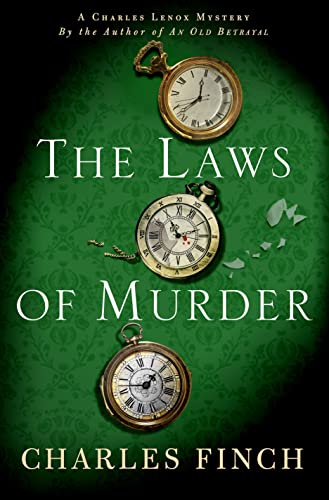


Publication Order of Standalone Books

Publication Order of Non-Fiction Books

About Charles Finch
Charles Finch is an American novelist, essayist, and literary critic best known for the Charles Lenox mysteries, a long-running series set in Victorian England. Beginning with A Beautiful Blue Death, the books follow gentleman investigator Charles Lenox through murder cases, political life, marriage, and the changing social world of nineteenth-century Britain. Finch has also written literary fiction and nonfiction, while maintaining a parallel career as a book critic and cultural commentator.
Born in New York City in 1980, Finch grew up in a literary and artistic family. His grandmother was the acclaimed minimalist artist Anne Truitt, whose influence and memory have figured prominently in Finch’s essays and nonfiction. He attended Yale University and later studied at the University of Oxford, experiences that helped deepen the interest in British history, institutions, and social traditions that would become central to his historical mysteries.
Finch made his fiction debut in 2007 with A Beautiful Blue Death. Set in 1860s London, the novel introduces Charles Lenox, an independently wealthy gentleman whose fascination with detection repeatedly draws him into cases that Scotland Yard has not solved. Lenox is intelligent and methodical but less flamboyant than many fictional Victorian detectives. His investigations depend heavily on careful observation, social knowledge, interviews, and his ability to move between aristocratic drawing rooms and less privileged parts of London.
The series quickly developed beyond individual murder puzzles. Lenox’s friendship and eventual relationship with Lady Jane Grey becomes a major continuing thread, while figures such as his brother Edmund, physician Thomas McConnell, and Scotland Yard detective Inspector Exeter contribute to the wider social world. Lenox also becomes increasingly involved in politics, allowing Finch to explore Parliament and public life alongside criminal investigations.
Later novels broaden the chronology and scope of the series. After numerous books following Lenox’s established career, Finch returned to the detective’s younger years with The Woman in the Water, The Vanishing Man, and The Last Passenger. These prequel mysteries show Lenox developing his investigative methods and professional identity before the events of A Beautiful Blue Death. The main chronology subsequently resumed, making publication order particularly useful for understanding how Finch deliberately reveals Lenox’s past.
Although historical mystery remains his signature genre, Finch has written outside the Lenox series. His literary novel The Last Enchantments follows an American graduate student at Oxford and examines friendship, romance, uncertainty, and the strange suspended period between university life and adulthood. The book draws on a more contemporary and introspective mode than his Victorian mysteries while retaining Finch’s interest in institutions, class, and relationships.
He is also an established critic and essayist. Finch has contributed book criticism to publications including The New York Times and the Chicago Tribune and received the National Book Critics Circle’s Nona Balakian Citation for Excellence in Reviewing in 2017. His criticism ranges broadly across contemporary and classic literature, complementing his work as a novelist with sustained engagement in the wider literary culture.
In 2021 he published What Just Happened: Notes on a Long Year, a nonfiction account drawn from observations he began recording during the COVID-19 pandemic in 2020. Part diary, part cultural criticism, the book considers isolation, politics, reading, music, friendship, and the altered rhythms of ordinary life during an extraordinary period.
Finch’s fiction is distinguished by its combination of historical detail and character continuity. The Lenox books recreate Victorian Britain without treating the period merely as decorative scenery; politics, class expectations, technological change, domestic service, and social convention all influence how crimes can be committed and investigated.
Across his career, Finch has balanced three related roles: historical novelist, literary novelist, and critic. The Charles Lenox mysteries remain the center of his bibliography, but his essays and contemporary fiction reveal the same underlying interest in how people read one another, how institutions shape behavior, and how private lives unfold within larger social worlds.