
Below is the complete list of Dale Brown’s Patrick McLanahan books in order. For this series, the chronological reading order is the same as the order of publication.
Publication Order of Patrick McLanahan Books

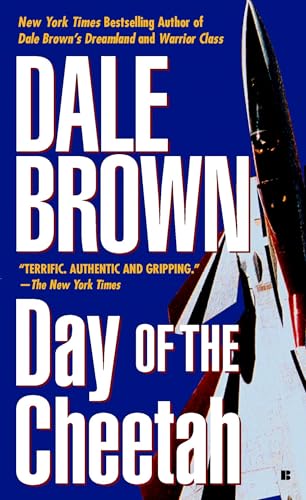


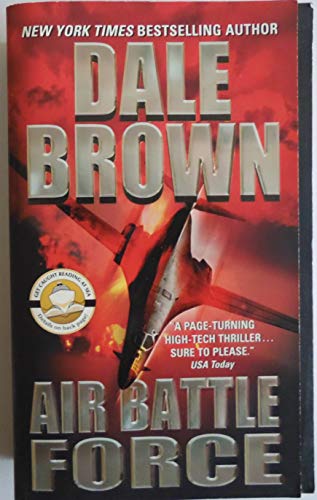



About Patrick McLanahan
Dale Brown’s Patrick McLanahan series is a long-running military techno-thriller saga built around aerial warfare, experimental weapons, geopolitical confrontation, and one officer’s increasingly uneasy relationship with authority. Beginning in the final decades of the Cold War and extending into conflicts involving terrorism, regional expansion, private military power, cyberwarfare, and space-based systems, the novels create an alternate modern history shaped by technologies that often remain just beyond real-world capability.
Patrick first appears in Flight of the Old Dog as a young United States Air Force navigator-bombardier recruited for an extraordinary mission aboard an aging B-52 transformed into the heavily armed EB-52 Megafortress. The aircraft’s veteran crew must penetrate Soviet defenses and destroy a strategic installation capable of undermining America’s nuclear deterrent. The mission establishes the qualities that define Patrick throughout the series: exceptional tactical imagination, technical fluency, courage under pressure, and a willingness to disregard orders when he believes political caution has placed the country in greater danger.
His career expands alongside the scale of Brown’s fictional technology. Patrick moves from bomber crewman to commander, general, strategist, and leader of increasingly independent aerospace forces. The High Technology Aerospace Weapons Center, commonly associated with Dreamland, supplies many of the aircraft and systems that drive the earlier novels. Later developments include robotic combat units, advanced bombers, spaceplanes, directed-energy weapons, intelligence networks, and private organizations capable of projecting military power without waiting for conventional government approval.
Recurring figures give the series continuity beyond its machines. General Bradley Elliott serves as Patrick’s early commander and mentor, while engineer Jon Masters becomes essential to the development of the unconventional equipment Patrick takes into battle. Wendy Tork, later Wendy McLanahan, connects his professional life to a more vulnerable personal history. Rebecca Furness and other characters introduced elsewhere in Brown’s fiction eventually enter the same continuity, turning the series into the central framework for much of his military-thriller universe.
Patrick’s principal conflict is often institutional rather than purely military. He repeatedly identifies threats before political leaders are prepared to acknowledge them, but his solutions can be provocative, unauthorized, or strategically dangerous. Success therefore rarely restores him permanently to official favor. Promotions alternate with investigations, disgrace, forced retirement, and renewed calls for his expertise. Brown uses this pattern to examine the attraction and danger of giving highly capable individuals the power to act according to their own assessment of national interest.
The tone changes across the sequence. Early novels such as Flight of the Old Dog and Day of the Cheetah emphasize secret test programs, Cold War espionage, and specialized aircraft. The middle period broadens into regional wars and the formation of Patrick’s Air Battle Force. Later books increasingly explore private military intervention, conflict with Washington, homeland defense, and the transfer of responsibility to a younger generation.
That generational change becomes explicit through Patrick’s son, Brad McLanahan. Tiger’s Claw functions as both a late Patrick-centered novel and the opening stage of Brad’s development into a principal character. Subsequent books are often classified separately as the Brad McLanahan series, although they continue the same world, political history, technologies, and family legacy. Readers following both sequences gain a clearer understanding of how Patrick’s victories, enemies, and defiance shape the burdens inherited by his son.
Some early events do not fall into perfectly straightforward internal chronology, and several apparently standalone Dale Brown novels later contributed characters or history to the shared universe. Publication order remains the most natural path because it preserves the introduction of technology, institutions, alliances, and revelations as Brown developed them. Read that way, the series becomes more than a succession of aerial battles: it traces Patrick’s transformation from gifted bomber officer into a powerful, controversial figure whose determination to protect his country repeatedly places him beyond its control.