
Below is the complete list of William McIlvanney books in order. For each series, the chronological reading order is the same as the order of publication.
Publication Order of Jack Laidlaw Books
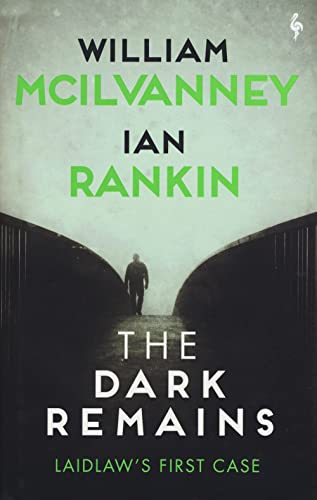
with Ian Rankin


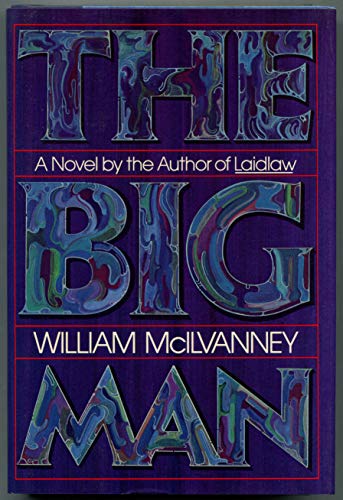
Publication Order of Standalone Books




Publication Order of Non-Fiction Books
Publication Order of Poems/Short Story Collections Books


About William McIlvanney
William McIlvanney was a Scottish novelist, poet, and short-story writer whose work combined literary fiction with an intense interest in working-class life, masculinity, social change, morality, and the industrial communities of western Scotland. He is particularly celebrated for the Laidlaw novels, featuring Glasgow detective Jack Laidlaw, which helped establish the foundations of what later became known as Scottish noir or “Tartan Noir.” His wider fiction includes acclaimed novels such as Docherty, The Big Man, and The Kiln, works that secured his reputation far beyond crime writing.
Born in Kilmarnock, Ayrshire, in 1936, McIlvanney grew up in a working-class family and studied English at the University of Glasgow. He subsequently worked as a schoolteacher before leaving teaching to concentrate on writing. The communities, speech, economic pressures, and cultural identity of Scotland’s industrial west became enduring elements of his fiction.
His first novel, Remedy Is None, appeared in 1966, followed by A Gift from Nessus. His major breakthrough came with Docherty, published in 1975. Set in a fictional Ayrshire mining community, the novel follows miner Tam Docherty and his family through a period of profound economic and social change. It won the Whitbread Novel Award and became one of McIlvanney’s defining works, demonstrating his ability to combine intimate family experience with larger questions of class, dignity, labor, and political disillusionment.
McIlvanney transformed Scottish crime fiction with Laidlaw in 1977. Detective Inspector Jack Laidlaw is a policeman, but also a philosophical and deeply conflicted observer of the city he investigates. The murder case at the center of the novel becomes a means of exploring Glasgow itself—its violence, sectarianism, poverty, loyalties, language, and competing ideas about justice. McIlvanney continued Laidlaw’s story in The Papers of Tony Veitch and Strange Loyalties.
Those novels became enormously influential on later Scottish crime writers. Authors including Ian Rankin have acknowledged McIlvanney’s importance, and Laidlaw is widely regarded as a significant predecessor to detectives such as Rankin’s John Rebus. McIlvanney demonstrated that Scottish crime fiction could use the detective novel not merely to solve a mystery but to examine the society producing the crime.
Crime, however, represented only one part of his bibliography. The Big Man explores the brutal world surrounding an illegal bare-knuckle fight and was later adapted into a film starring Liam Neeson. The Kiln returns to questions of memory, family, artistic identity, and working-class origins through a writer reflecting upon his life. McIlvanney also published poetry, essays, and short fiction, including the collection Walking Wounded, which portrays people struggling with the economic and emotional pressures of contemporary Scottish life.
McIlvanney received numerous literary honors during his career, including the Saltire Society Scottish Book of the Year Award and the Crime Writers’ Association Macallan Silver Dagger. He died in 2015 at the age of 79.
A fourth Laidlaw manuscript remained unfinished at his death. Ian Rankin later completed it with the permission of McIlvanney’s estate, and The Dark Remains was published in 2021 under both authors’ names. The collaboration was particularly fitting given McIlvanney’s influence on Rankin and the later development of Scottish noir.
McIlvanney’s lasting importance lies in his refusal to separate crime, character, and society. Whether writing about detectives, miners, fighters, families, or writers, he treated individual lives as inseparable from class, place, language, and history. That approach made him both a major Scottish literary novelist and a formative figure in the crime tradition that followed him.