
Below is the complete list of Isabel Allende books in order. For each series, the chronological reading order is the same as the order of publication.
Publication Order of Daughter Of Fortune Books


Publication Order of City Of The Beasts Books


Publication Order of Perla Books


Publication Order of Standalone Books










Publication Order of Short Stories/Novellas Books

Publication Order of Short Story Collections Books


Publication Order of Graphic Novels Books

Publication Order of Non-Fiction Books




Publication Order of Best of Best Women’s Erotica Books





About Isabel Allende
Isabel Allende is a Chilean-American novelist whose fiction combines family history, political upheaval, romance, and elements of magical realism. One of the most widely read Spanish-language authors in the world, she is celebrated for her portrayals of resilient women and families whose lives are transformed by historical events. Her best-known works include The House of the Spirits, Eva Luna, Daughter of Fortune, Inés of My Soul, and A Long Petal of the Sea.
Born on August 2, 1942, in Lima, Peru, to Chilean parents, Allende spent much of her childhood in Chile and later lived in Bolivia and Lebanon. Her father, Tomás Allende, was a Chilean diplomat and a cousin of Salvador Allende, who became president of Chile in 1970.
Before becoming a novelist, she worked as a journalist in Chile, including for the influential feminist magazine Paula. Her experience in journalism developed her interest in social inequality, women’s experiences, and the political forces shaping everyday life.
Following the military coup that overthrew Salvador Allende in September 1973, she became involved in helping people endangered by the new regime. She eventually left Chile in 1975 and settled in Venezuela, where she continued working as a journalist.
Her literary breakthrough began with a letter written to her dying grandfather. That letter gradually developed into The House of the Spirits (1982), a multigenerational family saga following the Trueba family through decades of political and social transformation. The novel established her international reputation and became closely associated with magical realism.
Allende continued exploring political repression and personal courage in Of Love and Shadows (1984), which follows a journalist and photographer investigating a disappearance under military rule. Eva Luna (1987) introduced an imaginative storyteller whose experiences unfold amid political unrest and social injustice. The character’s fictional world expanded in The Stories of Eva Luna (1989).
Her historical fiction gained further prominence with Daughter of Fortune (1999), following Eliza Sommers from Chile to California during the Gold Rush. Portrait in Sepia (2000) continues the interconnected family history through Aurora del Valle, while The House of the Spirits completes the broader narrative chronology.
Personal tragedy profoundly influenced Allende’s writing. Her daughter Paula died in 1992 after a prolonged illness. The experience inspired Paula (1994), a deeply personal memoir combining family memories with reflections on grief, identity, and motherhood.
She subsequently established the Isabel Allende Foundation in her daughter’s memory, supporting organisations dedicated to improving the lives of women and girls.
Allende expanded into young adult fantasy with the Eagle and Jaguar trilogy, beginning with City of the Beasts (2002). The adventures continue in Kingdom of the Golden Dragon and Forest of the Pygmies, following Alexander Cold and Nadia Santos through journeys involving mythology, environmental concerns, and Indigenous cultures.
Her later historical novels include Inés of My Soul (2006), inspired by the life of Inés Suárez during the Spanish conquest of Chile, and Island Beneath the Sea (2009), which portrays slavery and revolution in eighteenth-century Saint-Domingue.
In The Japanese Lover (2015), Allende explores a relationship shaped by the internment of Japanese Americans during the Second World War. A Long Petal of the Sea (2019) follows refugees fleeing the Spanish Civil War and rebuilding their lives in Chile.
Violeta (2022) tells the story of a woman’s century-long life against the backdrop of major historical transformations. The Wind Knows My Name (2023) connects the experiences of children separated from their families across different periods of political conflict.
Her novel My Name Is Emilia del Valle (2025) follows a young journalist whose search for her origins leads her to Chile during the civil war of 1891.
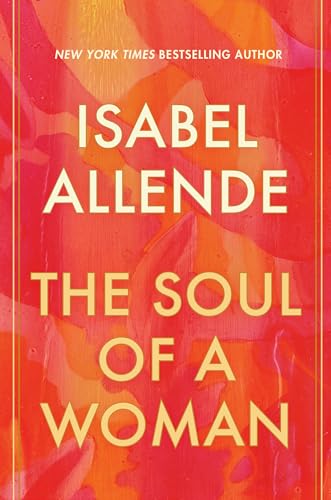
Alongside her fiction, Allende has published memoirs and personal reflections, including My Invented Country, The Sum of Our Days, and The Soul of a Woman. Her 2026 book Story Telling reflects on her life and creative work.
Allende has received numerous literary honours, including Chile’s National Prize for Literature in 2010, the United States Presidential Medal of Freedom in 2014, and the National Book Foundation’s Medal for Distinguished Contribution to American Letters in 2018.
A defining characteristic of her writing is the relationship between private lives and historical events. Her characters frequently experience political displacement, family separation, prejudice, and personal loss, yet remain determined to preserve their identities and relationships.
Across historical fiction, magical realism, memoir, and young adult adventure, Allende has developed a distinctive literary voice that places women’s experiences at the centre of sweeping narratives. Her novels explore how storytelling preserves memory, challenges injustice, and connects generations separated by geography and time.