
Below is the complete list of Kate Atkinson’s Todd Family books in order. For this series, the chronological reading order is the same as the order of publication.
Publication Order of Todd Family Books

About Todd Family
Kate Atkinson’s Todd Family books comprise two closely related novels, Life After Life and A God in Ruins, centered on siblings Ursula and Teddy Todd and their family’s experience of twentieth-century Britain. Atkinson describes the second novel as a companion to the first rather than a conventional sequel, and each can stand independently. Read together, however, they form a remarkable family diptych in which war, memory, chance, and the possibilities of fiction are examined through two radically different approaches to a human life.
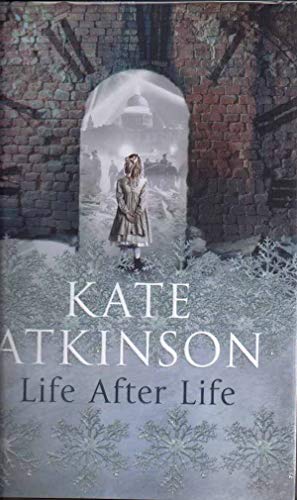
Life After Life begins with Ursula Todd’s birth at the family home, Fox Corner, in 1910. Almost immediately, Atkinson breaks with ordinary chronology. Ursula dies during childbirth—and then is born again. Throughout the novel she repeatedly lives variations of her life, dying through accident, illness, war, or circumstance before beginning again from an earlier point.
Ursula does not simply remember previous lives in a straightforward way. Instead, she experiences instincts, anxieties, and flashes of recognition that sometimes allow her to avoid an earlier fate. Small alterations can produce enormous consequences. A child arriving somewhere minutes earlier, choosing another path, or responding differently to a dangerous situation may change not only her own future but the lives surrounding her.
The Todd household provides a stable reference point through these changing possibilities. Ursula grows up with her parents, Hugh and Sylvie, and siblings including Pamela and Teddy, whose gentle temperament and close bond with Ursula make him particularly important. Domestic routines at Fox Corner coexist with the enormous historical events approaching outside it, especially the First World War, the influenza pandemic, the rise of Nazi Germany, and the Second World War.
Atkinson’s treatment of the Blitz is central to Ursula’s story. Rather than presenting wartime London from a heroic distance, she concentrates on ordinary people living with bombing, destroyed homes, civil-defense work, exhaustion, and sudden death. Ursula’s repeated lives make history feel simultaneously fixed and unstable: readers know the war will happen, yet an individual existence within it can change completely through chance.
A God in Ruins turns to Teddy, Ursula’s beloved younger brother. During the Second World War he becomes an RAF bomber pilot, repeatedly flying missions from which statistical probability suggests he should not return. Unlike Ursula, however, Teddy does not visibly receive endless opportunities to live his life differently. His story instead explores what happens when a young man prepared to die survives the war and must somehow construct an ordinary future afterward.
Teddy becomes a husband, father, and grandfather, and the novel moves freely across decades rather than following him chronologically. His difficult relationship with his daughter Viola becomes especially important, as does the contrast between the decent man Teddy tries to remain and the imperfect family life that grows around him. War does not end when combat stops; its emotional and moral consequences travel into generations that never experienced it directly.
The two books therefore mirror rather than duplicate one another. Ursula’s story asks what life might become if it could be attempted repeatedly, while Teddy’s examines the weight of living one imperfect life through to its end. Family members appear differently depending on whose experience is foregrounded, and events that seem settled in one novel acquire another significance in the other.
Publication order offers the strongest experience. Life After Life first establishes the Todd family and Atkinson’s radical treatment of possibility; A God in Ruins then revisits that world from a more grounded but equally inventive perspective. Together, they form a distinctive meditation on survival, war, family inheritance, and fiction’s power to imagine both the life that happened and all the lives that might have been.