
Below is the complete list of Terry Goodkind’s Sword Of Truth books in order. For this series, the chronological reading order is the same as the order of publication.
Publication Order of Sword Of Truth Books


- Temple of the Winds (1998)
In the Sword Of Truth series, Temple of the Winds is book #4 and was published in 1998. 


About Sword Of Truth
Terry Goodkind’s Sword of Truth series is a large-scale fantasy saga built around Richard Cypher, Kahlan Amnell, and a world where magic, political power, prophecy, and personal conviction are constantly in conflict. The series begins with Wizard’s First Rule, which introduces Richard as a woods guide in Westland before he is pulled into a struggle far beyond anything he understood about his own life. Through Kahlan, the Mother Confessor, and Zedd, the old wizard who has quietly watched over him, Richard discovers a hidden history involving the Midlands, D’Hara, ancient magic, and his own place in a much larger battle.
The early books establish the central emotional and philosophical shape of the series. Richard is not simply a chosen hero handed a magical sword. He is repeatedly forced to decide what kind of man he will be when truth is painful, authority is corrupt, and compassion can be exploited. The Sword of Truth itself is both weapon and symbol, tied to anger, justice, and the need to act with moral clarity. Goodkind’s fantasy is often direct and intense, with evil presented not only as individual cruelty but as systems of domination that demand obedience from the mind as much as the body.
Kahlan Amnell is just as central as Richard. As Mother Confessor, she carries a power that makes intimacy and trust painfully complicated. Her role gives the series one of its strongest tensions: she is politically powerful and deeply compassionate, yet isolated by the very magic that defines her office. Richard and Kahlan’s relationship becomes the emotional spine of the saga, tested by war, separation, prophecy, betrayal, and the repeated demand that they choose truth over comfort.
The world expands rapidly after Wizard’s First Rule. Stone of Tears deepens the role of the Sisters of the Light and the magical forces surrounding Richard’s identity, while later books such as Blood of the Fold, Temple of the Winds, and Soul of the Fire widen the political and spiritual conflict. Goodkind’s series is not structured as a simple quest that ends once one villain falls. Each book reveals another layer of power: imperial ambition, religious control, magical contagion, ancient weapons, hidden histories, and competing visions of how people should live.
One of the most significant arcs arrives through the Imperial Order, especially in books such as Faith of the Fallen and Naked Empire. This part of the series brings Goodkind’s philosophical concerns to the surface most clearly. The conflict is not only military; it is ideological. Richard’s belief in individual life, reason, work, and freedom is set against systems that demand sacrifice, submission, and collective obedience. Readers often respond strongly to this aspect of the series, whether for its moral intensity, its political clarity, or the way it gives the fantasy war a philosophical center.
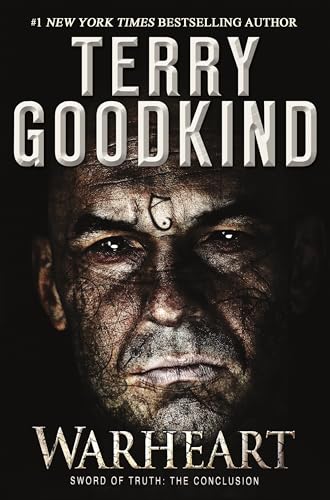
The later Richard and Kahlan novels, including The Omen Machine, The Third Kingdom, Severed Souls, and Warheart, continue after the original main arc, showing that victory does not erase the dangers rooted in prophecy, magic, and the world’s older powers. Goodkind also broadened the universe through related works such as the Nicci Chronicles and the Children of D’Hara novellas, which explore consequences and characters beyond the earliest structure.
Sword of Truth is best understood as epic fantasy with a strong moral and philosophical drive. It has battles, wizards, confessors, monsters, prophecy, and invented kingdoms, but its deepest concern is choice: whether people will think for themselves, defend what they love, and refuse to surrender truth to fear or power. Richard and Kahlan’s story endures because their love is never separate from that struggle.