
Below is the complete list of Marie Benedict books in order. For each series, the chronological reading order is the same as the order of publication.
Publication Order of Standalone Books




Publication Order of Short Stories/Novellas Books
with Kate Quinn


Publication Order of Blaze Collection Books





About Marie Benedict
Marie Benedict is an American historical novelist and former lawyer whose fiction is built around a clear literary mission: recovering women whose achievements, influence, or complexity have been diminished in traditional accounts of history. A New York Times and USA Today bestselling author, she has written about scientists, political figures, spies, writers, librarians, aristocrats, archaeologists, and women operating within powerful institutions that rarely gave them equal recognition. Her work blends extensive historical research with fictional reconstruction, concentrating particularly on the undocumented spaces where private motives and relationships must be imagined.
Benedict graduated from Boston College and Boston University School of Law and spent more than a decade practicing as a commercial litigator at major law firms. She published earlier fiction under the name Heather Terrell before adopting Marie Benedict for the historical novels that came to define her career. Her legal background is reflected in the investigative quality of her writing: she often begins with an accepted historical narrative, examines the evidence surrounding it, and asks whose contribution or perspective has been left out.
That direction crystallized with The Other Einstein, which centers on Mileva Marić, Albert Einstein’s first wife and a trained physicist whose possible intellectual contribution to his early scientific work has long generated debate. Benedict did not present the novel as settled biography; instead, she used fiction to explore a woman whose education and ambitions were extraordinary for her era but whose life became inseparable from that of a far more famous husband.
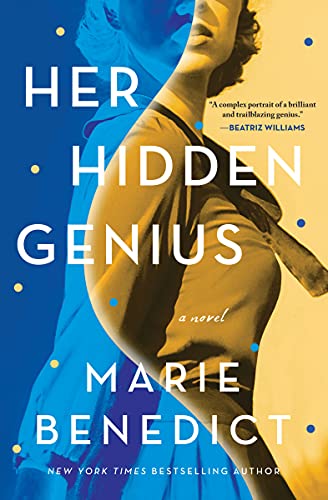
Similar questions shape Carnegie’s Maid, The Only Woman in the Room, and Lady Clementine. The subjects change—from Andrew Carnegie’s world to actress and inventor Hedy Lamarr and Clementine Churchill—but Benedict repeatedly examines women situated close to celebrated men while possessing intelligence and accomplishments of their own. Her Hidden Genius turns directly toward scientist Rosalind Franklin and the crucial research surrounding the discovery of DNA’s structure.
One of Benedict’s most successful novels, The Mystery of Mrs. Christie, explores Agatha Christie’s unexplained eleven-day disappearance in 1926. Rather than attempting to solve definitively a mystery Christie herself never publicly clarified, Benedict uses the episode to examine marriage, celebrity, authorship, and the limited choices available to women.
Collaboration has become another important part of her bibliography. With Victoria Christopher Murray, Benedict wrote The Personal Librarian, inspired by Belle da Costa Greene, the influential Morgan Library curator who was a Black woman passing as white. They reunited for The First Ladies, centered on the friendship and political partnership between Eleanor Roosevelt and educator and civil-rights leader Mary McLeod Bethune, and again for A Pair of Aces, which follows prosecutor Eunice Carter and madam Polly Adler as their very different worlds intersect with efforts to bring down mobster Lucky Luciano.
Benedict has also widened her range through The Queens of Crime, bringing together prominent women from the Golden Age of detective fiction, and Daughter of Egypt, which links archaeology with the historical erasure of female power. Her shorter fiction includes Agent 355, inspired by the unidentified female member of George Washington’s Culper spy ring, while The Secrets of Lovelace Academy, co-written with Courtney Sheinmel, takes her interest in overlooked women into middle-grade historical adventure.
Across these books, Benedict is less interested in simply fictionalizing famous lives than in questioning how historical reputation is constructed. Her bibliography repeatedly returns to women whose work was hidden behind husbands, institutions, social conventions, racial barriers, or incomplete records. The result is a body of historical fiction unified by an insistence that history changes when the women once pushed to its margins are placed back at the center.