
Below is the complete list of Jayne Ann Krentz’s Eclipse Bay books in order. For this series, the chronological reading order is the same as the order of publication.
Publication Order of Eclipse Bay Books


About Eclipse Bay
On the rugged Oregon coast, the small town of Eclipse Bay is home to two families whose rivalry has endured for generations. The Hartes and the Madisons have spent decades nursing grievances, exchanging accusations, and passing their mutual distrust from parents to children. Jayne Ann Krentz explores this complicated history in the Eclipse Bay trilogy, a contemporary romance series combining family secrets, romantic tension, small-town relationships, and the possibility of reconciliation.
The novels follow successive members of the Harte and Madison families as they discover that inherited hostility cannot always withstand personal attraction. Each story features a different romantic couple, while the continuing family feud provides a connection between their experiences.
The opening novel, Eclipse Bay (2000), introduces Hannah Harte and Rafe Madison, two people raised to believe that their families should have nothing to do with one another.
Hannah is a successful wedding consultant whose professional understanding of romance has left her sceptical about marriage. Rafe, meanwhile, has long carried a reputation as the rebellious member of the Madison family.
Despite their families’ hostility, the two share an important experience from their youth. During a troubling incident on the beach, Hannah defended Rafe when circumstances threatened to implicate him in a serious crime. Their encounter revealed qualities that neither family’s prejudices could adequately explain.
Years later, an unexpected inheritance brings Hannah and Rafe back to Eclipse Bay. Their reunion revives memories of their earlier connection and exposes the unresolved tensions surrounding their families.
As they become increasingly involved with one another, both must confront expectations established long before they were born. Their attraction challenges the assumption that loyalty to family requires unquestioning acceptance of inherited resentment.
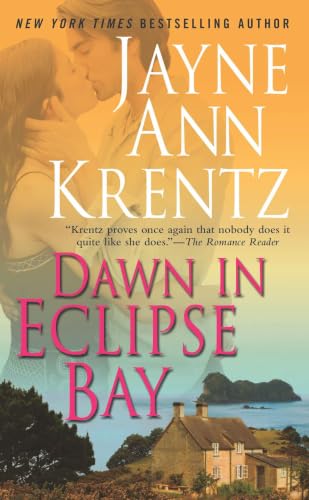
Dawn in Eclipse Bay (2001) continues the story through Hannah’s sister, Lillian Harte, and Gabe Madison, Rafe’s brother.
Lillian operates a professional matchmaking service, using her understanding of compatibility to help clients establish romantic relationships. Gabe is a successful business executive whose determined personality makes him accustomed to achieving his objectives.
Their professional association has been unusually frustrating. After five unsuccessful dates arranged through Lillian’s business, Gabe refuses to accept that she cannot find him a suitable partner.
Lillian has already decided to close her matchmaking service and return to Eclipse Bay, hoping to establish a different future. Gabe, however, insists that she fulfil their agreement.
Their increasingly personal disagreements reveal an attraction that neither initially welcomes. Although their siblings’ marriage has begun easing the longstanding feud, the relationship between Gabe and Lillian introduces another test of the families’ ability to abandon their prejudices.
The novel explores the tension between romantic compatibility and personal expectations. Lillian’s professional confidence does not necessarily equip her to recognise her own feelings, while Gabe discovers that businesslike determination provides limited guidance in matters of the heart.
The concluding novel, Summer in Eclipse Bay (2002), focuses on Nick Harte and Octavia Brightwell.
Nick is a charming single father whose reputation makes him an attractive but potentially dangerous romantic prospect. Octavia owns a local art gallery and has reasons to remain cautious about becoming involved with him.
Their circumstances are further complicated by the continuing influence of the Harte-Madison feud. Octavia possesses a family connection to the woman whose history contributed to the original dispute, giving her personal reasons to fear that a relationship with Nick might revive old hostilities.
Mitchell Madison, one of the family’s influential older members, has appointed himself Octavia’s protector. His determination to discourage Nick creates additional complications, particularly when Nick’s young son, Carson, develops his own ideas about the relationship.
As buried secrets emerge, the novel brings the family’s longstanding conflict into sharper focus. The romantic developments become closely connected to questions about the origins of the feud and whether generations of resentment were justified.
Across the trilogy, Krentz develops Eclipse Bay as a community where family reputations carry considerable weight. Its dramatic cliffs, secluded coves, and coastal atmosphere provide a setting for relationships complicated by histories that many residents accept without questioning.
The older generation’s interference adds humour as well as conflict. Mitchell Madison and other family members remain invested in grievances that younger relatives increasingly regard as obstacles to their happiness.
Although each romance reaches its own resolution, the trilogy develops a continuous family story. Hannah and Rafe’s relationship begins the process of reconciliation, Gabe and Lillian challenge the remaining divisions, and Nick and Octavia confront the history underlying the feud itself.
The series comprises three novels published between 2000 and 2002. They have also been collected in omnibus editions titled Together in Eclipse Bay and Eclipse Bay Trilogy, which contain the original stories rather than additional instalments.
Eclipse Bay is distinguished by its examination of loyalty and inherited prejudice within contemporary romance. Through three interconnected relationships, Krentz portrays a community gradually recognising that the conflicts of previous generations need not determine the choices of those who follow.