
Below is the complete list of Stephen Hunter’s Swaggerverse books in order. For this series, the chronological reading order is the same as the order of publication.
Publication Order of Swaggerverse Books
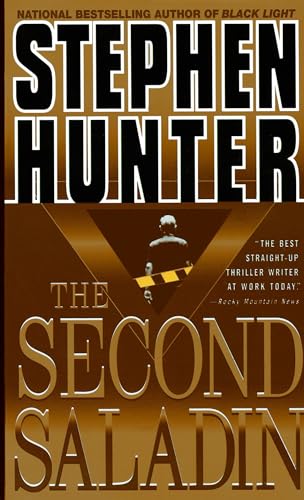







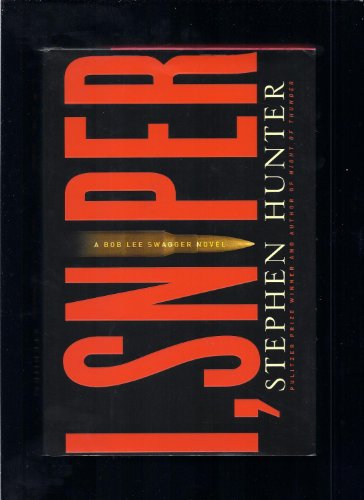




About Swaggerverse
The Swaggerverse is an informal umbrella term for Stephen Hunter’s interconnected thrillers involving Bob Lee Swagger, his father Earl Swagger, and characters who move between their respective stories. It is not a single conventionally numbered series. Instead, it forms a multigenerational crime-and-action universe stretching from Depression-era America and World War II through Vietnam and into contemporary conflicts. The core is divided between the Bob Lee Swagger novels and the Earl Swagger novels, with additional connections through figures such as Ray Cruz.
Bob Lee Swagger is the central character in the largest portion of this universe. A decorated former U.S. Marine sniper and Vietnam veteran, he first appears as the protagonist of Point of Impact. Hunter initially developed Bob’s story through Black Light and Time to Hunt, creating a trilogy that established his military history, family background, and complicated relationship with the legacy of his father.
The Bob Lee series later expanded well beyond that original arc. Books such as The 47th Samurai, Night of Thunder, I, Sniper, Dead Zero, The Third Bullet, Sniper’s Honor, G-Man, and Game of Snipers place an aging Swagger inside investigations involving assassinations, military history, legendary shooters, political conspiracies, and crimes whose accepted explanations do not match the physical evidence.
Earl Swagger represents an earlier generation of the same family. A highly decorated World War II Marine who becomes an Arkansas lawman, Earl is already part of Bob’s mythology before Hunter gives him his own sequence. His principal novels—Hot Springs, Pale Horse Coming, and Havana—move through the years following World War II and place him against organized crime, institutional corruption, racial violence, and political upheaval.
The connection between father and son is particularly important in Black Light. Bob’s investigation into Earl’s death transforms what initially appears to be family history into one of the defining mysteries of his own life. Hunter repeatedly returns to that relationship, using Earl’s past to explain both Bob’s inherited reputation and the values that shaped him.
G-Man creates one of the strongest bridges between the two branches. Although published as a Bob Lee Swagger novel, much of the book reconstructs Earl’s earlier experiences during the 1930s. Bob discovers material that sends him searching into his father’s past, while the historical storyline follows the younger Earl into the era of Depression-era gangsters and federal law enforcement. The result functions simultaneously as a Bob Lee investigation and a major Earl Swagger story.
Ray Cruz provides another connection within the wider Swaggerverse. Introduced through Hunter’s later thriller work and closely linked to Bob Lee, Cruz shares the same world of elite marksmanship, military experience, and covert violence. He becomes especially important in Dead Zero and also takes a central role in Soft Target. His presence demonstrates that the Swaggerverse is broader than a simple father-and-son sequence, although Bob and Earl remain its defining figures.
The chronology of the Swaggerverse can appear complicated because publication order and internal historical order are very different. Earl’s adventures occur decades before Bob’s, and individual Bob Lee novels frequently investigate events from earlier periods. Trying to arrange every book according to the year in which its principal action occurs therefore produces a less natural reading experience.
Publication order is generally the better approach. Hunter reveals family history deliberately, often allowing readers to learn something about Earl through Bob before later showing the event from Earl’s own perspective. Reading the historical novels too early can weaken discoveries that were designed to unfold gradually.
What unifies the Swaggerverse is not simply a shared surname or recurring characters. Hunter repeatedly returns to the relationship between violence, technical skill, history, and inherited reputation. Both Earl and Bob are exceptional shooters, but their stories are equally concerned with what happens when highly capable men encounter institutions that distort the truth or fail to deliver justice.
Across generations, the Swaggerverse becomes a compressed history of American violence. Depression-era gangsters, World War II, postwar corruption, Vietnam, political assassination, modern warfare, and contemporary terrorism all become part of the same fictional continuum. Earl establishes the family legend, Bob inherits and interrogates it, and later characters extend it, giving Hunter a flexible universe in which personal history and national history continually overlap.