
Below is the complete list of Eric Van Lustbader’s Sunset Warrior Cycle books in order. For this series, the chronological reading order is the same as the order of publication.
Publication Order of Sunset Warrior Cycle Books


About Sunset Warrior Cycle
Eric Van Lustbader’s Sunset Warrior Cycle begins as post-apocalyptic sword-and-sorcery and gradually expands into a more mystical epic concerned with transformation, destiny, and the struggle between order and chaos. The series was Lustbader’s first major fictional cycle, establishing several qualities that would recur throughout his later work: highly trained warriors, conflicting systems of belief, divided identities, elaborate quests, and settings shaped by both Eastern philosophy and speculative technology.
The central figure is Ronin, an independent swordsman raised in the Freehold, a subterranean refuge created after an ecological catastrophe left the surface of Earth frozen. Humanity has survived beneath the ground, but its society has regressed into a rigid feudal order controlled by the Saardin and enforced by their Bladesmen. Ronin belongs to no ruling faction and resists the obedience expected of him, making him both useful and dangerous to those who hold power.
The Sunset Warrior establishes the Freehold’s claustrophobic social structure and follows Ronin as conflict forces him beyond the only world he has known. His journey to the surface changes the scale of the story. What appears to be a confined struggle within a dying underground civilization becomes a much larger exploration of a world transformed by disaster but not emptied of life. The frozen landscape, unfamiliar settlements, strange creatures, and surviving cultures undermine everything Ronin has been taught.
That progression continues directly through Shallows of Night and Dai-San. Ronin travels with Borros, a mysterious Magic Man, reaches the port city of Sha’angh’sei, and encounters allies and enemies whose abilities challenge any simple division between science, magic, and spiritual power. Among the important figures surrounding him are Kiri and Moichi Annai-Nin, a navigator who becomes closely tied to Ronin’s developing destiny. The threat posed by the Makkon also grows from a regional danger into an apocalyptic conflict.
Ronin’s evolution is the series’ structural core. He begins as an unaffiliated Bladesman surviving through discipline and skill, but the widening crisis demands more than physical prowess. His identity becomes connected to the title Dai-San, the Sunset Warrior, and to powers whose consequences are as important as their advantages. Lustbader treats this transformation as both elevation and burden. Greater ability brings greater responsibility, while the distinction between chosen purpose and imposed destiny becomes increasingly difficult to maintain.
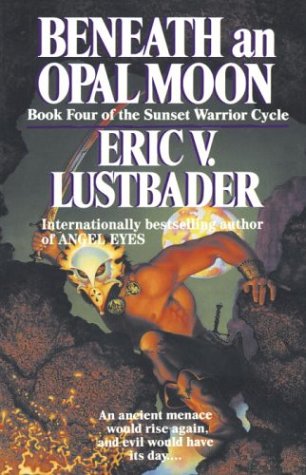
Beneath an Opal Moon shifts the immediate focus away from Ronin and places Moichi at the center of a separate but connected adventure. Joined by the Bujun warrior Chiisai, he becomes involved in murder, rescue, vengeance, sorcery, and a threat emerging beyond familiar territories. The change in protagonist broadens the cycle’s world and gives a supporting character room to develop independently, while preserving the mythology and relationships established earlier.
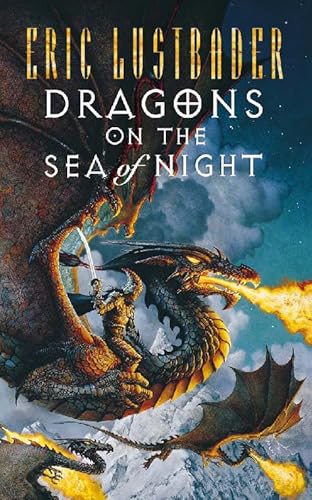
After a substantial publication gap, Dragons on the Sea of Night returns to Ronin, now fully identified as Dai-San. The final novel reunites major elements of the earlier books, including Moichi and Chiisai, and revisits the conflict between immense supernatural power and the recurring force of Chaos. Its later publication does not make it a detached sequel; it depends heavily on the transformations, loyalties, and mythology built throughout the preceding volumes.
Publication order is therefore especially important. The first three novels form a tightly connected progression, the fourth expands the perspective through Moichi, and the fifth draws those strands back together. Read sequentially, the cycle moves from an enclosed underground society to a vast, unstable world in which swordplay, technology, philosophy, sorcery, friendship, and fate are inseparable.