
Below is the complete list of Cassandra Clare’s Mortal Instruments books in order. For this series, the chronological reading order is the same as the order of publication.
Publication Order of Mortal Instruments Books


Publication Order of Mortal Instruments Collections Books


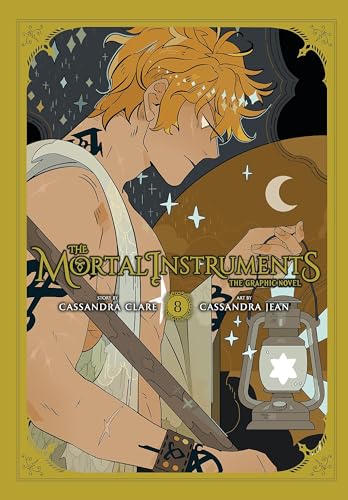
Publication Order of Mortal Instruments Graphic Novels Books



Publication Order of Mortal Instruments Non-Fiction Books


About Mortal Instruments
Cassandra Clare’s Mortal Instruments series is the central contemporary arc of The Shadowhunter Chronicles and the doorway through which many readers first enter her fantasy world. Beginning with City of Bones, the series introduces Clary Fray, a New York teenager who discovers that the ordinary city around her is layered with demons, angels, warlocks, vampires, werewolves, faeries, and Shadowhunters—human-angel warriors bound by runes, laws, family lines, and ancient conflicts. What begins as Clary’s personal search for her missing mother quickly widens into a story about identity, inheritance, forbidden knowledge, and the danger of power carried through blood.
The first three books form the original core of the series. City of Bones establishes the hidden world and the major emotional tensions around Clary, Jace Wayland, Simon Lewis, Isabelle and Alec Lightwood, Magnus Bane, and Valentine Morgenstern. City of Ashes deepens the conflict by exposing more of Valentine’s plans and the weaknesses inside Shadowhunter society, while City of Glass brings the early arc to a major confrontation in Idris, the ancestral homeland of the Shadowhunters. These books have the shape of a discovery fantasy: Clary learns what she is, where she comes from, and why the truth about her family is far more dangerous than ignorance.
The later three novels change the scale and texture of the story. Rather than simply extending the same conflict, City of Fallen Angels, City of Lost Souls, and City of Heavenly Fire deal with the aftermath of victory, the instability left behind by Valentine’s war, and the rise of Sebastian Morgenstern as a more intimate and destructive threat. The second half of the series is darker in its emotional consequences, especially for Jace and Clary, but it also gives more weight to Simon, Isabelle, Alec, Magnus, and the wider network of Downworlders and Shadowhunters affected by every political decision.
One of the series’ strongest features is the way Clare balances romance with ensemble storytelling. Clary and Jace are the main romantic center, but the books are not built only around them. Simon’s transformation from loyal best friend into someone with his own supernatural burden gives the series one of its most important character arcs. Alec and Magnus bring in questions of identity, love, immortality, family expectation, and public acceptance within a society that is often rigid and traditional. Isabelle’s sharpness, loyalty, and guarded vulnerability also help keep the Lightwood family from functioning merely as background support.
The Mortal Instruments is urban fantasy, but it is also family drama. Nearly every major conflict is tied to bloodlines, parentage, chosen bonds, hidden histories, or the damage caused by adults who believed they were entitled to shape the next generation. Valentine and Sebastian are compelling threats because they are not distant monsters; they are connected to Clary’s own history and to the Shadowhunter world’s failures. That makes the series’ battles feel personal as well as supernatural.
Within Cassandra Clare’s larger bibliography, The Mortal Instruments remains the modern foundation. Later series such as The Infernal Devices, The Dark Artifices, and The Last Hours add history, family depth, and future consequences, but Mortal Instruments is where the core contemporary mythology takes shape. The series works best as a connected character arc, following Clary from ordinary life into a world where love, loyalty, and identity are constantly tested by secrets older than she ever imagined.