
Below is the complete list of J. R. Ward’s Kingdoms of the Compass books in order. For this series, the chronological reading order is the same as the order of publication.
Publication Order of Kingdoms of the Compass Books

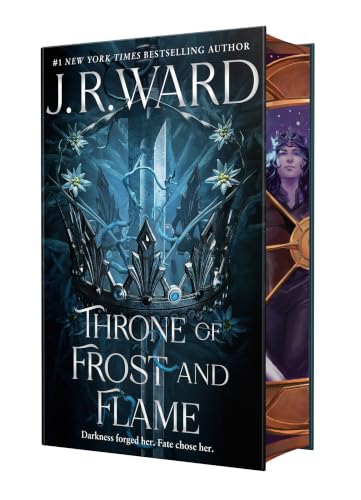
About Kingdoms of the Compass
J.R. Ward’s Kingdoms of the Compass series marks a departure from the contemporary paranormal romance that made her famous through the Black Dagger Brotherhood. Set in a fantasy world shaped by rival kingdoms, political power, and dangerous loyalties, the series brings Ward’s interest in emotionally complicated characters and high-stakes relationships into a setting built around royal authority and competing ambitions.
Unlike the vampire society of Caldwell, New York, the Kingdoms of the Compass setting draws upon the traditions of epic and romantic fantasy. Its central framework concerns the relationships between kingdoms whose political interests do not necessarily align. Questions of allegiance, inheritance, duty, and personal freedom become especially important when individuals must navigate obligations imposed by their position in society.
The series represents an expansion of Ward’s established approach to storytelling. Her earlier novels frequently feature powerful individuals constrained by rules they did not create, whether those rules arise from vampire traditions, military responsibilities, family expectations, or supernatural forces. A fantasy setting provides another way to explore those conflicts through the structures of monarchy and political rivalry.
Romantic fantasy also allows relationships to carry consequences beyond the people directly involved. In a world divided by competing kingdoms, private attachments may conflict with public responsibilities. Trust can become a political liability, while loyalty to a particular person may challenge obligations to a family, ruler, or larger community.
These concerns are familiar territory for Ward. Her Black Dagger Brotherhood novels repeatedly examine the tension between personal relationships and the demands of leadership, particularly through Wrath’s responsibilities as vampire king. The Bourbon Kings trilogy similarly explores the pressures created by inherited privilege and family power, although in a contemporary Southern setting rather than an imagined world.
Kingdoms of the Compass belongs to a different fantasy framework, however, and should not be treated as another branch of the Black Dagger Brotherhood universe. Its identity rests on its own setting and the possibilities offered by a story involving distinct kingdoms rather than the supernatural institutions established in Ward’s earlier fiction.
The series also reflects Ward’s movement between different branches of romantic storytelling. Under the name Jessica Bird, she began with contemporary romance, while her J.R. Ward novels expanded into paranormal romance, supernatural suspense, and family sagas. Kingdoms of the Compass adds fantasy romance to that range, giving her another setting in which to explore desire, power, vulnerability, and the consequences of difficult choices.
For readers organizing Ward’s bibliography, Kingdoms of the Compass should be kept separate from Black Dagger Brotherhood, Black Dagger Legacy, Black Dagger Brotherhood: Prison Camp, and Fallen Angels. Those series have their own established continuities, while Kingdoms of the Compass is a distinct project.
Because the series is a newer addition to Ward’s bibliography, its publication history and reading sequence should be distinguished from assumptions about its eventual scope. Announced or forthcoming installments are not the same as published books, and a definitive series order depends on the titles actually released.
What makes Kingdoms of the Compass particularly notable within Ward’s career is the shift in scale and setting. Her fiction has long examined powerful characters whose private emotions threaten to disrupt carefully maintained systems. By moving those concerns into a fantasy world of kingdoms and political obligations, she extends familiar themes into a different narrative tradition while maintaining the emphasis on relationships that characterizes her work.