
Below is the complete list of Lauren Tarshis’ I Survived books in order. For this series, the chronological reading order is the same as the order of publication.
Publication Order of I Survived Books


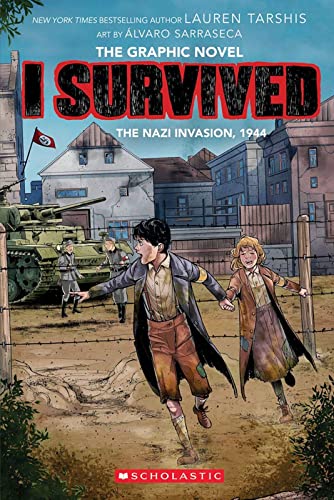
Publication Order of I Survived Graphic Novels Books




Publication Order of I Survived True Stories Books


About I Survived
Lauren Tarshis’s I Survived series places fictional children inside real disasters, wars, epidemics, and other moments of extreme historical danger. Beginning with I Survived the Sinking of the Titanic, 1912, the books move freely across centuries and continents rather than following one family or continuing storyline. Each installment introduces a new young protagonist whose ordinary life is suddenly overwhelmed by an event far larger than anything they have previously faced.
The series has covered widely known subjects such as Pearl Harbor, the September 11 attacks, the American Revolution, D-Day, Hurricane Katrina, and the destruction of Pompeii. Other novels examine events that may be less familiar to younger readers, including the Children’s Blizzard of 1888, the Great Molasses Flood, the Wellington Avalanche, and the Galveston hurricane. Later books have expanded the range further through the Black Death, the Dust Bowl, the Great Alaska earthquake, and a contemporary survival story set in Botswana’s Okavango Delta.
Tarshis builds each story around a child close enough to the action to experience its fear and confusion but not responsible for the larger forces causing it. The protagonist may be separated from family, trapped by collapsing buildings, caught in military conflict, pursued by dangerous animals, or forced to navigate fire, flood, disease, or freezing weather. Survival depends upon courage and quick thinking, but also upon cooperation, compassion, and knowledge gained from other people.
Although the stories are fictional, their settings and central disasters are carefully grounded in historical research. Tarshis uses survivor accounts, photographs, maps, newspaper reports, and details of daily life to create believable surroundings. Historical information is woven into the action rather than presented as a detached lesson, allowing readers to understand how an event affected individuals who did not know what would happen next.
The novels are written for younger and developing readers, with short chapters, direct language, strong suspense, and illustrations that support the setting. Their compact length does not prevent them from addressing difficult subjects. Death, displacement, prejudice, war, illness, environmental destruction, and grief appear throughout the series, but the emphasis remains on resilience rather than spectacle. The characters are frightened and sometimes deeply changed by what they endure, yet they also discover their own capacity to help others and move forward.
Because every chapter book tells an independent story, the novels do not need to be read in either publication order or historical chronology. Reading them as published shows how the series has broadened from famous American disasters to events across different periods and regions, but readers can also begin with whichever historical subject interests them most.
The I Survived graphic novels are adaptations of selected chapter books rather than separate additions to the main storyline. They retell the same central stories through sequential art, sometimes with adapted text and different illustrators. The numbered I Survived True Stories books form another distinct branch of the bibliography. Those volumes use narrative nonfiction to recount the experiences of real people and animals connected to disasters and acts of survival.
Together, these formats give the series an unusually broad reach. The chapter books provide immersive historical fiction, the graphic editions offer a visual route into many of the same events, and the true-story collections connect readers directly with documented survivors. Across them all, Tarshis returns to the same central idea: history becomes more immediate when viewed through one young person struggling to understand what is happening and finding the strength to endure it.