
Below is the complete list of Janet Evanovich’s Full/Max Holt books in order. For this series, the chronological reading order is the same as the order of publication.
Publication Order of Full/Max Holt Books
with Charlotte Hughes


About Full/Max Holt
Janet Evanovich’s Full/Max Holt series is a light romantic mystery and comedy series set largely around Beaumont, South Carolina, where small-town gossip, eccentric side characters, romantic chaos, and criminal trouble keep colliding. The series is often associated with Max Holt because he becomes one of its main recurring figures, especially alongside Jamie Swift, but its structure is a little unusual. Full House comes first and was originally rooted in Evanovich’s earlier romance work, while the later books, co-written with Charlotte Hughes, develop the Beaumont setting into a more connected comic mystery-romance series.
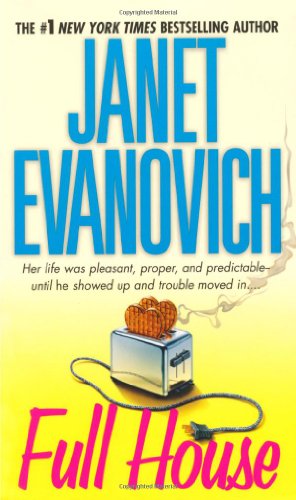
Full House introduces the tone more than the central Max-and-Jamie partnership. It focuses on Billie Pearce, a divorced mother, and Nick Kaharchek, a polo instructor with a wealthy background and a complicated family circle. The book has the bright, exaggerated feel of Evanovich’s early romantic comedies: mismatched attraction, domestic disruption, class contrast, and a cast that keeps pushing the central couple into increasingly messy situations. It is lighter and more romance-driven than the later Max Holt entries, but it helps establish the “Full” brand of humor, chemistry, and farce.
The series shifts more clearly into its best-known shape with Full Tilt, where Jamie Swift and Max Holt come forward. Jamie owns a newspaper in Beaumont, and Max is a rich, confident, high-energy figure whose presence tends to bring trouble as quickly as attraction. Their relationship becomes the main thread that holds the later books together. Jamie is practical, hardworking, and tied to the local world of news, community, and rumor. Max, by contrast, has money, nerve, and a tendency to move through life as if every problem can be solved by charm, force, or a very expensive gadget.
That contrast gives the series its rhythm. Jamie wants stability and control; Max pulls her into danger, spectacle, and romantic uncertainty. The mysteries are often lively rather than grim, involving murders, suspicious accidents, strange schemes, and Beaumont residents behaving badly. Evanovich and Hughes use the newspaper setting well because it places Jamie at the center of local information. She hears things, notices patterns, and becomes involved when personal drama turns into something more serious.
Books such as Full Speed, Full Blast, Full Bloom, and Full Scoop continue that blend of romance, mystery, and slapstick energy. The mysteries give each installment forward motion, but the real appeal lies in the recurring cast and the comic instability of Beaumont itself. Secondary characters often steal scenes, especially when romantic entanglements, family interference, and local eccentricity overlap with the crime plot. The tone is closer to breezy romantic caper than hard-edged detective fiction.
The Full/Max Holt series also fits naturally beside Evanovich’s broader bibliography. Readers who know Stephanie Plum will recognize the taste for outrageous situations, fast dialogue, romantic tension, and characters who treat danger with a mix of alarm and stubborn humor. The Full books are not as long-running or as deeply identified with one heroine as the Plum novels, but they share Evanovich’s gift for turning crime-adjacent chaos into entertainment.
The series is best understood as a romantic comedy mystery sequence with a slightly uneven opening because Full House functions differently from the later Jamie-and-Max books. Once Max Holt and Jamie Swift become the center, the books settle into a recognizable pattern: attraction under pressure, trouble in Beaumont, and a cast of characters who make every investigation more complicated than it needs to be.