
Below is the complete list of Fannie Flagg’s Elmwood Springs books in order. For this series, the chronological reading order is the same as the order of publication.
Publication Order of Elmwood Springs Books



About Elmwood Springs
Elmwood Springs, Missouri, is the kind of town where neighbours know one another’s business, family stories survive for generations, and even the smallest events can become memorable local legends. Fannie Flagg brings this fictional Midwestern community to life through an affectionate blend of humour, nostalgia, family drama, and social observation. Spanning four novels published between 1998 and 2016, the Elmwood Springs series follows interconnected families whose experiences reflect the changing character of small-town America.
Unlike a conventional saga centred on one protagonist, Elmwood Springs features an ensemble of characters whose lives intersect across different decades. Some achieve professional success far from home, while others remain deeply rooted in the town’s familiar routines. Their contrasting experiences allow Flagg to explore the tension between ambition and belonging, particularly as American society undergoes significant cultural and economic changes.
The series begins with Welcome to the World, Baby Girl! (1998), which follows Dena Nordstrom, a successful television journalist whose glamorous professional life conceals serious emotional difficulties. Working in the competitive world of network broadcasting during the 1970s, Dena struggles with unresolved questions about her childhood and the mysterious disappearance of her mother.
Her search for answers eventually draws attention to her family connections in Elmwood Springs, where relatives including the eccentric Elner Shimfissle offer a striking contrast to her demanding career. Through Dena, Flagg examines the emotional cost of success and the difficulty of escaping a complicated family history.
Standing in the Rainbow (2002) broadens the narrative into a multigenerational portrait of Elmwood Springs, beginning in the years following World War II. One of its central figures is Dorothy Smith, affectionately known as Neighbor Dorothy, whose popular radio programme broadcasts news, recipes, conversations, and everyday observations from her home.
Dorothy’s broadcasts provide a distinctive window into community life, connecting residents through shared experiences while reflecting the optimism and uncertainties of postwar America. Her family, particularly her imaginative son Bobby, becomes part of a larger cast that includes Norma and Macky Warren, the unpredictable Aunt Elner, and numerous other memorable townspeople.
The novel follows changing social customs, political developments, and personal fortunes across several decades. Flagg balances nostalgia with an awareness that progress brings both opportunities and losses, particularly as traditional community institutions adapt to modern life.
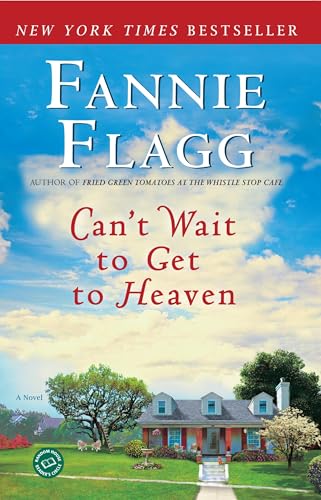
Elner Shimfissle moves to the centre of the story in Can’t Wait to Get to Heaven (2006). An energetic octogenarian with an unconventional outlook, Elner experiences an extraordinary incident after falling from a ladder while picking figs. Her apparent death and unexpected return send Elmwood Springs into confusion, prompting friends and relatives to reconsider their beliefs about life, mortality, and happiness.
Elner’s experiences introduce a more overtly spiritual dimension to the series, but Flagg maintains her characteristic humour. The novel celebrates everyday kindness and the often-overlooked influence of ordinary people on those around them.
The final novel, The Whole Town’s Talking (2016), approaches Elmwood Springs from a remarkably expansive perspective. Beginning with its founding by Swedish immigrant Lordor Nordstrom in the late nineteenth century, the story traces the community through successive generations, following marriages, births, deaths, and the transformations brought by modern American life.
One of its most distinctive features is Still Meadows, the town cemetery, where deceased residents continue observing and discussing events among the living. This imaginative device allows Flagg to explore memory and mortality while preserving the conversational humour that defines her fictional community.
The novels are connected through recurring families, familiar locations, and relationships that develop over time. Characters who occupy supporting roles in one story may become central elsewhere, while the town itself gradually acquires a history extending beyond any individual’s lifetime.
Although Flagg is strongly associated with Southern fiction, Elmwood Springs is set in Missouri rather than her native Alabama. Its Midwestern setting nevertheless reflects many of her familiar interests: eccentric neighbours, resilient women, intergenerational friendships, and the importance of community traditions.
The series also differs from her Whistle Stop novels, which centre on a separate fictional Alabama community. Both share an affectionate interest in small-town life, but their characters and principal narratives are distinct.
Across more than a century of fictional history, Elmwood Springs becomes a portrait of how communities preserve their identities through changing generations. Flagg’s humour softens difficult subjects without dismissing them, while her attention to overlooked individuals gives ordinary experiences lasting significance. The result is a warmly observed saga about friendship, remembrance, and the countless personal stories that collectively shape a town’s history.