
Below is the complete list of Peter Grainger’s DC Smith Investigation books in order. For this series, the chronological reading order is the same as the order of publication.
Publication Order of DC Smith Investigation Books


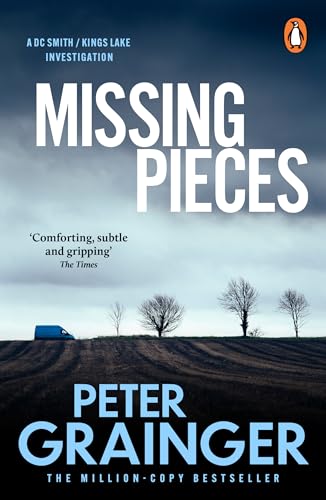


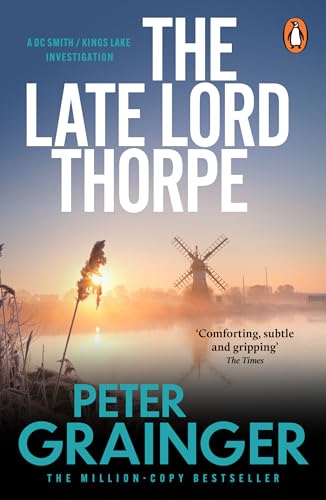

About DC Smith Investigation
Peter Grainger’s DC Smith Investigation series is a character-driven British police procedural centered on Detective Sergeant DC Smith, an experienced investigator working at Kings Lake Central in a fictionalized corner of Norfolk. The novels combine carefully constructed mysteries with an unusually strong interest in the everyday realities of police work: colleagues learning one another’s habits, disagreements over procedure, career ambitions, changing leadership, and the gradual accumulation of trust that comes from working difficult cases together.
An Accidental Death introduces Smith after his return from leave. What initially appears to be the accidental drowning of a young man becomes increasingly suspicious when the post-mortem and witness accounts fail to fit comfortably together. Smith investigates alongside trainee detective Christopher Waters, establishing one of the relationships that becomes increasingly important as the series develops.
Smith is deliberately different from the more flamboyant detectives common to crime fiction. He is older, observant, dryly funny, musically inclined, and generally more interested in understanding people than demonstrating his cleverness. Grainger gives him a complicated past without turning personal damage into his defining characteristic. His experience allows him to recognize when an investigation is moving in the wrong direction, but he is neither infallible nor immune to the institutional pressures surrounding police work.
That restraint shapes the mysteries themselves. But for the Grace, Luck and Judgement, and Persons of Interest move through very different cases, yet Grainger rarely relies on extreme violence or implausible twists for momentum. Interviews, inconsistencies, relationships between suspects, overlooked details, and patient reconsideration of evidence matter. The reader spends substantial time inside the investigative process rather than simply waiting for a final revelation.
The Norfolk setting contributes heavily to the atmosphere. Kings Lake is fictional, but the novels draw on the landscapes of East Anglia: villages, fields, waterways, coastal communities, marshes, and towns where people may have known one another for decades. The Rags of Time makes particularly effective use of the rural environment as Smith begins questioning whether an apparently straightforward murder investigation has identified the right suspect. Time and Tide places another investigation against the saltmarshes while also confronting substantial change within Kings Lake Central itself.
Personal continuity becomes increasingly significant as the sequence progresses. Christopher Waters develops from the relatively inexperienced officer introduced in the first novel into a capable detective with his own professional judgment. Other colleagues likewise gain histories, relationships, and distinct personalities rather than existing merely to assist Smith. Careers advance, circumstances change, and decisions in earlier novels remain part of the characters’ lives.
That development becomes crucial in A Private Investigation. Smith is approaching retirement, and his changing relationship with police work forces the series to confront something many long-running detective stories avoid: an investigator cannot remain in the same job indefinitely. Grainger allows Smith’s age and accumulated experience to alter the direction of the books rather than resetting him at the beginning of every case.
The apparent division between the DC Smith Investigation books and the later Kings Lake Investigation novels can therefore be misleading. Grainger treats them as one continuing sequence. After Smith’s circumstances change, characters such as Chris Waters and other members of Kings Lake Central move further into the foreground, while Smith remains connected to the larger fictional world.
That continuity is one of the series’ greatest strengths. The individual crimes provide satisfying procedural mysteries, but the longer story concerns people changing over years of work together. Friendships deepen, younger detectives mature, senior officers move on, and Kings Lake Central evolves around them. Reading the DC Smith books as a progression therefore offers more than a succession of cases: it reveals the slow development of an unusually believable police community.