
Below is the complete list of Barbara Kingsolver books in order. For each series, the chronological reading order is the same as the order of publication.
Publication Order of Greer Family Books


Publication Order of Standalone Books




Publication Order of Short Story Collections Books


Publication Order of Non-Fiction Books


Publication Order of Faber Stories Books

Publication Order of Children’s Books

About Barbara Kingsolver
Barbara Kingsolver is an American novelist, essayist, poet, and environmental thinker whose work has made her one of the most respected literary voices of contemporary American fiction. Born in Annapolis, Maryland, and raised in rural Kentucky, she writes with a deep attachment to place, especially Appalachia, the American Southwest, and communities shaped by land, labor, poverty, migration, and ecological pressure. Her fiction is often socially engaged, but its power comes from character rather than argument: families under strain, women seeking autonomy, children forced to grow too quickly, and communities trying to survive systems that do not value them.
Kingsolver studied biology before becoming a full-time writer, and that scientific background runs through much of her work. Nature in her books is not scenery; it is habitat, economy, memory, danger, and moral context. Plants, insects, rivers, farms, forests, weather, and animals shape human lives as actively as politics or family history. That ecological intelligence helps distinguish her from many writers of domestic or social fiction. She sees human beings as part of larger living systems, and her novels often ask what happens when those systems are damaged by greed, ignorance, or indifference.
Her debut novel, The Bean Trees, appeared in 1988 and introduced several of her enduring concerns: young women making unconventional families, Southwestern landscapes, migration, motherhood, and moral responsibility. Animal Dreams and Pigs in Heaven continued to develop her interest in kinship, community, Native identity, adoption, and the complicated obligations created by love. These early novels are accessible and character-rich, but they also show Kingsolver’s refusal to separate private life from political reality.
Her widest literary breakthrough came with The Poisonwood Bible, a multivoice novel about an American missionary family in the Belgian Congo. Told through the voices of the Price women, the book examines faith, colonial arrogance, family damage, language, guilt, and survival. It remains one of her signature works because it combines intimate family tragedy with historical and political scale, showing how ideology can deform both nations and households.
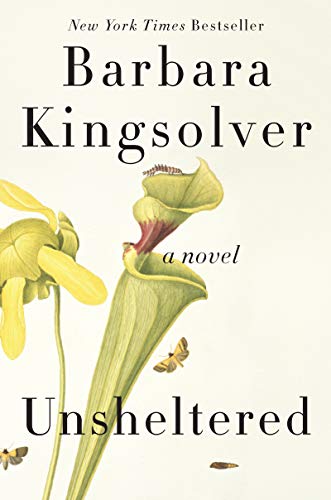
Kingsolver’s later novels widened her range while keeping her core concerns intact. Prodigal Summer braids human desire with ecological interdependence. The Lacuna moves through Mexico, the United States, art, politics, and Cold War suspicion; it won the Women’s Prize for Fiction in 2010. Flight Behavior uses a mysterious ecological event in Appalachia to examine climate change, class, media, religion, and the difficulty of recognizing crisis from inside ordinary hardship. Unsheltered links two periods of American uncertainty, asking how families survive when inherited structures—economic, political, intellectual, and literal—begin to fail.
Demon Copperhead brought Kingsolver renewed international attention. A modern Appalachian reimagining of Charles Dickens’s David Copperfield, it follows a boy born into poverty, addiction, foster care, and institutional neglect while preserving humor, anger, tenderness, and fierce narrative life. The novel won the 2023 Pulitzer Prize for Fiction and the 2023 Women’s Prize for Fiction, making Kingsolver the first writer to win the Women’s Prize twice.
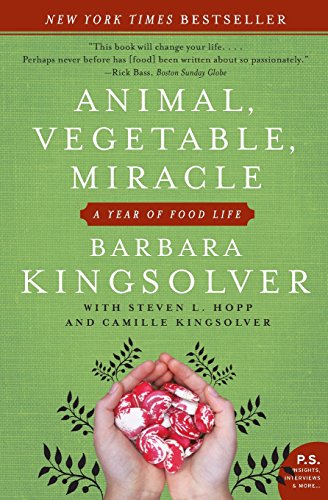
Her nonfiction, including High Tide in Tucson, Small Wonder, and Animal, Vegetable, Miracle, reflects the same moral ecology as her fiction: attention to food, land, family, citizenship, and the daily choices that connect private life to public consequence. Across her bibliography, Barbara Kingsolver’s achievement lies in making social and environmental questions feel inseparable from story. She writes with conviction, but her best work never reduces people to positions. It gives them soil, weather, hunger, memory, and voice.