
Below is the complete list of Amanda Flower books in order. For each series, the chronological reading order is the same as the order of publication.
Publication Order of Amish Candy Shop Mysteries Books


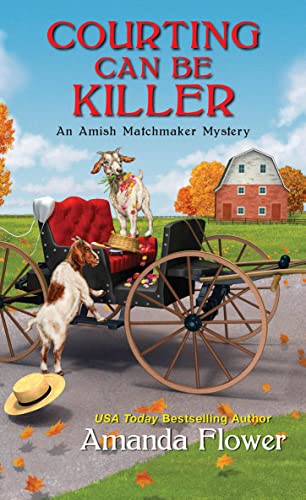
Publication Order of Amish Matchmaker Mysteries Books





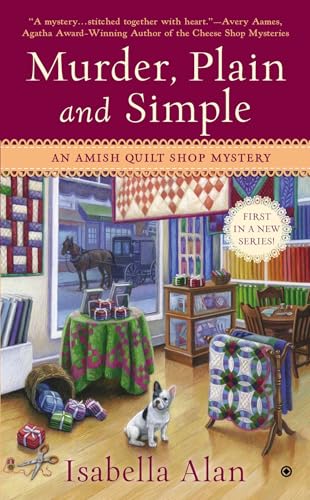
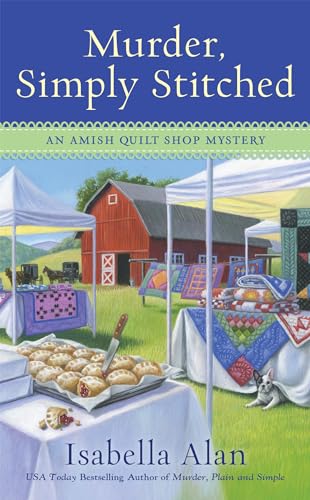
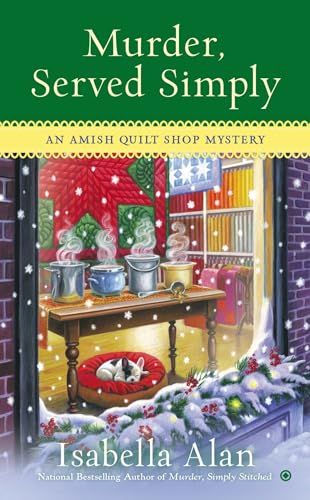
Publication Order of Amish Quilt Shop Mysteries Books
as Isabella Alan



Publication Order of Andi Boggs Books


Publication Order of Appleseed Creek Books


Publication Order of Emily Dickinson Mystery Books


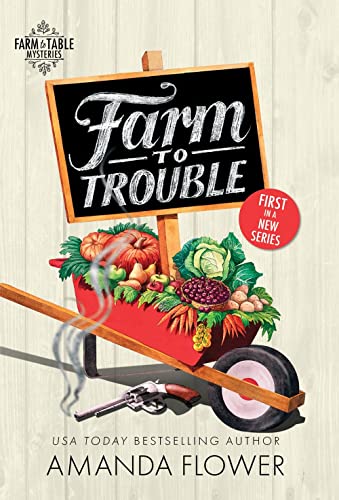
Publication Order of Farm To Table Mysteries Books


Publication Order of India Hayes Books


Publication Order of Katharine Wright Mysteries Books


Publication Order of Living History Museum Books


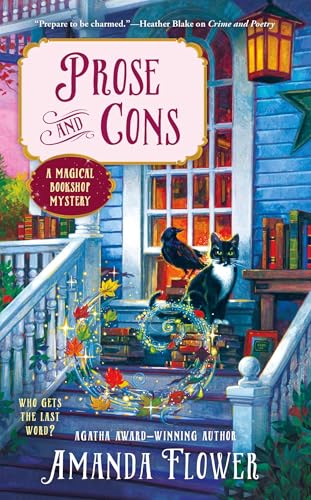
Publication Order of Magical Bookshop Mysteries Books



Publication Order of Magic Garden Mystery Books


Publication Order of Piper and Porter Mysteries Books


Publication Order of Cat Rescue Mystery Books

Publication Order of Music and Murder Mystery Books

About Amanda Flower
Amanda Flower is an American mystery author best known for cozy and traditional mysteries that combine small-town settings, distinctive professions, family relationships, and strong community life. Her bibliography includes several long-running series, among them the Amish Matchmaker Mysteries, Magical Bookshop Mysteries, Amish Candy Shop Mysteries, Piper and Porter Mysteries, and Farm to Table Mysteries. She has also written under the name Isabella Alan, particularly for the Amish Quilt Shop Mystery series.
Flower grew up in Ohio and has drawn heavily on the state’s small towns, rural communities, and Amish country for her fiction. Before becoming a full-time novelist, she worked as a librarian, a background that naturally informed several of her book-centered mysteries. Her familiarity with libraries, readers, and literary communities is especially visible in series where books, archives, or storytelling become part of the investigative framework.
Her first novel, Maid of Murder, introduced college librarian India Hayes and marked the beginning of Flower’s published mystery career. The book established many of the qualities that would recur across her work: an amateur sleuth with strong ties to her community, a crime that becomes personal, and a cast of recurring friends and relatives whose lives continue beyond the immediate investigation.
Flower gained a wider readership through her Amish-themed mysteries. The Amish Candy Shop series follows Bailey King, a chocolatier who leaves New York City for the fictional Ohio town of Harvest to help her Amish grandparents with their candy shop, Swissmen Sweets. What begins as a family obligation develops into a new life, with Bailey repeatedly becoming involved in suspicious deaths while navigating the differences between her own background and the Amish community surrounding her.
The Amish Matchmaker Mysteries are connected to that world but focus on a different protagonist and occupation. Millie Fisher returns to Harvest and becomes involved in matchmaking as well as murder investigations. The series allows Flower to revisit familiar characters and locations while shifting the point of view and emphasizing different aspects of Amish community life.
Her Magical Bookshop Mysteries move into paranormal cozy territory. The series centers on Violet Waverly and Charming Books, a seemingly enchanted bookstore in Cascade Springs, New York. Books and literary clues play directly into the mysteries, and the shop’s unusual abilities give the series a whimsical element while the underlying plots still follow recognizable cozy-mystery structure.
Flower has also explored historical mystery. The Emily Dickinson Mysteries feature the poet Emily Dickinson and her family within fictional murder investigations set in nineteenth-century Amherst, Massachusetts. Rather than simply using Dickinson as a recognizable historical name, the books draw on her household, social environment, and literary sensibility while placing her alongside invented mystery plots.
Under the pseudonym Isabella Alan, Flower wrote the Amish Quilt Shop Mystery series, beginning with Murder, Plain and Simple. The books follow Angie Braddock, who inherits her aunt’s quilt shop in Holmes County, Ohio. The series shares Flower’s broader interest in outsiders entering close communities and gradually finding a place within them, while quilting and Amish culture provide the central setting.
Her other series show similar versatility within the mystery genre. The Farm to Table Mysteries focus on food and rural life, while the Piper and Porter books introduce another investigative partnership. Across these different settings, Flower repeatedly uses occupations and hobbies not merely as decorative themes but as practical ways for her protagonists to encounter people, secrets, and motives.
Flower’s work has earned recognition within the mystery field, including Agatha Award attention, and she has built a particularly strong following among cozy readers. Her novels tend to avoid graphic violence, placing greater emphasis on puzzle solving, relationships, humor, and the disruption that murder causes within otherwise welcoming communities.
One of the defining strengths of Flower’s fiction is range within a recognizable style. Her sleuths may be chocolatiers, librarians, booksellers, matchmakers, farmers, or historical figures, but the stories consistently examine how communities respond when familiar relationships prove less trustworthy than they appear. Whether the setting is Amish Ohio, an enchanted bookstore, or nineteenth-century Massachusetts, Flower builds mysteries around the idea that knowing a place well does not necessarily mean knowing all of its secrets.