
Below is the complete list of George R.R. Martin’s Wild Cards books in order. For this series, the chronological reading order is the same as the order of publication.
Publication Order of Wild Cards Books

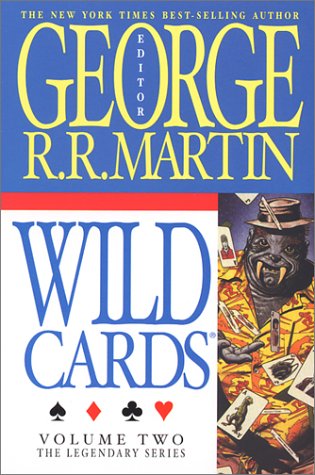


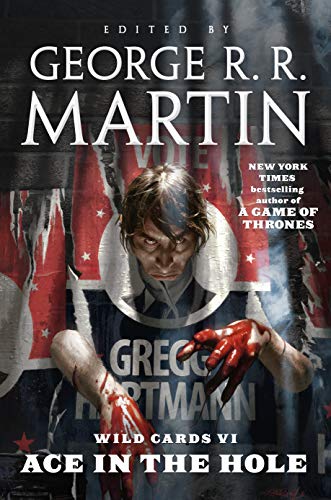


- Ghost Girl Takes Manhattan (2010)
(By Carrie Vaughn)
Ghost Girl Takes Manhattan is a 2010 release and appears as book #18 in the Wild Cards series. 

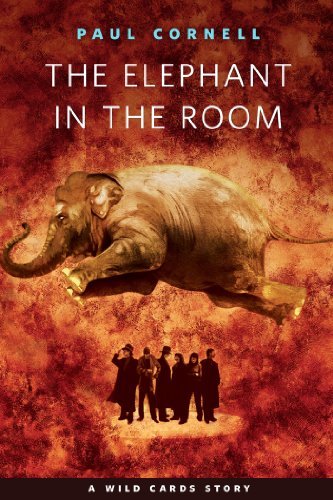


- Prompt. Professional. Pop! (2014)
(By Walter Jon Williams)
In the Wild Cards series, Prompt. Professional. Pop! is book #24 and was published in 2014. 

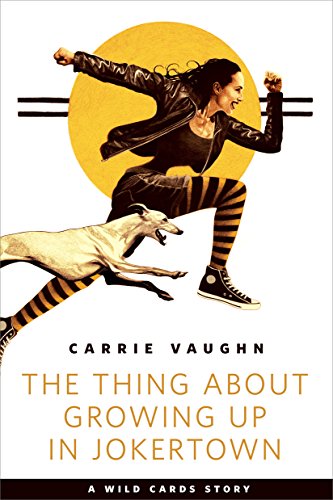
- The Atonement Tango (2017)
(By Stephen Leigh)
The Atonement Tango is a 2017 release and appears as book #28 in the Wild Cards series. 




- Ripple Effects (2021)
(By Laura J. Mixon)
In the Wild Cards series, Ripple Effects is book #39 and was published in 2021. 


Publication Order of Wild Cards: USA Triad Books
by Melinda M. Snodgrass


Publication Order of George R.R. Martin’s Wild Cards Graphic Novel Books
with Daniel Abraham
About Wild Cards
George R.R. Martin’s Wild Cards series is a long-running shared-world superhero project rather than a traditional single-author saga. Martin is best known to many readers for A Song of Ice and Fire, but Wild Cards occupies a major place in his career as an editor, worldbuilder, and collaborator. The series began in 1987 and has grown through anthologies, mosaic novels, and related stories written by a large group of authors working inside the same alternate-history universe.
The premise begins with the Wild Card virus, an alien biological weapon released over Earth after World War II. Its effects are brutally random. Most infected people die, a fate known as drawing the black queen. Some survivors become “jokers,” physically altered or mutated in ways that may make ordinary life painful, frightening, or socially isolating. A much smaller number become “aces,” gaining powers that can turn them into heroes, celebrities, criminals, political weapons, or something more complicated than any of those labels.
That setup gives Wild Cards its central strength. The series is not simply about costumed superheroes fighting villains. It is about what superhuman ability would do to history, politics, medicine, fame, prejudice, organized crime, war, and everyday life. Because the books are written by many contributors, the world can shift tone from noir to political thriller, horror, satire, spy fiction, science fiction, courtroom drama, and street-level urban fantasy without leaving the same continuity.
The earliest books, including Wild Cards, Aces High, Jokers Wild, and Aces Abroad, establish the foundation of the universe. They introduce the virus, its early impact, and the social divisions between aces, jokers, ordinary humans, and those who try to exploit or control them. These opening volumes are especially important because they show Wild Cards as an alternate history, where the existence of superpowered and visibly changed people reshapes public life across decades.
As the series develops, books such as Down and Dirty, Ace in the Hole, Dead Man’s Hand, and Jokertown Shuffle push deeper into political corruption, street conflict, celebrity culture, and the lives of characters living in Jokertown, the New York neighborhood most closely associated with joker identity. Wild Cards often works best when it treats superpowers as social facts rather than wish fulfillment. Powers may make someone famous, but they can also make them hunted, feared, addicted to attention, or trapped in a role they never chose.
Later arcs widen the scale. The Card Sharks and Black Trump books move into conspiracy and global danger, while the Tor-era revival beginning with Inside Straight introduces a new generation of characters and a more contemporary media landscape. Reality television, international crises, terrorism, celebrity branding, and public spectacle become part of the superhero conversation. That generational shift is one reason the series has continued for so long: Wild Cards can keep adapting its central idea to new political and cultural moments.
George R.R. Martin’s role is best understood as that of architect and editor rather than sole author. He created and shaped the setting, contributed stories, and guided the larger continuity, while writers such as Melinda M. Snodgrass, Walter Jon Williams, Roger Zelazny, Victor Milán, Lewis Shiner, and many others helped define its characters and eras. The project reportedly grew out of a 1980s role-playing campaign, which helps explain both its collaborative structure and its unusually large cast.
The Wild Cards series can be intimidating because of its size, but its appeal is clear. It offers a superhero universe with history, damage, politics, humor, and moral messiness built in from the start. Instead of asking only what people would do with powers, Wild Cards asks what society would do to them, and what they might become in return.