
Below is the complete list of Tui T. Sutherland books in order. For each series, the chronological reading order is the same as the order of publication.
Publication Order of Avatars Books


Publication Order of Menagerie Books


Publication Order of Pet Trouble Books






Publication Order of Pirates of the Caribbean: Dead Man’s Chest Books

Publication Order of Spirit Animals Books

Publication Order of Wings of Fire Books


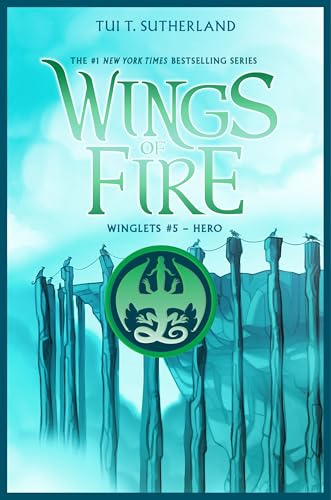
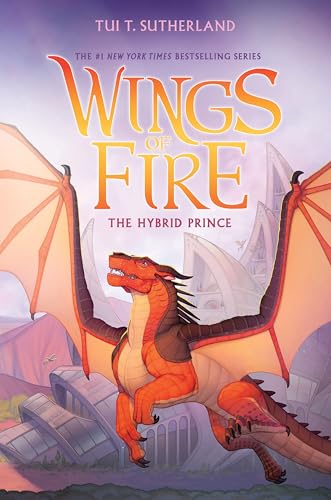
Publication Order of Wings of Fire: Legends Books


Publication Order of Wings of Fire: Winglets Books


Publication Order of Wings of Fire Graphic Novels Books


Publication Order of Wings of Fire Companion Books


Publication Order of Standalone Books

Publication Order of Children’s Books
with Emily Sollinger




Publication Order of Who Was/Is…? Books

About Tui T. Sutherland
Tui T. Sutherland is an American children’s author best known for Wings of Fire, the bestselling dragon fantasy series that made her one of the most widely read middle-grade fantasy writers of her generation. Her bibliography is larger and more varied than that single franchise suggests, stretching across animal fantasy, adventure, humor, young adult fiction, chapter books, ghostwriting, and collaborative series written under shared pen names. Still, Wings of Fire remains the center of her literary identity: a large-scale fantasy world built almost entirely around dragons, prophecy, war, family, tribe, and the difficult work of choosing peace after generations of violence.
Sutherland’s background is unusually international. She was born in Caracas, Venezuela, and spent parts of her childhood in several places before building her career in the United States. Before becoming known primarily as a novelist, she worked in children’s publishing, including editorial work, which helps explain the strong sense of structure and readability in her books. Her stories are accessible to young readers, but they rarely feel careless or thin. She tends to build clear premises, strong chapter momentum, and character voices that make large fantasy conflicts emotionally understandable.
Wings of Fire began with The Dragonet Prophecy, introducing a world divided among dragon tribes with their own habitats, abilities, customs, prejudices, and political histories. The series’ early arc follows the Dragonets of Destiny, young dragons raised under the weight of a prophecy meant to end a devastating war. As the books continue, Sutherland expands the world through new continents, new generations, different narrators, and increasingly complicated questions about power, identity, loyalty, and inherited conflict. One of the series’ strongest features is its rotating point of view: each main book allows a different dragon to carry the emotional center, giving the world a broader moral and cultural texture than a single-hero fantasy would allow.
Sutherland’s dragons are not merely humans with scales, but neither are they distant mythical creatures. They have schools, families, rivalries, secrets, fears, friendships, and political systems. The appeal of the series lies in that balance. Young readers get battles, queens, assassinations, caves, magical objects, and prophecies, but they also get recognizable struggles with belonging, self-doubt, trauma, prejudice, and the pressure to live up to a role chosen by someone else.
Beyond Wings of Fire, Sutherland co-wrote The Menagerie trilogy with her sister Kari Sutherland. That series shifts from dragon war to contemporary fantasy, following children who discover and protect a hidden reserve of mythical creatures. It is lighter in atmosphere than much of Wings of Fire but still built around secrecy, wonder, and the responsibility that comes with finding impossible things. Her Pet Trouble books show another side of her work, aiming at younger readers through stories of children and badly behaved pets.
Sutherland has also contributed to major collaborative publishing projects. As part of the Erin Hunter writing team, she worked on Seekers, the animal-fantasy series about bears, and she contributed to the Spirit Animals series. Those projects fit naturally beside her own work because they share an interest in animal perspectives, group quests, survival, and young characters learning the cost of loyalty.
Her bibliography is best understood by separating its strands: Wings of Fire as the major epic fantasy achievement; The Menagerie as a compact family collaboration; Pet Trouble and other shorter works for younger readers; and shared-name or franchise projects that show her flexibility within collaborative storytelling. Across those forms, Sutherland’s strongest gift is making fantasy feel emotionally immediate. Whether she is writing dragons, bears, mythical creatures, or ordinary children with extraordinary problems, her stories return to courage, friendship, moral choice, and the possibility that even a world shaped by old conflicts can be changed by the young.