
Below is the complete list of John Banville books in order. For each series, the chronological reading order is the same as the order of publication.
Publication Order of Philip Marlowe Books




Publication Order of Quirke Books
as Benjamin Black


Publication Order of The Revolutions Trilogy Books


Publication Order of The Cleave Trilogy Books


Publication Order of Frames: The Freddie Montgomery Trilogy Books


Publication Order of St. John Strafford Books
as Benjamin Black


Publication Order of Standalone Books







Publication Order of Short Stories/Novellas Books

Publication Order of Short Story Collections Books


Publication Order of Poetry Collections Books

Publication Order of Plays Books

Publication Order of Non-Fiction Books


Publication Order of Writer and the City Books

Publication Order of Benjamin Black Poetry Collections Books
as Benjamin Black
About John Banville
John Banville is an Irish novelist, playwright, screenwriter, critic, and crime writer whose work ranges from densely crafted literary fiction to the atmospheric detective novels he originally published as Benjamin Black. Born in Wexford, Ireland, in 1945, he has spent more than five decades exploring memory, identity, guilt, art, deception, and the unstable boundary between what people experience and what they later persuade themselves happened. His most widely celebrated novel, The Sea, won the Booker Prize in 2005.
Banville left school without attending university and worked for Aer Lingus before entering journalism. He spent many years in the Irish newspaper world, eventually serving as literary editor of The Irish Times. Journalism provided his livelihood while he developed a very different kind of prose in fiction—deliberate, highly polished, and intensely attentive to imagery and language.
His first book, the story collection Long Lankin, appeared in 1970, followed by the novels Nightspawn and Birchwood. Banville soon became known for ambitious fiction engaging with science, art, and intellectual history. Doctor Copernicus, Kepler, and The Newton Letter examine scientific figures and ideas, with Mefisto extending his fascination with mathematics and the human desire to impose order on an uncertain world.
Another important group begins with The Book of Evidence, whose narrator, Freddie Montgomery, recounts the circumstances surrounding a murder while demonstrating how unreliable confession can become when filtered through vanity and self-invention. Ghosts and Athena continue interconnected concerns with art, authenticity, desire, and moral evasion. The Book of Evidence was shortlisted for the Booker Prize, as was Shroud years later.
Banville reached his largest international audience with The Sea. Its narrator, art historian Max Morden, returns after his wife’s death to a seaside place associated with a formative childhood summer. Grief and memory gradually merge as the adult Max attempts to reconstruct events whose meaning has shifted over time. The novel’s 2005 Booker Prize victory confirmed Banville’s standing among the major literary novelists of his generation.
Alongside these literary novels runs a substantial second career in crime fiction. Beginning with Christine Falls, Banville wrote under the name Benjamin Black, introducing Quirke, a pathologist working in 1950s Dublin. Quirke’s investigations expose secrets beneath respectable institutions, wealthy families, the Catholic establishment, and postwar Irish society. Banville later abandoned the strict separation between his two authorial identities, publishing subsequent crime novels such as Snow, April in Spain, The Lock-Up, and The Drowned under his own name. Christine Falls was selected as Dublin’s One Dublin One Book choice for 2026.
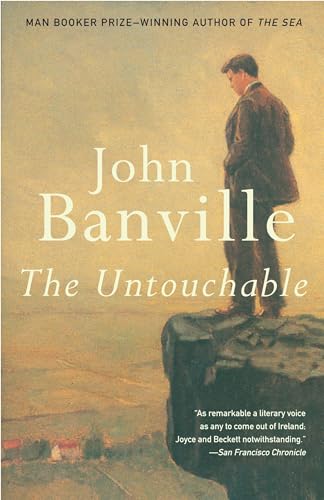
His bibliography also includes The Untouchable, The Infinities, Ancient Light, The Blue Guitar, and Mrs Osmond, which continues the story of Isabel Archer from Henry James’s The Portrait of a Lady. In The Singularities, Banville revisited characters and ideas from several earlier novels, creating an unusually self-referential meeting point within his fiction. His 2025 novel Venetian Vespers moves into fin-de-siècle Venice with a story combining literary fiction, mystery, and gothic unease.
Whether writing about murder, science, lost love, or an aging consciousness revisiting the past, Banville repeatedly returns to the unreliability of perception. His narrators may possess beautiful language, but eloquence rarely guarantees honesty. That tension—between verbal precision and human uncertainty—has become one of the most recognizable features of his work.