
Below is the complete list of Laura Lippman’s Tess Monaghan books in order. For this series, the chronological reading order is the same as the order of publication.
Publication Order of Tess Monaghan Books




Publication Order of Tess Monaghan Collections Books

About Tess Monaghan
Laura Lippman’s Tess Monaghan series follows a former newspaper reporter who gradually builds a career as a private investigator while Baltimore changes around her. Tess begins Baltimore Blues at twenty-nine, unemployed after the collapse of the newspaper where she worked and uncertain about what comes next. A small investigative favor for a rowing friend unexpectedly develops into a murder case, giving her the first indication that the reporting skills she thought she had lost a use for—research, interviewing, skepticism, and persistence—can be redirected into detective work.
Baltimore is as important to the sequence as Tess herself. Lippman uses neighborhoods, political institutions, newspapers, sports culture, restaurants, redevelopment, racial and economic divisions, and the peculiar loyalties of a city she knew intimately from her own journalism career. Tess rarely investigates crime in an abstract setting; her cases grow from specific communities and from the relationships connecting people to the city.
Charm City sends her back into the newspaper world when an article that was supposed to be withheld mysteriously appears in print, contributing to a public scandal and death. Butchers Hill draws on social-service issues as Tess searches for people who witnessed a killing years earlier, while In Big Trouble temporarily removes her from familiar territory when a message concerning an old boyfriend sends her to Texas.
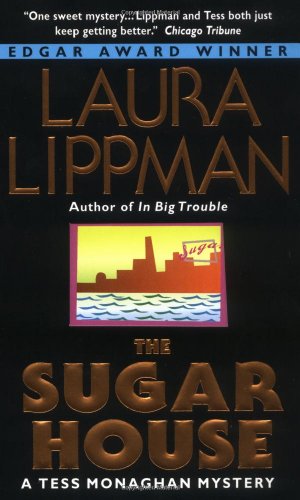
The middle novels increasingly establish Tess as a professional investigator rather than an accidental amateur. The Sugar House begins with an unidentified murder victim, and In a Strange City uses Baltimore’s famous Edgar Allan Poe tradition as the entrance to another killing. The Last Place turns toward unsolved murders, while By a Spider’s Thread gives Tess the apparently straightforward task of locating a client’s missing wife and children. No Good Deeds involves the murder of a federal prosecutor and places Tess and her longtime partner Crow in conflict with authorities prepared to exert considerable pressure to obtain information.
Crow is essential to the series’ continuity. So are Tess’s formidable friend Whitney Talbot, her extended family, and other Baltimore figures who recur as her life becomes increasingly settled. Lippman allows relationships to evolve rather than returning Tess to an unchanged private-eye existence after each investigation.
Another Thing to Fall brings a television production to Baltimore and places Tess in the unfamiliar role of protecting a young actress while accidents and threatening incidents accumulate around the set.
The Girl in the Green Raincoat takes a particularly inventive turn. Pregnant and temporarily confined to bed, Tess becomes fascinated by a woman she repeatedly observes through her window and begins investigating when the woman disappears. The novella deliberately echoes the confined-observer structure of classic suspense while advancing Tess into motherhood. HarperCollins classifies it as a Tess Monaghan title, and it sits between Another Thing to Fall and the later Hush Hush.
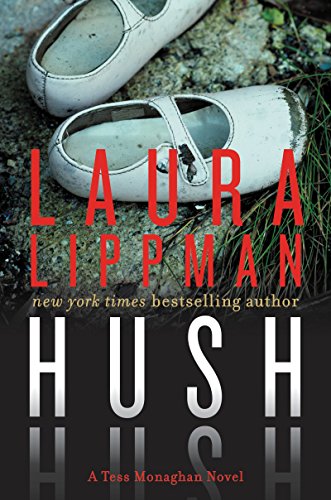
Hush Hush, published in 2015, is the latest full-length Tess Monaghan novel. By then Tess is balancing motherhood and private investigation when she takes on a disturbing case involving a woman accused years earlier of killing her infant daughter.
The sequence also extends into short fiction, several examples of which appear in Hardly Knew Her. Across the longer arc, Tess changes from an insecure former reporter improvising her first investigation into an experienced professional, partner, and mother. Baltimore changes too. That dual development gives the series its durability: the crimes reveal the city, but Tess’s accumulating relationships and history make it feel inhabited rather than merely investigated.