
Below is the complete list of Victoria Christopher Murray books in order. For each series, the chronological reading order is the same as the order of publication.
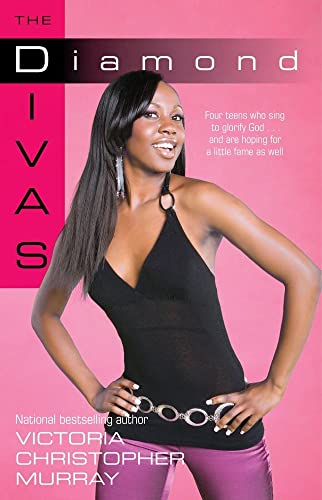
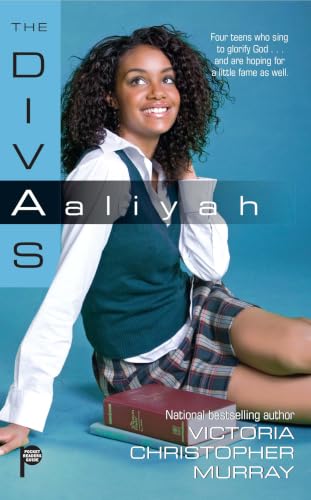
Publication Order of Divas Books


Publication Order of Jasmine Books


Publication Order of Seven Deadly Sins Books


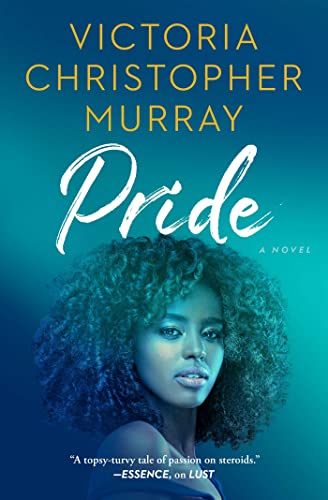
Publication Order of Temptation Books
Publication Order of Short Stories/Novellas Books

Publication Order of Standalone Books





Publication Order of Jasmine and Rachel Books
with ReShonda Tate Billingsley


About Victoria Christopher Murray
Victoria Christopher Murray is an American novelist whose career spans contemporary fiction, Christian fiction, historical fiction, and collaborative novels centered on Black women whose lives intersect with major cultural and political moments. A New York Times and USA Today bestselling author, she has written more than thirty books and is particularly known for the Jasmine Larson Bush novels, the Divas series, and her historical collaborations with Marie Benedict. Across a career lasting more than two decades, Murray has moved comfortably between dramatic contemporary storytelling and rigorously researched fiction based on real women.
Born in Queens, New York, Murray studied communication disorders at Hampton University before earning an MBA from New York University’s Stern School of Business. She initially pursued a corporate career and operated a financial-services business before turning seriously to writing. Her debut novel, Temptation, was self-published in 1997 after she struggled to secure a traditional publishing deal. Strong reader response eventually led to wider distribution and established Murray in the rapidly expanding market for African American inspirational fiction.
Faith, marriage, temptation, ambition, and the tensions within church communities became significant elements of her early work. The Jasmine Larson Bush books developed one of her most memorable recurring characters: glamorous, manipulative, ambitious, and frequently willing to rationalize questionable choices. Rather than creating an uncomplicated inspirational heroine, Murray allowed Jasmine to be deeply flawed, giving the series much of its humor and dramatic energy.
Jasmine’s world eventually intersected with that of Reverend Curtis Black, the central character created by fellow novelist Kimberla Lawson Roby. Murray and Roby collaborated on A Blessing & a Curse, bringing the two established fictional universes together. Murray has also written the Divas novels and numerous standalones dealing with friendship, marriage, betrayal, family relationships, professional ambition, and the pressures surrounding public success.
A major shift in her career came through historical fiction. With Marie Benedict, Murray co-wrote The Personal Librarian, based on Belle da Costa Greene, the extraordinarily influential librarian and curator who directed J. P. Morgan’s collection while concealing her African American heritage and passing as white. The novel became a major bestseller and introduced many readers to a woman whose importance in the worlds of rare books and collecting had long been overshadowed by the powerful men around her.
Murray and Benedict continued their collaboration with The First Ladies, focused on the remarkable friendship between Eleanor Roosevelt and Mary McLeod Bethune. Rather than treating Bethune simply as a supporting figure in Roosevelt’s political life, the novel emphasizes her achievements as an educator, civil-rights leader, presidential adviser, and institution builder. Their later collaboration, A Pair of Aces, turns to prosecutor Eunice Carter and New York madam Polly Adler, women from profoundly different backgrounds whose lives intersected with the campaign against organized crime.
Historical fiction has allowed Murray to extend concerns already present in her contemporary novels. Power, race, gender, reputation, ambition, faith, and the difference between public image and private reality remain central, but they are now examined through documented lives constrained by the social structures of their eras.
Murray’s bibliography is therefore best understood as a career with two strong but connected strands. Her contemporary novels established her through vivid recurring characters, relationship drama, and African American faith communities, while her later historical work has brought overlooked Black women into the foreground of nationally significant stories. In both forms, she remains particularly interested in women exercising agency within systems that expect them to behave differently.