
Below is the complete list of Barbara Park books in order. For each series, the chronological reading order is the same as the order of publication.
Publication Order of Don’t Make Me Smile Books


Publication Order of Skinnybones Books

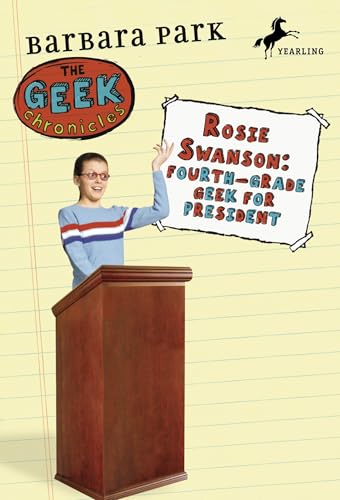
Publication Order of Geek Chronicles Books

Publication Order of Junie B. Jones Books


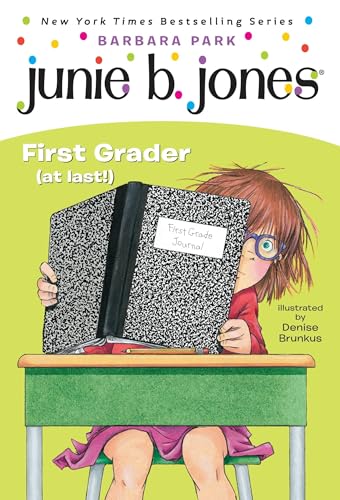
Publication Order of Junie B., First Grader Books


Publication Order of Junie B. Jones Non-Fiction Books


Publication Order of Standalone Books


- Psssst!It’s Me…the Bogeyman (1998)
Psssst!It’s Me…the Bogeyman was published in 1998 and is listed as book #6 in the Standalone series. 
Publication Order of Short Story Collections Books

Publication Order of Picture Books


About Barbara Park
Barbara Park was an American children’s author best known as the creator of Junie B. Jones, one of the most recognizable early chapter-book characters of the late twentieth and early twenty-first centuries. Her books helped define a kind of comic school fiction built around voice: Junie B.’s grammar, exaggerations, misunderstandings, stubborn confidence, and emotional honesty made her feel less like an adult’s idea of a child and more like a child speaking at full volume. Park’s work has remained widely read because it captures the drama of ordinary childhood with unusual comic precision.
Born Barbara Lynne Tidswell in Mount Holly, New Jersey, in 1947, Park did not begin with an obvious path toward becoming a famous children’s writer. She studied secondary education and initially expected to teach, but writing became the profession that shaped her life. Her early books were not Junie B. Jones titles; before that series began, she had already written standalone children’s and middle-grade novels such as Don’t Make Me Smile, Skinnybones, Beanpole, Buddies, and The Kid in the Red Jacket. These books show her interest in children facing embarrassment, family changes, social awkwardness, school pressure, and the humiliations that adults sometimes underestimate.
The Junie B. Jones series began in 1992 with Junie B. Jones and the Stupid Smelly Bus, illustrated by Denise Brunkus. The book introduced Junie B. as a kindergartener with a huge personality, a sharp sense of injustice, and a talent for turning small school events into emotional catastrophes. Park’s great achievement was giving that character a voice that was funny without being polished into adult cleverness. Junie B. mishears, misnames, interrupts, judges, complains, boasts, and worries in ways that feel chaotic but carefully controlled on the page.
As the series progressed, Junie B. moved from kindergarten into first grade, allowing Park to keep the character recognizable while changing her daily world. Teachers, classmates, family members, school routines, friendships, rivalries, holidays, and classroom anxieties all became material for compact comic stories. The books are short and accessible, but their appeal is not only their reading level. Park understood that young children often experience ordinary situations with enormous intensity. A bus ride, a loose tooth, a party, a new teacher, a classroom job, or a disagreement with a friend can feel as consequential as any grand adventure.
Park’s humor sometimes attracted criticism from adults who objected to Junie B.’s grammar, attitude, or behavior. That controversy is also part of the series’ history. For many children, however, those same qualities were exactly what made the books inviting. Junie B. was not a model student designed to instruct politely; she was impulsive, imperfect, funny, and frequently wrong. Park trusted young readers to enjoy the gap between what Junie B. thinks is happening and what is actually happening, which gives the books much of their comic intelligence.
Outside Junie B. Jones, Park wrote books for somewhat older readers that could be more serious in tone. Mick Harte Was Here deals with grief after the death of a sibling, while The Graduation of Jake Moon focuses on family strain and Alzheimer’s disease. These works reveal a broader emotional range than the Junie B. books alone might suggest.
Barbara Park died in 2013, but her bibliography continues to introduce new readers to the comedy, insecurity, stubbornness, and wonder of childhood. Her lasting contribution is not simply that she created a bestselling series, but that she respected how funny and overwhelming being a child can be.