
Below is the complete list of Sadeqa Johnson books in order. For each series, the chronological reading order is the same as the order of publication.
Publication Order of Standalone Books




Publication Order of Blaze Collection Books




About Sadeqa Johnson
Sadeqa Johnson is an American novelist whose career has evolved from contemporary women’s fiction into historically grounded stories about Black women, family, motherhood, race, survival, and the choices people make within systems designed to restrict them. A New York Times bestselling author, she is best known for Yellow Wife and The House of Eve, novels that brought her a wide readership through their combination of intimate character drama and overlooked episodes of American history.
Originally from Philadelphia, Johnson studied theater before entering the publishing industry. Her first job after college was as a publicist at Scholastic, where she worked on books by authors including J. K. Rowling, Walter Dean Myers, and Ruby Bridges. She later became a public relations manager and worked with prominent writers such as Bebe Moore Campbell and Amy Tan. Years spent promoting other authors gave Johnson firsthand familiarity with publishing before she began building a career around her own fiction.
Her debut novel, Love in a Carry-On Bag, was independently published in 2012. The contemporary story follows a long-distance relationship complicated by careers, expectations, and the difficulties of sustaining intimacy across separate lives. Johnson continued in contemporary women’s fiction with Second House from the Corner and And Then There Was Me, writing about marriage, infidelity, motherhood, friendship, identity, and women confronting the difference between outwardly successful lives and their private emotional realities.
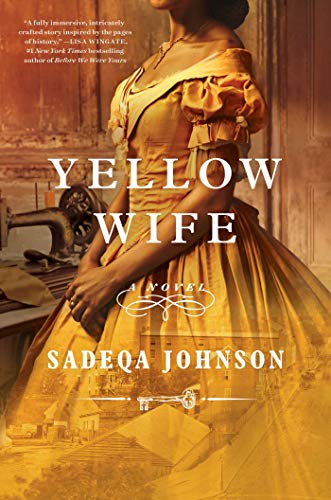
A significant change came with Yellow Wife in 2021. Inspired by the history of the notorious slave-trading complex known as Lumpkin’s Jail or the Devil’s Half Acre in Richmond, Virginia, the novel follows Pheby Delores Brown, an enslaved woman forced into circumstances where survival requires intelligence, compromise, and painful sacrifice. The book marked Johnson’s move into historical fiction and won the Library of Virginia’s Literary People’s Choice Award while also becoming a Hurston/Wright Legacy Award finalist.
The House of Eve developed that historical direction further. Set primarily in 1950s Philadelphia and Washington, D.C., it follows Ruby Pearsall and Eleanor Quarles, two Black women whose very different lives become connected through pregnancy, motherhood, class, colorism, and the limited choices available to women of their era. Part of the novel’s inspiration came from Johnson’s own family history: her grandmother became pregnant as a teenager and gave birth to Johnson’s mother under circumstances that were hidden within the family for years. The book became an instant New York Times bestseller and a Reese’s Book Club selection.
Johnson’s 2026 novel Keeper of Lost Children expands her historical range beyond the United States. Set in the aftermath of World War II, it examines the lives of displaced children in Germany and the people attempting to reunite families fractured by war. The novel continues Johnson’s interest in motherhood and belonging while placing those themes inside the enormous humanitarian crisis created by wartime displacement.
Across both her contemporary and historical fiction, Johnson repeatedly writes about women forced to reconsider the identities assigned to them as wives, mothers, daughters, lovers, or members of particular communities. Family secrets often carry consequences across generations, while motherhood is presented as complex rather than idealized—capable of producing devotion, sacrifice, resentment, protection, and difficult moral choices.
Johnson now lives near Richmond, Virginia. Her six novels show a clear progression from contemporary relationship fiction toward historical novels rooted in Black experience and lesser-known histories, while retaining the same underlying concern with women attempting to claim agency when family, society, and circumstance have already tried to define their lives.