
Below is the complete list of Philippa Gregory books in order. For each series, the chronological reading order is the same as the order of publication.
Publication Order of Plantagenet and Tudor Books






Publication Order of Cousins’ War Books
Publication Order of Tudor Court Books
Publication Order of Fairmile Books


Publication Order of Order Of Darkness Books



Publication Order of Tradescant Books


Publication Order of Wideacre Books


Publication Order of Standalone Books


Publication Order of Short Story Collections Books

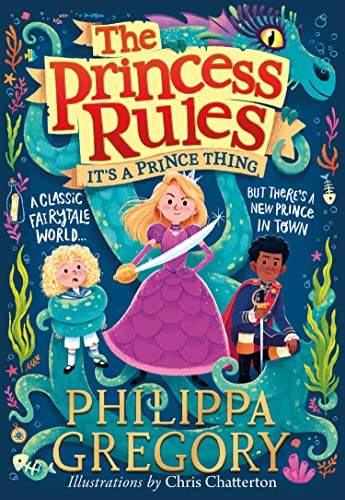
Publication Order of The Princess Rules Books


Publication Order of Children’s Books

Publication Order of Non-Fiction Books


About Philippa Gregory
Philippa Gregory is a British historical novelist best known for fiction that places women at the center of major episodes in English and European history. Her international breakthrough, The Other Boleyn Girl, brought renewed popular attention to Mary Boleyn and the court of Henry VIII and became one of the defining historical novels of her career. Gregory’s extensive bibliography includes the Tudor Court and Plantagenet novels, later brought together as the Plantagenet and Tudor series, as well as the Wideacre trilogy, the Tradescant series, the Order of Darkness novels, the Fairmile series, and numerous stand-alone works.
Born in Nairobi, Kenya, in 1954, Gregory moved with her family to England as a child. She studied history at the University of Sussex and later earned a PhD in eighteenth-century literature from the University of Edinburgh. Her academic training became important to her approach to historical fiction, particularly her interest in examining familiar periods through figures—often women—whose experiences received less attention in traditional historical narratives.
Gregory’s first novel, Wideacre, was published in 1987. Set in eighteenth-century England, it introduced Beatrice Lacey and began a dark family saga concerned with land, inheritance, gender, class, and obsession. The Favoured Child and Meridon completed the Wideacre trilogy and established Gregory as a historical novelist years before the Tudor fiction that would make her internationally famous.
Her Tradescant novels, Earthly Joys and Virgin Earth, moved into the seventeenth century through the lives of the real gardeners John Tradescant the Elder and Younger. The books connect horticulture and exploration with the political upheavals surrounding the Stuart monarchy and the English Civil War, demonstrating Gregory’s willingness to build historical fiction around figures outside royal courts.
The greatest expansion of her readership came with The Other Boleyn Girl in 2001. Told through Mary Boleyn, the novel portrays the ambitions of the Boleyn family and the dangerous competition surrounding Henry VIII. Gregory continued exploring Tudor women in novels such as The Queen’s Fool, The Virgin’s Lover, The Constant Princess, The Boleyn Inheritance, and The Other Queen.
She subsequently turned to the Wars of the Roses and the women associated with the rival Plantagenet houses. Beginning with The White Queen, centered on Elizabeth Woodville, these novels include The Red Queen, The Lady of the Rivers, The Kingmaker’s Daughter, The White Princess, and The King’s Curse. Gregory later organized her Plantagenet and Tudor novels into a broader historical sequence spanning generations of dynastic conflict.
Her fiction has also moved well beyond royal England. The Order of Darkness series, written for younger readers, follows characters through fourteenth-century Europe amid religious anxiety and apparent supernatural events. The Fairmile series begins with Tidelands in seventeenth-century England and expands across the Atlantic, using the fortunes of one family to examine civil war, commerce, social mobility, slavery, and colonial America.
Gregory’s novels have frequently been adapted for film and television. The Other Boleyn Girl received major screen adaptations, while The White Queen, The White Princess, and The Spanish Princess inspired interconnected television productions drawing from several of her novels.
Her interpretation of historical figures has sometimes generated debate, particularly where the requirements of dramatic historical fiction extend beyond what surviving evidence can establish. Gregory’s central contribution, however, has been her sustained focus on how dynastic politics affected women whose marriages, pregnancies, inheritances, and family alliances could carry national consequences.
Across a career spanning several historical periods, Gregory has repeatedly approached famous events from the side of the people who had to live with their consequences. Kings may determine the conventional chronology, but in her fiction queens, daughters, wives, widows, servants, and ambitious outsiders frequently provide the perspective through which history becomes personal.