
Below is the complete list of Laura Lippman books in order. For each series, the chronological reading order is the same as the order of publication.
Publication Order of Tess Monaghan Books




Publication Order of Tess Monaghan Collections Books

Publication Order of Standalone Books





Publication Order of Short Stories/Novellas Books


- Waco 1982 (2013)
Waco 1982 is a 2013 release and appears as book #18 in the Short Stories/Novellas series.
Publication Order of Short Story Collections Books


Publication Order of Non-Fiction Books

- The Summer of Fall (2023)
Published in 2023, The Summer of Fall is listed as book #2 in the Non-Fiction series.
Publication Order of Akashic Drug Chronicles Books

Publication Order of Akashic Noir Books


Publication Order of Mysterious Profiles Books
Publication Order of Bibliomysteries Books
Publication Order of Hush Books


About Laura Lippman
Laura Lippman is an American crime novelist and former newspaper reporter whose work ranges from the long-running Tess Monaghan private-investigator series to psychologically intricate standalone novels about memory, family, obsession, class, gender, and the stories people tell to protect themselves. Baltimore has been central to much of her fiction, but Lippman’s real subject is often the gap between a city’s public image and the private lives hidden behind it. Her books have won many of crime fiction’s major honors, and in 2025 the Mystery Writers of America named her a Grand Master.
Born in Atlanta in 1959, Lippman grew up primarily in Columbia, Maryland. Journalism was part of her family background: her father, Theo Lippman Jr., worked for The Baltimore Sun, while her mother was a school librarian. Lippman studied journalism at Northwestern University’s Medill School and subsequently worked as a newspaper reporter, including for the San Antonio Light and The Baltimore Sun.
She began writing novels while still working full time as a journalist. Baltimore Blues, published in 1997, introduced Tess Monaghan, a former newspaper reporter who becomes a private investigator. Tess offered Lippman a way to transform her knowledge of Baltimore, reporting, police work, politics, neighborhoods, and local institutions into crime fiction without simply reproducing her own career.
The Tess Monaghan novels developed into Lippman’s principal series, beginning with Baltimore Blues and continuing through books such as Charm City, Butchers Hill, In a Strange City, By a Spider’s Thread, and Another Thing to Fall. Tess evolves substantially across the sequence rather than remaining a permanently unattached detective, and her changing relationships and responsibilities become part of the books’ continuity. The Girl in the Green Raincoat, originally serialized, offers a particularly compact variation on the character, while Hush Hush returned to Tess after a longer gap between full-length novels.
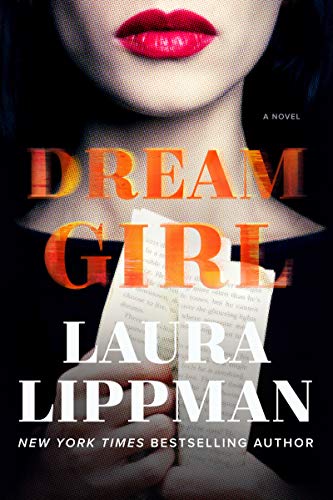
Lippman gradually built an equally important career outside the series. Every Secret Thing examines the aftermath of a child’s murder through two women who had themselves been convicted of killing a child years earlier. What the Dead Know begins when a woman claims to be one of two sisters who disappeared decades before, turning identity and memory into the core mystery. Other standalones—including The Most Dangerous Thing, Sunburn, Dream Girl, and Prom Mom—combine noir traditions with shifting perspectives, unreliable narratives, and characters whose versions of the past are rarely neutral.
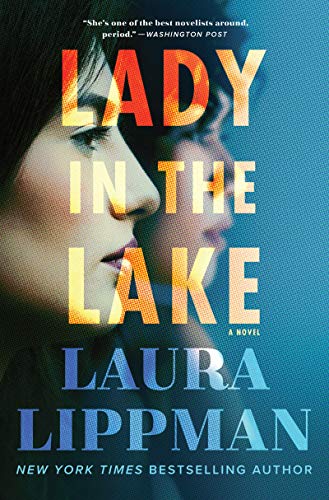
Lady in the Lake places a woman attempting to reinvent herself in 1960s Baltimore against the deaths of two women whose cases receive very different levels of public attention. The novel was later adapted as an Apple TV+ limited series. Every Secret Thing was also adapted for film.
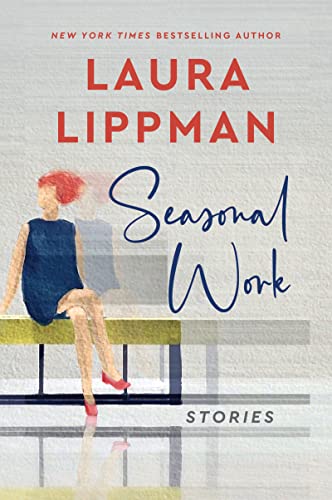
Lippman’s short fiction has appeared in collections including Hardly Knew Her and Seasonal Work. Her 2025 novel Murder Takes a Vacation follows an older woman whose European holiday becomes entangled with murder and criminal intrigue, bringing a lighter, travel-mystery energy to themes of reinvention and underestimated women that have appeared throughout her career.
Across both series and standalones, Lippman rarely treats crime as an isolated puzzle. Murder exposes class divisions, family loyalties, professional ambition, prejudice, and the unequal value society assigns to different victims. Her journalism gave her an instinct for asking who controls the accepted version of events; her fiction repeatedly demonstrates how dangerous that control can become.