
Below is the complete list of Jeffrey Archer books in order. For each series, the chronological reading order is the same as the order of publication.
Publication Order of Kane and Abel Books


Publication Order of Clifton Chronicles Books


Publication Order of Detective William Warwick Books




Publication Order of Standalone Books




Publication Order of Short Stories/Novellas Books



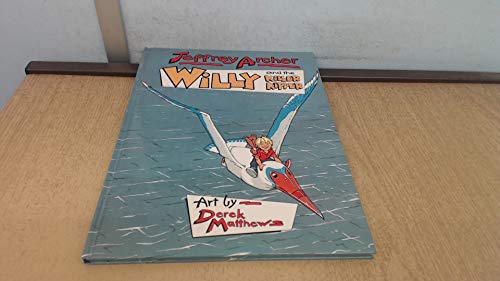
Publication Order of Children’s Books



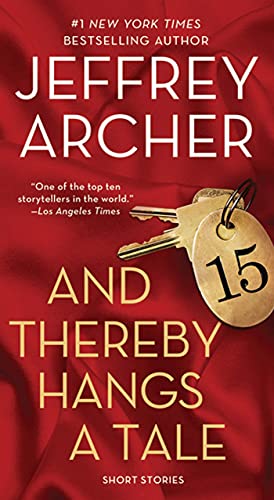
Publication Order of Short Story Collections Books




Publication Order of Non-Fiction Books

Publication Order of A Prison Diary Non-Fiction Books


Publication Order of Little Kingdoms Books


About Jeffrey Archer
Jeffrey Archer is an English novelist, short-story writer, playwright, and former politician whose career has combined bestseller fiction with one of the most public and controversial lives in modern British letters. Born in London in 1940 and raised in Somerset, Archer first became widely known through politics, serving as a Conservative Member of Parliament before turning a financial crisis into the beginning of a long writing career. His debut novel, Not a Penny More, Not a Penny Less, appeared in 1976 and established the storytelling pattern that would define much of his fiction: ambition, reversal, rivalry, wealth, betrayal, courtroom or institutional pressure, and a final twist designed to change how the reader sees the game.
Archer’s major breakthrough came with Kane and Abel, the 1979 novel that remains his signature work. Built around the parallel lives of William Lowell Kane and Abel Rosnovski, it turned personal ambition into a sweeping rivalry shaped by class, immigration, money, and revenge. The book’s scale, pace, and clean narrative drive made it central to Archer’s reputation as a popular storyteller rather than a literary stylist in the narrower sense. He is a writer of momentum: short chapters, clear stakes, sharply staged confrontations, and plots that invite readers to keep turning pages.
His fiction often returns to institutions of power. Banks, auction houses, Parliament, courts, prisons, newspapers, police departments, schools, and old families all appear as arenas where private ambition becomes public conflict. Archer’s characters are frequently strivers, heirs, frauds, rivals, idealists, or opportunists, and his strongest plots depend on the tension between reputation and reality. He is less interested in interior subtlety than in the dramatic machinery of choice and consequence.
The Clifton Chronicles, beginning with Only Time Will Tell, gave Archer one of his most expansive later successes. Across seven novels, the series follows Harry Clifton, Emma Barrington, and their families through decades of British social, political, and business life. It blends family saga, historical backdrop, inheritance drama, and cliff-hanger plotting, showing Archer’s instinct for serial storytelling on a broad canvas. The Clifton books also led naturally into the William Warwick novels, because Warwick begins as a fictional character created within the Clifton world before receiving his own crime-and-police sequence.
The William Warwick series, beginning with Nothing Ventured, follows Warwick’s rise through the Metropolitan Police and develops across art crime, corruption, organized criminality, promotion, marriage, and professional rivalry. Archer has described the sequence as “not a detective story, but a story about a detective,” a useful distinction because the books are as interested in Warwick’s career progression as in individual cases. The series concluded with End Game in 2025, the eighth William Warwick novel.
Archer’s bibliography also includes short-story collections such as A Quiver Full of Arrows and A Twist in the Tale, where his fondness for irony and reversal appears in compressed form. His prison diaries, written after his conviction for perjury, form a separate nonfiction strand and remain inseparable from the public complexity of his reputation. Archer’s life has included literary success, political ambition, scandal, imprisonment, and return, all of which have kept him visible beyond the fiction itself.
His official catalogue lists a broad body of work across novels, short stories, prison diaries, plays, children’s books, and other writing, while Adam & Eve, scheduled for October 2026, has been announced as his final novel. Archer’s enduring appeal lies in direct narrative confidence. He writes stories built for propulsion, competition, secrets, and payoff, using the old-fashioned pleasures of plot with unusually durable commercial force.