
Below is the complete list of Jeffrey Archer’s Clifton Chronicles books in order. For this series, the chronological reading order is the same as the order of publication.
Publication Order of Clifton Chronicles Books


About Clifton Chronicles
Jeffrey Archer’s Clifton Chronicles is a seven-novel family saga built around secrets of birth, class ambition, inheritance, politics, war, business, loyalty, and revenge. Beginning with Only Time Will Tell and ending with This Was a Man, the series follows Harry Clifton, Emma Barrington, and the people connected to them across much of the twentieth century. It is one of Archer’s most sustained works, using the machinery of the multigenerational saga—hidden parentage, contested fortunes, marriages, betrayals, elections, boardroom battles, and courtroom-style confrontations—to keep one family’s private history tied to wider public change.
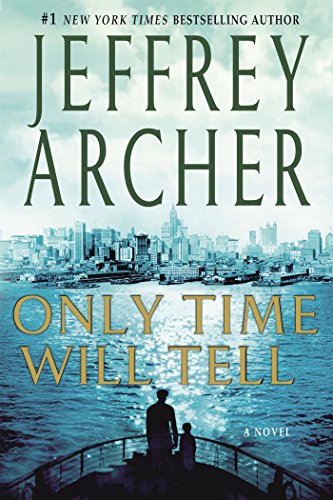
The first novel, Only Time Will Tell, establishes the central mystery of Harry Clifton’s identity. Harry grows up in Bristol, the son of Maisie Clifton, a hardworking woman determined to give him a better life. His talent, friendships, and education bring him into the orbit of the wealthy Barrington family, whose shipping empire and social position contrast sharply with Harry’s working-class origins. Archer uses the early book to build one of the series’ recurring tensions: personal merit against inherited privilege, and love against the secrets families preserve to protect power.
Harry and Emma Barrington become the emotional center of the sequence. Their relationship is shaped not only by affection but by the consequences of the past, especially the question of Harry’s parentage and the long shadow cast by Hugo Barrington. Around them, Archer builds a wide cast that includes Giles Barrington, Sebastian Clifton, Lady Virginia Fenwick, Maisie, Old Jack Tar, and others whose choices keep reshaping the family’s fortunes. Some characters act from loyalty, others from ambition or malice, but nearly all are tied into the series’ central concern with reputation and consequence.
The books move steadily through changing historical circumstances. War, postwar reconstruction, shipping, banking, publishing, politics, Cold War pressures, and social mobility all affect the characters’ lives. Archer does not write the series as dense historical fiction in the documentary sense. Instead, history functions as a stage on which family decisions become more dramatic. A private lie can affect a company; a company battle can affect a marriage; a political victory can expose an old wound.
Publication order is essential for the Clifton Chronicles because the novels are tightly cumulative. Each book ends with major unresolved tension, and each sequel picks up the emotional and practical consequences. The Sins of the Father, Best Kept Secret, Be Careful What You Wish For, Mightier Than the Sword, and Cometh the Hour all depend on what the previous books have revealed or concealed. This is not a loose series of standalones. It is one continuous narrative built on cliff-hangers, reversals, and long-delayed reckonings.
One of the series’ most effective devices is the shifting point of view. Archer often allows the same period or event to be seen through different characters, creating tension between what one person believes and what another knows. That structure suits his strengths as a plot-driven storyteller. He is interested in the moment when information changes hands, when a document is found, when a witness speaks, when a vote turns, or when an old assumption collapses.
The Clifton Chronicles also connect to Archer’s later William Warwick novels in an unusual way: Warwick begins as a fictional detective created by Harry Clifton before becoming the lead of his own separate series. That link gives the Clifton books a place not only as a family saga, but as a bridge within Archer’s wider bibliography.
The series endures because it delivers old-fashioned storytelling with confidence. Its pleasures are not subtle minimalism but momentum, rivalry, secrets, and payoff. Archer turns the Clifton and Barrington families into engines of drama, showing how one generation’s choices can echo through marriages, careers, fortunes, and children who inherit battles they did not begin.