
Below is the complete list of Agatha Christie’s Hercule Poirot books in order. For this series, the chronological reading order is the same as the order of publication.
Publication Order of Hercule Poirot Books









Publication Order of Hercule Poirot Short Stories/Novellas Books




- Christmas Adventure (1923)
Published in 1923, Christmas Adventure is listed as book #47 in the Hercule Poirot series. 





- The Chess Problem (1927)
The Chess Problem is a 1927 release and appears as book #58 in the Hercule Poirot series. 
- The Third-Floor Flat (1929)
The Third-Floor Flat was first published in 1929; within the Hercule Poirot series, it is listed as book #60. 


- The Cretan Bull (1939)
The Cretan Bull was first published in 1939; within the Hercule Poirot series, it is listed as book #70. - The Stymphalean Birds (1939)
The Stymphalean Birds was published in 1939 and is listed as book #71 in the Hercule Poirot series. - The Lernean Hydra (1939)
Published in 1939, The Lernean Hydra is listed as book #72 in the Hercule Poirot series. - The Apples of Hesperides (1940)
The Apples of Hesperides is a 1940 release and appears as book #73 in the Hercule Poirot series. - The Flock of Geryon (1940)
In the Hercule Poirot series, The Flock of Geryon is book #74 and was published in 1940. - The Horses of Diomedes (1940)
The Horses of Diomedes was first published in 1940; within the Hercule Poirot series, it is listed as book #75. - The Augean Stables (1940)
The Augean Stables was published in 1940 and is listed as book #76 in the Hercule Poirot series. - The Erymanthian Boar (1940)
Published in 1940, The Erymanthian Boar is listed as book #77 in the Hercule Poirot series. - The Arcadian Deer (1940)
The Arcadian Deer is a 1940 release and appears as book #78 in the Hercule Poirot series. - The Capture of Cerberus (1947)
In the Hercule Poirot series, The Capture of Cerberus is book #79 and was published in 1947. 







Publication Order of Hercule Poirot Collections Books


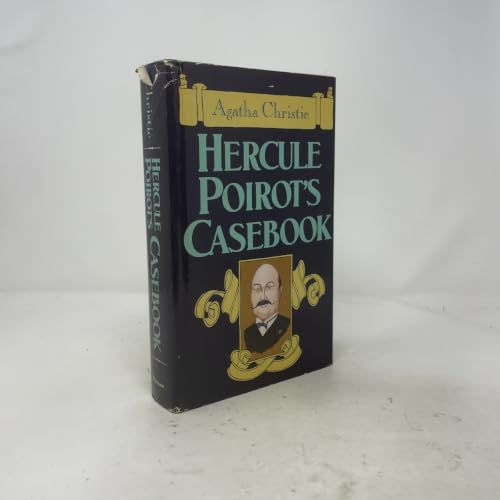


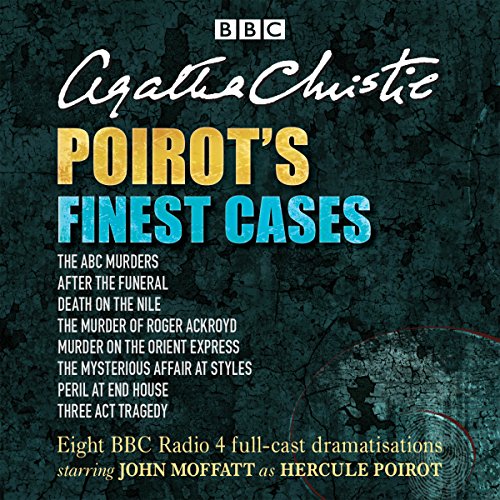


- The Grey Cells of Mr. Poirot (2019)
The Grey Cells of Mr. Poirot was first published in 2019; within the Hercule Poirot series, it is listed as book #105.
About Hercule Poirot
Agatha Christie’s Hercule Poirot books are the backbone of her career and one of the great long-form achievements in detective fiction. Poirot first appears in The Mysterious Affair at Styles and remains with Christie across decades of writing, ending with Curtain, a final case written much earlier and held back until near the end of her life. That publication history alone is a good reminder that Poirot is not just a recurring detective used whenever Christie needed a familiar name. He is a full career-spanning creation, and publication order matters because it lets readers watch both the character and Christie’s handling of him evolve over time.
Poirot is instantly recognizable: the immaculate appearance, the symmetry, the vanity, the formal manners, the famous moustaches, and above all the conviction that the mind is the true instrument of detection. What separates him from many later fictional detectives is that he rarely depends on physical daring or procedural grind. He solves crimes by understanding disorder in human nature while insisting on order in thought. The “little grey cells” are not a gimmick. They are the series’ governing principle. Poirot listens, observes, compares, and waits for vanity, fear, jealousy, greed, or wounded pride to reveal themselves.
One of the pleasures of reading the Poirot books in order is seeing how flexible Christie made him. In some novels he is at the center from the first page, conducting the investigation openly and confidently. In others he arrives later, almost as a force of clarification entering a world already clouded by suspicion and self-deception. He can function in country houses, on trains, in hotels, on archaeological digs, in seaside resorts, in London drawing rooms, and abroad. That range is part of why the series never feels trapped in one repetitive formula. Christie uses Poirot to explore different kinds of settings and social worlds while keeping the same central intelligence intact.
Publication order also matters because the books show Christie becoming increasingly daring with structure. The early Poirot novels establish the basic pleasures of clue, suspect, alibi, and final revelation. As the series develops, Christie grows bolder. Some of the most famous Poirot books are memorable not simply because the killer is surprising, but because the entire form of the mystery is being bent in unexpected ways. She plays with narration, with assumptions about guilt, with shared responsibility, with stage-managed appearances, and with how much the reader thinks a detective story is allowed to do. Poirot is the ideal guide for those experiments because he is both theatrical and rigorous enough to carry them.
Captain Hastings also matters to the series, especially in the earlier books. He gives Poirot a useful contrast: warmer, more conventional, often slower to see what is in front of him, and therefore an excellent measure of the reader’s own assumptions. Their partnership helps define the early tone of the series, though Poirot later works with a wider range of companions, officials, and clients. Reading in order makes those shifts more satisfying, because it becomes clear that Christie is not simply repeating one detective-and-sidekick arrangement forever.
Another reason publication order is rewarding is tonal change. The early books often carry more overt lightness and puzzle energy. Later Poirot novels can feel stranger, sadder, or more morally complicated. Christie never abandons clarity, but she increasingly allows darkness into the series: spiritual emptiness, wartime shadows, corruption beneath respectability, and the idea that solving a crime does not always restore the world to moral comfort. By the time you reach the late books, Poirot can seem less merely amusing and more poignant, a man of order moving through a century that has become harder to set right.
For readers who already have the list above, the best way to think about the Hercule Poirot books is as more than a chain of classic mysteries. Read in publication order, they become the record of Christie’s greatest fictional instrument at work: a detective who turns vanity, logic, manners, and psychological insight into one of literature’s most enduring methods of discovering the truth.