
Below is the complete list of Heather Graham’s Harrison Investigation books in order. For this series, the chronological reading order is the same as the order of publication.
Publication Order of Harrison Investigation Books


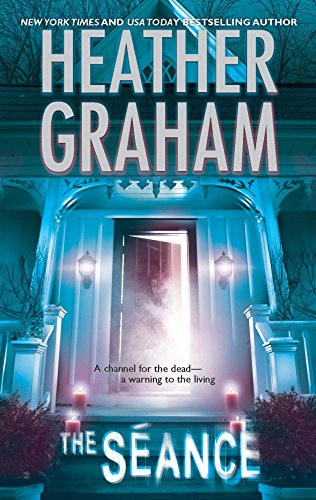


About Harrison Investigation
Heather Graham’s Harrison Investigation series is an early paranormal romantic-suspense sequence built around Adam Harrison and the investigators, researchers, and psychically sensitive people who work with him on cases involving hauntings, unexplained deaths, historic crimes, and apparently supernatural events. The books predate Graham’s much larger Krewe of Hunters series and anticipate many of the elements she would later develop there: ghosts as witnesses, old buildings with violent histories, romance under pressure, and investigations in which the supernatural may be real but human motives still have to be uncovered.
Adam Harrison provides the organizational center. Wealthy, intelligent, and deeply interested in phenomena that conventional investigators tend to dismiss, he assembles people with different abilities and areas of expertise rather than relying on one standard investigative method. Some are skeptical, some possess psychic sensitivity, and others approach cases through history, research, or practical detective work. That mixture allows Graham to keep the series balanced between paranormal possibility and rational inquiry.
The books generally move to a new central couple and location rather than following one protagonist through every case. Haunted houses, historic estates, theaters, old battlefields, family properties, and other places with long memories become natural settings for the mysteries. A death in the present may echo something that happened decades or centuries earlier, and the people living with the consequences often do not understand the full history of the place around them.
That structure gives the series a strong historical element even when the main action is contemporary. Graham frequently uses local legends, architecture, old documents, family stories, and buried crimes to build the mystery. Ghosts can sometimes reveal fragments of what happened, but those revelations are incomplete. The investigators still have to determine who among the living has motive, opportunity, and reason to manipulate the fear surrounding the haunting.
Romance is integrated directly into the suspense. Characters may be forced to work with someone they do not fully trust, or attraction may develop while both are trying to understand whether the threat around them is supernatural, criminal, or both. Because the central couple changes from book to book, each installment has its own emotional arc while Adam Harrison and the broader investigative network provide continuity.
The series is also important within Graham’s bibliography because of what came after it. Krewe of Hunters, launched years later, takes a similar basic idea and expands it into a formal FBI unit populated by agents with paranormal sensitivities. Harrison Investigation is smaller and more intimate by comparison, but many of the same narrative interests are already present: the dead can provide clues, history can remain dangerously unfinished, and extraordinary experiences do not remove the need for disciplined investigation.
For that reason, Harrison Investigation works best as its own paranormal-suspense sequence while also serving as a clear precursor to Krewe of Hunters. Readers familiar with Graham’s later work will recognize the approach immediately, but the earlier books retain a more compact structure built around Adam Harrison’s circle rather than a large federal team.
What gives the series its identity is Graham’s insistence that supernatural evidence and human crime can coexist. A ghost may be real, a haunting may have genuine roots in the past, and yet someone living may still be exploiting fear, concealing murder, or trying to protect a secret. Harrison’s investigators succeed because they are willing to consider both possibilities at once.