
Below is the complete list of Bob Ross books in order. For each series, the chronological reading order is the same as the order of publication.
Publication Order of Joy of Painting Books

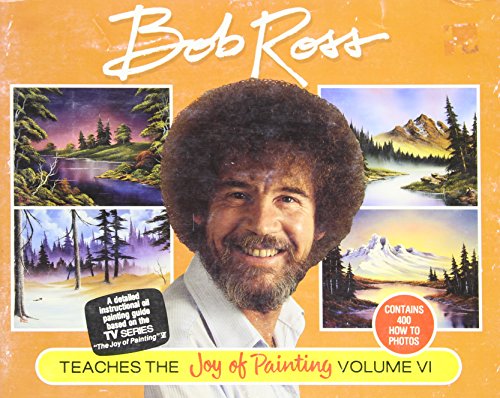
- The Joy of Painting Volume 2 (1984)
Published in 1984, The Joy of Painting Volume 2 is listed as book #2 in the Joy of Painting series. 






Publication Order of Short Stories/Novellas Books

Publication Order of Collections Books


Publication Order of Bob Ross Art Books
- Experience the Joy of Painting With Bob Ross (1984)
Experience the Joy of Painting With Bob Ross was published in 1984 and is listed as book #1 in the Bob Ross Art series. 


- Experience The Joy of Painting Volume X (2023)
Experience The Joy of Painting Volume X was first published in 2023; within the Bob Ross Art series, it is listed as book #5.
Publication Order of Non-Fiction Books




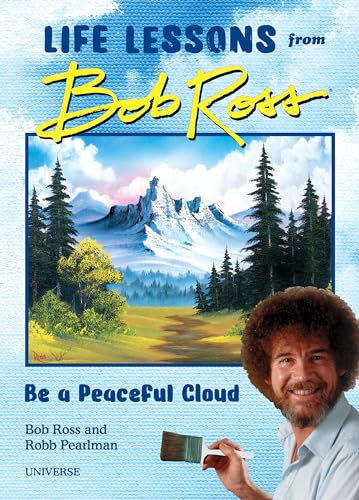


Publication Order of My First Bob Ross Books Books
with Robb Pearlman
- Bob Ross: My First Book of Colors (2020)
Bob Ross: My First Book of Colors was published in 2020 and is listed as book #1 in the My First Bob Ross Books series. - Bob Ross: My First Book of Nature (2022)
Published in 2022, Bob Ross: My First Book of Nature is listed as book #2 in the My First Bob Ross Books series. 
About Bob Ross
Bob Ross was an American painter, art instructor, and television personality whose calm teaching style turned landscape painting into an unusually accessible form of popular entertainment. Born Robert Norman Ross in Daytona Beach, Florida, in 1942, he became internationally recognizable through The Joy of Painting, the public television program on which he created complete landscapes while explaining each step in reassuring, conversational language. His snow-covered mountains, forests, lakes, cabins, clouds, and “happy little trees” became inseparable from his public image, but his larger achievement was convincing inexperienced viewers that painting was something they could attempt themselves.
Painting was not Ross’s first career. He spent roughly two decades in the United States Air Force and rose to the rank of master sergeant before leaving military service in 1981. His years stationed in Alaska exposed him to mountains, snow, forests, and wilderness scenery that would later dominate much of his artwork. After leaving the Air Force, he pursued art more seriously and developed his use of the wet-on-wet oil-painting method, in which fresh layers of paint are applied over still-wet underlayers. The technique allowed landscapes to take shape rapidly and became perfectly suited to television, where Ross needed to complete a painting within a single short program.
The Joy of Painting reached public television audiences in 1983 and continued through 1994. Ross worked directly at the canvas rather than presenting art history or abstract theory, demonstrating how broad brushes, palette knives, layered colors, and simple repeated techniques could produce convincing natural scenery. More than four hundred episodes were recorded, and his deliberately encouraging manner became as important as the paintings. Mistakes were treated as opportunities to alter the landscape, reinforcing Ross’s belief that creativity did not require perfection.
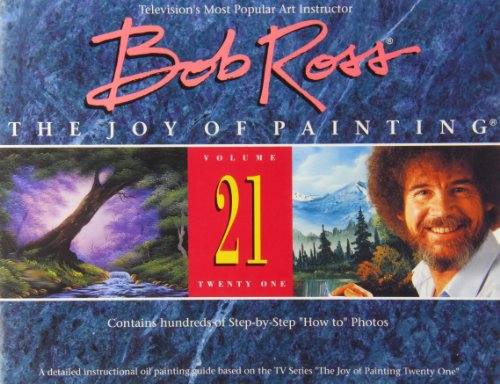
His books developed from the same instructional philosophy. The principal Joy of Painting books correspond to the television series and contain step-by-step projects that allow painters to reproduce landscapes demonstrated on screen. The official collection extends through Series 31, with individual volumes generally presenting thirteen painting projects. More Joy of Painting gathers sixty additional projects into a larger instructional volume. These books are best understood as practical companions to Ross’s television teaching rather than conventional art-theory texts or personal memoirs; their purpose is to get the reader painting.
Ross died in 1995, but the number of books associated with his name continued to grow substantially afterward. This creates an important distinction within his bibliography. Later publications such as Happy Little Accidents: The Wit & Wisdom of Bob Ross compile his sayings and artwork, while numerous children’s books, journals, activity books, cookbooks, novelty titles, and illustrated collections use Ross’s paintings, philosophy, or licensed persona while being written or compiled by other authors. They belong to the continuing Bob Ross publishing legacy, but they should not automatically be treated as books personally written by him.
Ross’s enduring appeal ultimately rests on the same idea that shaped both his television programs and instructional books: art should feel inviting rather than intimidating. He reduced landscape painting to understandable decisions about color, shape, texture, and placement while encouraging painters to create their own variations instead of pursuing exact imitation. Decades after his final programs were recorded, that combination of practical instruction and gentle reassurance continues to define his unusual place between professional art education and popular culture.