
Below is the complete list of Beverly Cleary books in order. For each series, the chronological reading order is the same as the order of publication.
Publication Order of Henry Huggins Books


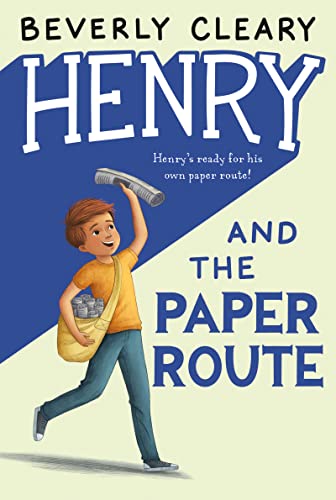


Publication Order of Ellen & Otis Books


Publication Order of Ramona Quimby Books


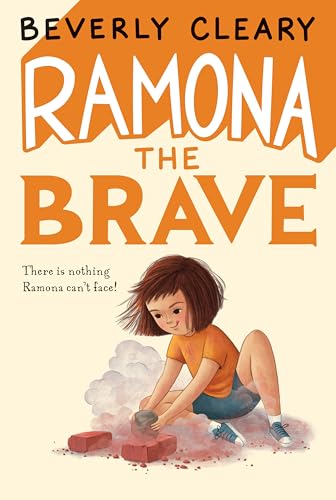



Publication Order of Ramona Quimby Non-Fiction Books

Publication Order of First Love Books


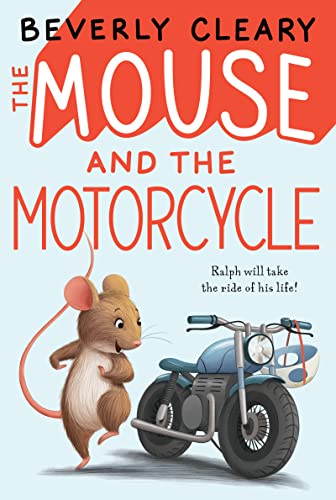
Publication Order of Ralph S. Mouse Books


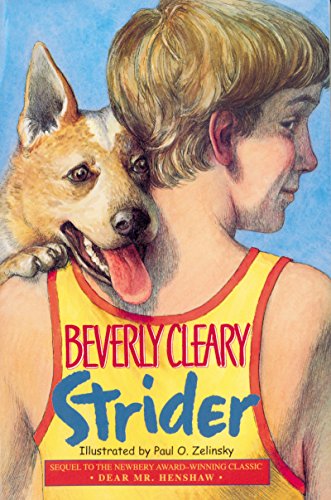
Publication Order of Leigh Botts Books

Publication Order of Standalone Books


Publication Order of Short Story Collections Books

Publication Order of Picture Books


Publication Order of Non-Fiction Books


Publication Order of Avon Camelot Books
About Beverly Cleary
Beverly Cleary was an American children’s author whose stories about Ramona Quimby, Henry Huggins, Ralph S. Mouse, and other ordinary children became classics of twentieth-century juvenile literature. Born Beverly Bunn in McMinnville, Oregon, in 1916, she built her career around an idea that was deceptively simple: children deserved funny, believable books about people who behaved and worried like the children she actually knew. Her ability to turn sibling arguments, school frustrations, neighborhood adventures, embarrassment, money problems, and family tensions into compelling stories gave her work an unusual durability.
Cleary spent her earliest years on a farm in Yamhill, Oregon, where there was no local library. Her mother helped arrange for books to be brought into the community through the state library system. After the family moved to Portland, Cleary initially struggled with reading herself, an experience that later gave her particular sympathy for children who did not immediately find pleasure in books.
She graduated from the University of California, Berkeley, in 1938 and earned a librarianship degree from the University of Washington the following year. While working as a children’s librarian in Yakima, Washington, she repeatedly encountered young readers asking for stories about children like themselves. That question reinforced an ambition she had carried since a school librarian suggested that she might someday write books for boys and girls.
Her first novel, Henry Huggins, appeared in 1950. Set in a Portland neighborhood recognizable from Cleary’s own childhood, it introduced Henry, his dog Ribsy, Beezus Quimby, and Beezus’s irrepressible younger sister Ramona. Ramona initially occupied the edges of Henry’s world, but her strong personality quickly made her one of Cleary’s most important creations.
Beginning with Beezus and Ramona and later Ramona the Pest, Cleary developed Ramona from an exuberant preschooler into an increasingly self-aware schoolgirl. The series succeeded because Cleary took childhood emotions seriously without making them solemn. Ramona could be jealous, impatient, imaginative, embarrassed, furious, affectionate, and unintentionally destructive, yet her behavior was presented from a child’s logic rather than judged exclusively through an adult perspective. The Quimby family’s changing finances, Mr. Quimby’s employment difficulties, sibling rivalry, school, and the arrival of a new baby gave the books a realistic domestic foundation.
Cleary created other memorable characters as well. Ralph S. Mouse, introduced in The Mouse and the Motorcycle, brought fantasy into her work through a mouse capable of riding a toy motorcycle, while Ellen Tebbits, Otis Spofford, Ribsy, and others expanded the neighborhood-centered world familiar to generations of readers.
Her most acclaimed novel, Dear Mr. Henshaw, took a quieter and more introspective direction. Told largely through letters and diary entries written by Leigh Botts, the book addresses divorce, loneliness, bullying, and an absent father. It won the 1984 Newbery Medal. Ramona and Her Father and Ramona Quimby, Age 8 were both named Newbery Honor books, while Cleary received numerous additional honors for her contribution to children’s literature, including recognition as a Library of Congress Living Legend.
Cleary also wrote two memoirs, A Girl from Yamhill and My Own Two Feet, documenting the childhood and early adulthood that helped shape her fiction. She died in 2021 at the age of 104.
Her bibliography is best understood through its recurring communities and characters rather than elaborate continuity. Cleary’s lasting achievement was making ordinary childhood feel worthy of literature. She understood that losing a tooth, resenting a sibling, worrying about money, surviving an embarrassing school day, or wanting adults to listen could feel enormous to a child—and she wrote those experiences with humor, precision, and respect.