
Below is the complete list of Ariel Lawhon books in order. For each series, the chronological reading order is the same as the order of publication.
Publication Order of Standalone Books


Publication Order of Blaze Books





About Ariel Lawhon
Ariel Lawhon is an American historical novelist known for transforming real people, unresolved mysteries, and dramatic episodes from the past into character-driven fiction with the momentum of a thriller. A New York Times bestselling author, she has written about subjects ranging from the disappearance of a New York judge and the destruction of the Hindenburg to the Romanovs, the French Resistance, and an eighteenth-century Maine midwife. Her books have been translated into more than thirty languages and frequently combine extensive historical research with suspense, shifting timelines, and women whose lives were more consequential than conventional histories sometimes suggest.
Lawhon established her reputation with The Wife, the Maid, and the Mistress, a historical mystery inspired by the 1930 disappearance of New York Supreme Court Justice Joseph Force Crater. Rather than centering the missing judge, she approached the mystery through three women connected to him, using their perspectives to reconstruct a world of political corruption, nightlife, marriage, and secrets. The novel demonstrated an approach that would become characteristic of her work: beginning with documented history, identifying what remains unknown, and using fiction to explore the spaces between established facts.
Flight of Dreams turned to the Hindenburg disaster of 1937. Lawhon populated the airship with characters based largely on people who actually made its final voyage, constructing a suspense story around the unanswered question of what caused the explosion. The novel reinforced her fascination with famous historical events whose familiar endings leave considerable uncertainty about what happened beforehand.
She adopted an especially ambitious narrative structure for I Was Anastasia, which examines Anna Anderson’s decades-long claim that she was Grand Duchess Anastasia, the supposedly surviving daughter of Russia’s last tsar. Lawhon moves between Anastasia Romanov and Anderson while manipulating chronology to reflect the uncertainty surrounding identity, memory, and historical evidence. The result exemplifies her willingness to use structure itself as part of the mystery rather than simply recount events in chronological order.
With Code Name Hélène, Lawhon moved from unresolved historical questions toward the documented life of Nancy Wake, the journalist and resistance operative who became one of the most decorated women of World War II. The novel follows Wake through several identities and code names as she works against Nazi occupation in France. Although dramatized as fiction, it reflects Lawhon’s increasing interest in recovering extraordinary women whose real achievements provide enough drama without requiring invented heroism.
That interest continued with The Frozen River, inspired by Martha Ballard, the eighteenth-century Maine midwife whose detailed diary preserved an unusually rich record of early American community life. Lawhon builds a murder mystery around Ballard while drawing on the documented work, family responsibilities, medical knowledge, and legal circumstances of a woman whose historical importance was later recognized by scholars. The novel became one of Lawhon’s most widely read books and a Good Morning America Book Club selection.
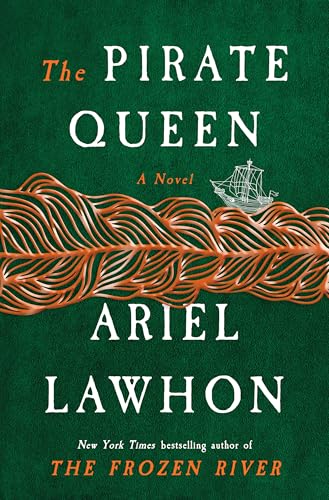
Lawhon has also collaborated with Kristina McMorris and Susan Meissner on When We Had Wings, a World War II novel about military nurses in the Pacific, and has written shorter fiction. Her forthcoming 2026 novel The Pirate Queen turns to sixteenth-century Ireland and Grace O’Malley, the formidable Gaelic leader remembered for her political power, maritime activities, and resistance to English authority.
Beyond writing novels, Lawhon co-founded the online reading community She Reads, which operated for more than a decade. She lives outside Nashville, Tennessee, with her family.
Across her bibliography, Lawhon is less interested in simply recreating historical periods than in interrogating them. Her strongest novels begin where surviving records become incomplete, disputed, or unexpectedly revealing, then place individual lives inside those gaps. Whether writing about a famous catastrophe or a woman nearly obscured by history, she consistently combines factual foundations with narrative suspense, giving her historical fiction the investigative quality that has become its clearest signature.