
Below is the complete list of Stephen Hunter books in order. For each series, the chronological reading order is the same as the order of publication.
Publication Order of Bob Lee Swagger Books




Publication Order of Earl Swagger Books


Publication Order of Swagger Collections Books

Publication Order of Ray Cruz Books

Publication Order of Standalone Books



Publication Order of Short Stories/Novellas Books

- Citadel (2016)
Published in 2016, Citadel is listed as book #2 in the Short Stories/Novellas series.
Publication Order of Non-Fiction Books


Publication Order of Swaggerverse Books
About Stephen Hunter
Stephen Hunter is an American novelist, journalist, and Pulitzer Prize-winning film critic best known for his tightly constructed thrillers and the long-running Bob Lee Swagger series. His fiction frequently combines firearms expertise, military history, political intrigue, assassination plots, and investigations built around highly skilled protagonists. Although Bob Lee Swagger is his most famous creation, Hunter has also written the related Earl Swagger novels, stand-alone thrillers, historical fiction, and nonfiction.
Hunter was born in Kansas City, Missouri, in 1946 and grew up in the Chicago area. He studied journalism at Northwestern University’s Medill School of Journalism, graduating in 1968, and then served for two years in the United States Army. His early professional career was devoted to journalism rather than fiction.
In 1971, Hunter joined The Baltimore Sun, where he worked in several editorial roles before becoming the newspaper’s full-time film critic. He spent more than two decades at the paper and developed a reputation for energetic, opinionated criticism that combined close attention to filmmaking with a strong sense of entertainment and storytelling.
He moved to The Washington Post in 1997 as film critic and later became its chief film critic. His journalism earned major recognition, culminating in the 2003 Pulitzer Prize for Criticism. Hunter had already been a Pulitzer finalist while at The Baltimore Sun, and his career as a critic gave him an unusually strong background in narrative structure, pacing, characterization, and visual action before he became primarily associated with bestselling thrillers.
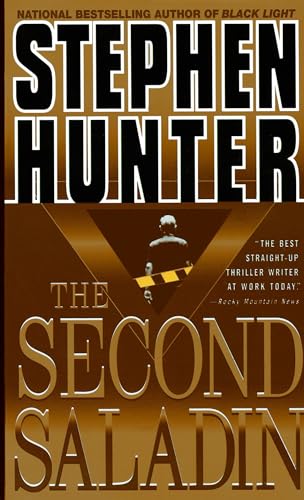
Hunter’s first novel, The Master Sniper, appeared in 1980. Several early books, including The Second Saladin and Target, established his interest in political violence, weapons, espionage, and characters operating under extreme pressure. His breakthrough fictional creation arrived with Bob Lee Swagger, a former Marine sniper introduced in Point of Impact.
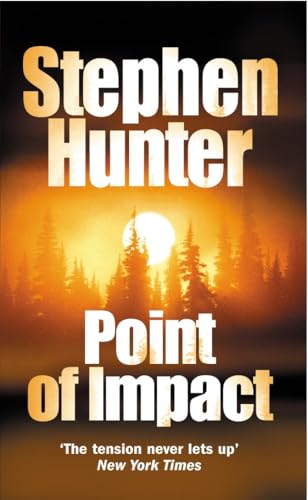
Published in 1993, Point of Impact centers on Swagger being drawn into a sophisticated conspiracy that exploits his extraordinary marksmanship and military background. The novel established many of the elements that would define Hunter’s later work: meticulous technical detail, elaborate plotting, institutional deception, and a protagonist whose competence becomes his primary means of survival.
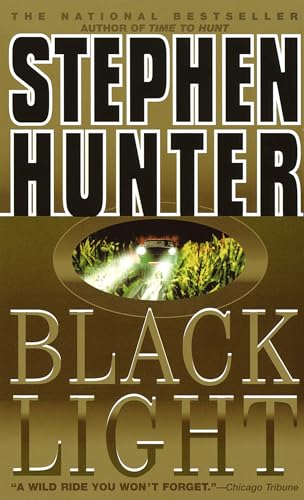
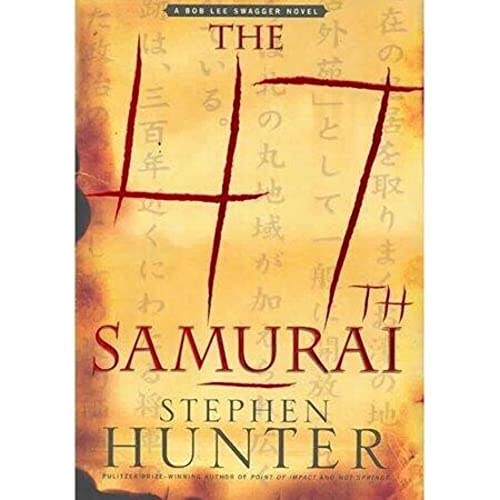
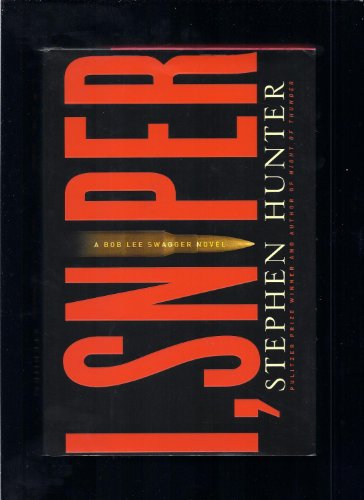
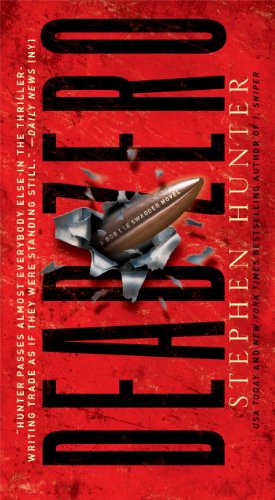
Bob Lee Swagger returned in Black Light and Time to Hunt, initially forming a trilogy before Hunter expanded the character into a much longer series. Later novels include The 47th Samurai, Night of Thunder, I, Sniper, Dead Zero, The Third Bullet, Sniper’s Honor, G-Man, and Game of Snipers. The books often place Swagger inside mysteries connected with military history, famous crimes, or unresolved events from earlier generations.
Hunter also created Earl Swagger, Bob Lee’s father, whose novels explore an earlier period of American crime and warfare. Earl is a decorated Marine veteran and lawman, and his stories broaden the Swagger family history while giving Hunter opportunities to work with mid-twentieth-century settings.
The popularity of Bob Lee Swagger expanded well beyond the novels. Point of Impact was adapted into the 2007 film Shooter, starring Mark Wahlberg, and later provided the basis for the television series Shooter, with Ryan Phillippe as Swagger.
Hunter’s nonfiction includes collections of his film criticism as well as American Gunfight, co-written with John Bainbridge Jr., an account of the 1950 assassination attempt on President Harry Truman. His familiarity with firearms is also central to his fiction, where weapons are usually treated not as generic action props but as mechanical objects with specific histories, limitations, and capabilities.
Across decades of writing, Hunter has remained closely associated with precision-driven thrillers in which technical knowledge matters as much as physical courage. Whether working with snipers, soldiers, lawmen, assassins, or historical mysteries, his fiction repeatedly examines how trained individuals survive when powerful institutions, hidden agendas, and carefully engineered violence are aligned against them.