
Below is the complete list of Lisa See books in order. For each series, the chronological reading order is the same as the order of publication.
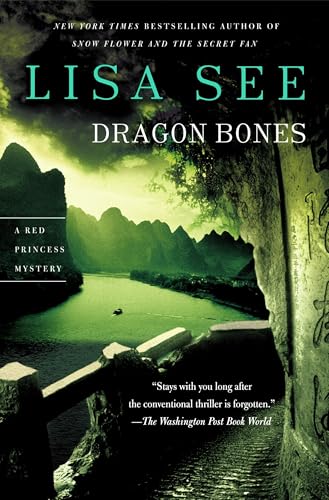
Publication Order of Red Princess Books


Publication Order of May and Pearl Books


Publication Order of Standalone Books




Publication Order of Non-Fiction Books

About Lisa See
Lisa See is an American novelist and nonfiction writer whose work is closely associated with Chinese and Chinese American history, women’s relationships, migration, family inheritance, and stories that have been marginalized or lost from conventional historical accounts. From nineteenth-century China and Japanese-occupied Shanghai to Los Angeles’s Chinatown, Jeju Island, and Ming-dynasty medicine, her novels repeatedly place women at the center of periods more commonly narrated through politics, war, or prominent men. Extensive research and intimate female relationships have become defining features of her fiction.
See was born in Paris in 1955 but grew up in Los Angeles. Her mother was novelist Carolyn See, while her paternal family connected her deeply to Los Angeles’s Chinese American community. Although she lived primarily with her mother, she spent considerable time with her father’s relatives in Chinatown. That family history eventually became the subject of her first major book, On Gold Mountain: The One-Hundred-Year Odyssey of My Chinese-American Family, published in 1995. Drawing on interviews, archival research, and travel to her ancestral village in China, See traced the history of her great-grandfather Fong See and several generations of the family.
Before becoming a full-time novelist, See worked extensively as a journalist and spent thirteen years as the West Coast correspondent for Publishers Weekly. Research undertaken for On Gold Mountain also helped inspire her first mystery novel, Flower Net. Featuring Chinese investigator Liu Hulan and American attorney David Stark, it was followed by The Interior and Dragon Bones. The trilogy combines crime and suspense with contemporary Chinese politics, cultural change, archaeology, and the complications of relationships crossing national boundaries.
A major shift came with Snow Flower and the Secret Fan. Set in nineteenth-century China, it explores the lifelong bond between Lily and Snow Flower through nu shu, the writing system historically used among women in Jiangyong County. See traveled to the region as part of her research, and the resulting novel became an international bestseller and was later adapted for film. Its success established the historical direction that would dominate much of her subsequent work.
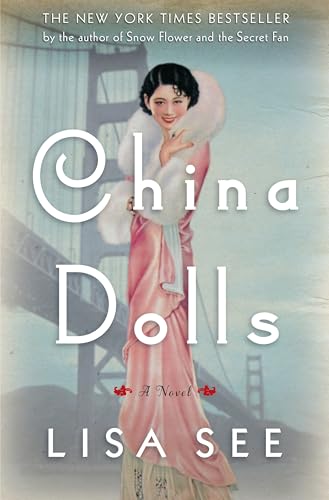
Peony in Love drew upon seventeenth-century Chinese literary culture, while Shanghai Girls and its continuation, Dreams of Joy, follow sisters Pearl and May through war, immigration, life in Los Angeles, and the upheavals of Mao-era China. China Dolls turns to Chinese American nightclub performers in San Francisco during the 1930s and 1940s.
Later novels widened See’s geographical and social range while preserving her interest in women’s communities. The Tea Girl of Hummingbird Lane explores the Akha people, tea culture, adoption, and connections between China and the United States. The Island of Sea Women centers on the haenyeo, the female diving communities of Korea’s Jeju Island, against decades of political upheaval. Lady Tan’s Circle of Women draws inspiration from Tan Yunxian, a female physician who lived during China’s Ming dynasty.
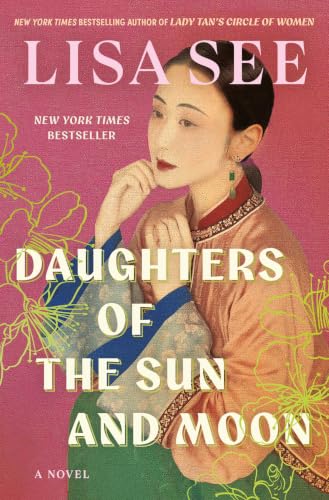
Her 2026 novel, Daughters of the Sun and Moon, returns to nineteenth-century Los Angeles, following Chinese women attempting to build lives in the turbulent city after the American Civil War.
Across See’s work, historical research is rarely an end in itself. She uses it to recover private experiences—female friendship, motherhood, secrecy, work, migration, prejudice, and survival—that official histories can leave obscured. That sustained interest in the lives hidden behind larger events gives her bibliography its strongest continuity, even as its settings span centuries and continents.