
Below is the complete list of Karen Rose books in order. For each series, the chronological reading order is the same as the order of publication.
Publication Order of Baltimore Books

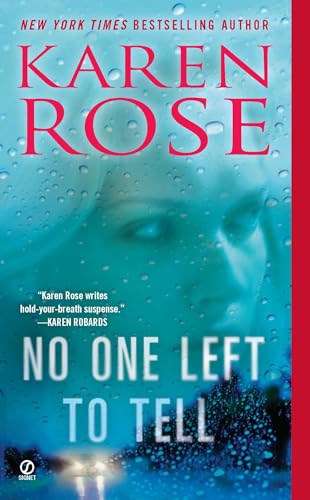


Publication Order of Chicago Romantic Suspense Books


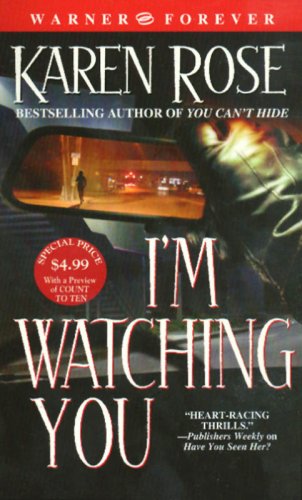

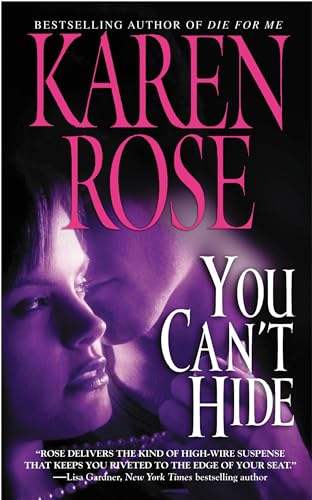

Publication Order of The Cincinnati Books


Publication Order of Minneapolis Romantic Suspense Books
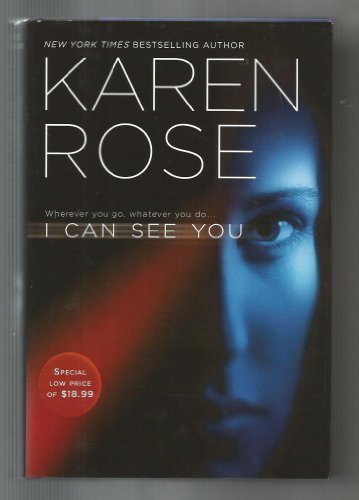
Publication Order of New Orleans Books


Publication Order of Philadelphia/Atlanta Romantic Suspense Books


Publication Order of Romantic Suspense Books

Publication Order of Sacramento Books


Publication Order of San Diego Case Files Books


Publication Order of St. Petersburg Books

Publication Order of Standalone Books

About Karen Rose
Karen Rose is an American romantic-suspense author known for intricately connected crime novels that combine serial-killer investigations, law enforcement, forensic work, family relationships, and romance. Rather than building her career around a single detective, Rose has created an expanding fictional world populated by homicide investigators, FBI agents, prosecutors, psychologists, medical professionals, survivors, and families whose supporting characters frequently become protagonists in later books. Her novels have appeared on bestseller lists in the United States, Britain, Germany, and other international markets and have been translated into more than twenty languages.
Born and raised in the Maryland suburbs of Washington, D.C., Rose met her future husband, Martin, when they were seventeen. She studied chemical engineering at the University of Maryland, and after graduation the couple moved to Cincinnati, Ohio. Rose initially pursued a career far removed from publishing, working as an engineer for a major consumer-products company. Her technical work resulted in two patents before she eventually left engineering. She later taught chemistry and physics at high-school level.
Rose began writing after scenes and characters she imagined became difficult to ignore. An enthusiastic romance reader, she found herself mentally constructing stories during a period when her work required extensive travel. Writing initially provided a private creative outlet rather than a planned career change, but the project eventually developed into her first published romantic-suspense novel.
Don’t Tell appeared in 2003 and introduced Chicago firefighter Max Hunter and Caroline Stewart, a woman hiding with her son from an abusive husband. The novel established the foundation of Rose’s continuing fictional universe: violent crimes carry serious psychological consequences, survivors remain central to the narrative rather than functioning merely as victims, and the developing romance unfolds alongside an investigation rather than interrupting it.
Her subsequent books expanded geographically while retaining connections among characters. Early novels move through Chicago and Philadelphia, with detectives such as Steven Thatcher and members of the Ciccotelli family linking separate investigations. Rose later developed recognizable location-based arcs in Baltimore, Cincinnati, Sacramento, New Orleans, and San Diego. These groupings make her unusually large bibliography easier to navigate, although the boundaries between them are deliberately permeable. A character introduced as a sibling, colleague, forensic specialist, or investigator in one city may later receive a central story elsewhere.
The Cincinnati novels begin with Closer Than You Think, pairing psychologist Faith Corcoran with FBI Special Agent Deacon Novak. The Baltimore books develop characters including prosecutor Daphne Montgomery and members of the Carter and McCloud circles, while the Sacramento sequence explores the survivors of the Eden cult and the investigators attempting to bring its remaining perpetrators to justice. Her later New Orleans and San Diego books continue the pattern of introducing new law-enforcement communities without abandoning the broader continuity built over decades.
Rose’s novels are typically substantial in length and contain several narrative viewpoints, allowing readers to follow investigators, victims, romantic leads, and often the perpetrator. She favors escalating danger, complex criminal networks, extensive investigative teamwork, and villains whose actions affect entire families or communities. Romance provides an emotional counterweight to the darker material, but relationships must develop under the consequences of trauma rather than magically removing them.
Her bibliography is best understood as one large romantic-suspense universe divided into regional subseries. Individual crimes usually reach a resolution, while marriages, friendships, careers, children, and family connections continue evolving in later novels. That interconnected structure has become Rose’s defining achievement: characters who survive one terrifying case rarely disappear completely, because the community built around them remains part of the stories still to come.