
Below is the complete list of Dick Francis books in order. For each series, the chronological reading order is the same as the order of publication.
Publication Order of Sid Halley Books
with Felix Francis


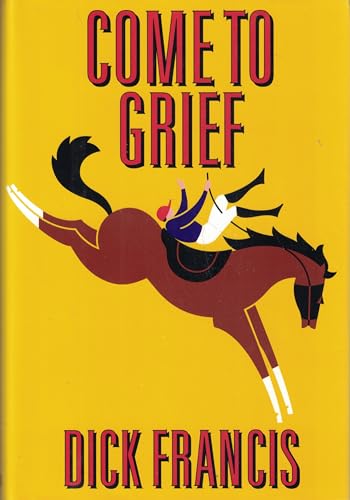


Publication Order of Kit Fielding Books


Publication Order of Standalone Books












Publication Order of Short Story Collections Books

Publication Order of Non-Fiction Books


Publication Order of Jefferson Hinkley Books
with Felix Francis


About Dick Francis
Dick Francis was a Welsh jockey turned crime novelist whose intimate knowledge of horse racing gave his thrillers an authority few writers could imitate. Born Richard Stanley Francis in Pembrokeshire in 1920, he grew up around horses and was determined from an early age to become a professional rider. Before his racing career took hold, the Second World War intervened. Francis served in the Royal Air Force, flying aircraft that included Spitfires, Wellingtons, and Lancasters—experience that added another layer of technical knowledge and personal danger to his later fiction.
After the war, Francis became one of Britain’s leading National Hunt jockeys. He won more than 350 races, was champion jockey for the 1953–54 season, and rode for Queen Elizabeth the Queen Mother. The most famous moment of his racing life was also one of its most painful: in the 1956 Grand National, Devon Loch appeared certain to win before inexplicably collapsing on the run-in. Francis retired from competitive riding the following year, carrying into his writing a clear understanding of racing’s physical risks, financial pressures, rivalries, and emotional reversals.
His first book was the autobiography The Sport of Queens, published after he left the saddle. He also became racing correspondent for the Sunday Express, but fiction soon established his second career. Dead Cert, his first novel, appeared in 1962 and introduced the pattern that would define much of his work: a capable but vulnerable man becomes entangled in violence or corruption within a world connected to racing.
Although horses and racecourses recur throughout the bibliography, Francis rarely repeated the same professional viewpoint. His protagonists include jockeys, trainers, bloodstock agents, pilots, photographers, painters, bankers, wine merchants, investigators, and people working in other specialized fields. Racing might provide the social network, financial motive, or route into danger, but the novels often expand into fraud, kidnapping, blackmail, sabotage, murder, or organized crime. Meticulous research allowed each profession to feel structurally important rather than added as surface detail.
Most of Francis’s novels are standalones, making his bibliography accessible without a rigid reading sequence. The principal exceptions involve recurring protagonists. Sid Halley, a former jockey whose career-ending injury leads him into investigation, became Francis’s best-known continuing character. Champion jockey Kit Fielding also appears in two connected novels. These returning heroes reveal more personal continuity than the typical Francis protagonist, although the author’s broader fictional identity rests on consistency of atmosphere and character rather than an extensive shared universe.
Francis’s style is lean, controlled, and built around endurance. His heroes are observant and morally stubborn but seldom invulnerable; they are frequently injured, threatened, or placed under severe psychological pressure. Violence has consequences, and courage often means continuing while frightened rather than displaying effortless toughness. That restraint, combined with technical precision and rapidly escalating danger, helped his books appeal far beyond readers already interested in racing.
His wife, Mary Francis, played an important role in researching and developing the novels throughout their marriage. Later, their son Felix collaborated with him on several books and continued writing racing thrillers after Dick Francis’s death in 2010. Francis received three Edgar Awards for best novel, the Crime Writers’ Association Diamond Dagger, Grand Master recognition from the Mystery Writers of America, and a CBE. His bibliography remains distinctive because lived sporting experience was only its starting point; discipline, vulnerability, professional pride, and moral persistence gave the thrillers their lasting character.