
Below is the complete list of James Dashner books in order. For each series, the chronological reading order is the same as the order of publication.
Publication Order of Maze Runner Books


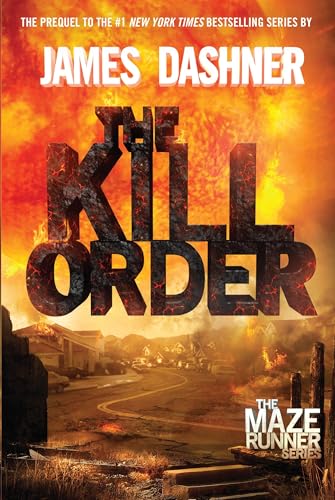

Publication Order of Maze Runner Collections Books

Publication Order of Maze Cutter Books



Publication Order of Jimmy Fincher Saga Books


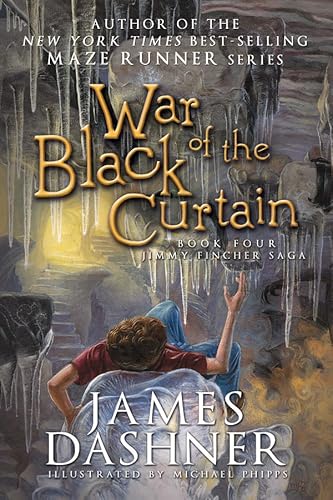
Publication Order of The 13th Reality Books


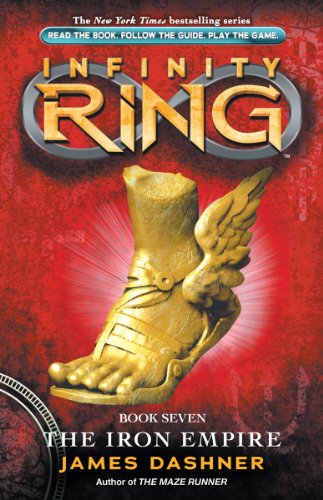
Publication Order of Infinity Ring Books

Publication Order of The Mortality Doctrine Books


About James Dashner
James Dashner is an American writer of young adult and middle-grade speculative fiction whose career is dominated by labyrinths, unstable realities, technological threats, and young protagonists forced to discover the rules of dangerous systems. Born and raised in Georgia, he worked in finance before becoming a full-time author. His bibliography eventually expanded across dystopian science fiction, fantasy, virtual-reality thrillers, time-travel adventure, and adult horror, though the Maze Runner novels remain the work most closely associated with his name.
Dashner’s first substantial series was the Jimmy Fincher Saga, beginning with A Door in the Woods. Across four books, he developed an early form of the fast-moving speculative adventure that would recur throughout his career: an ordinary young protagonist is drawn into a hidden conflict whose scale expands as the series progresses. The books did not achieve the international reach of his later fiction, but they established him as a series writer and preceded the two projects that significantly widened his audience, The 13th Reality and The Maze Runner.
The 13th Reality series begins with The Journal of Curious Letters and follows Atticus “Tick” Higginbottom through a multiverse of alternate realities. Its mixture of puzzles, science-fiction concepts, strange technologies, and large-scale threats illustrates several recurring features of Dashner’s work. He is particularly drawn to protagonists who enter situations with incomplete knowledge and must learn that the apparent structure around them conceals another level of control. That pattern became far more famous with The Maze Runner, published in 2009.
The Maze Runner introduces Thomas, who arrives without his memories in the Glade, an enclosed community surrounded by a deadly maze. The novel developed into a larger dystopian saga through The Scorch Trials and The Death Cure, while prequels including The Kill Order and The Fever Code explored the catastrophe, institutions, and experiments behind the original story. The books combine survival pressure with questions about memory, manipulation, sacrifice, and whether authorities can justify extreme harm in pursuit of a supposed greater good. Their success led to three major film adaptations released between 2014 and 2018.
Dashner later returned to that fictional world through The Maze Cutter, shifting the story to a later generation rather than simply extending Thomas’s original journey. The continuation developed into a trilogy and concluded with The Infinite Glade in 2025, giving the broader Maze Runner universe a second major chronological phase. This expansion is important when viewing his bibliography as a whole: what began as a tightly focused survival mystery ultimately became a multi-generational speculative setting with prequels, companion material, and a later sequel sequence.
Outside the Maze Runner world, Dashner created the Mortality Doctrine trilogy, beginning with The Eye of Minds. Set around an immersive virtual environment, the series explores artificial reality, identity, consciousness, and the possibility that technology can destabilize the distinction between physical and digital existence. He also participated in the multi-author Infinity Ring project, a time-travel adventure series, demonstrating his ability to work within a shared narrative framework as well as independently created worlds.
His later bibliography also moved beyond fiction primarily aimed at younger readers with The House of Tongues, an adult horror novel. Across these different phases, Dashner’s strongest recurring interest is not one particular future or technology but uncertainty itself. His characters are frequently trapped inside systems they do not understand, surrounded by withheld information, manipulated memories, alternate realities, or institutions claiming authority over the truth. The result is a body of work best understood through several distinct series—the early Jimmy Fincher adventures, the reality-bending 13th Reality books, the virtual dangers of the Mortality Doctrine, and above all the expanding Maze Runner universe that transformed his career.