
Below is the complete list of Fannie Flagg books in order. For each series, the chronological reading order is the same as the order of publication.
Publication Order of Elmwood Springs Books



Publication Order of Whistle Stop, AL Books


Publication Order of Standalone Books


Publication Order of Short Story Collections Books

Publication Order of Cookbooks Books

About Fannie Flagg
Fannie Flagg is an American bestselling novelist, actress, comedian, and screenwriter celebrated for her warm, humorous portrayals of Southern life. Best known for Fried Green Tomatoes at the Whistle Stop Cafe, she has built a literary career around memorable characters, small-town communities, enduring friendships, and the complicated bonds between generations. Her novels frequently move between past and present, combining family histories, social observations, and moments of heartbreak with an unmistakable sense of optimism.
Born Patricia Neal on September 21, 1944, in Birmingham, Alabama, Flagg grew up in nearby Irondale, a community that would later influence her most famous fictional setting. She showed an early interest in performing and storytelling, writing, directing, and appearing in theatrical productions during her school years. As a teenager, she adopted the professional name Fannie Flagg to avoid confusion with the established actress Patricia Neal.
Before becoming a successful novelist, Flagg developed a varied entertainment career. She began writing and producing television specials at nineteen and subsequently worked on Candid Camera. She also became a familiar television personality through frequent appearances on game shows, particularly Match Game, where her quick wit and distinctive humour attracted a national audience.
Despite her success in entertainment, Flagg faced considerable difficulties with writing because of dyslexia. She has spoken about the insecurity this caused, particularly before computers and other writing aids made composing and revising manuscripts more manageable. Nevertheless, her determination to tell stories eventually led her toward fiction.
Her literary breakthrough began when a short story won recognition at the Santa Barbara Writers Conference in 1978. The material developed into her debut novel, Coming Attractions (1981), later republished as Daisy Fay and the Miracle Man. Told through the observations of a spirited young girl growing up in the South, the novel established Flagg’s characteristic combination of humour, eccentric personalities, and emotional insight.
Her greatest success followed with Fried Green Tomatoes at the Whistle Stop Cafe (1987). Moving between different periods, the novel explores the lives of women connected to a small Alabama community, particularly the friendship between Idgie Threadgoode and Ruth Jamison. Beneath its affectionate portrayal of Southern life, the story addresses racism, domestic abuse, prejudice, and the importance of chosen families.
The novel became an international bestseller and inspired the acclaimed 1991 film Fried Green Tomatoes. Flagg co-wrote the screenplay with director Carol Sobieski, earning an Academy Award nomination for Best Adapted Screenplay. The adaptation introduced her storytelling to a much wider audience.
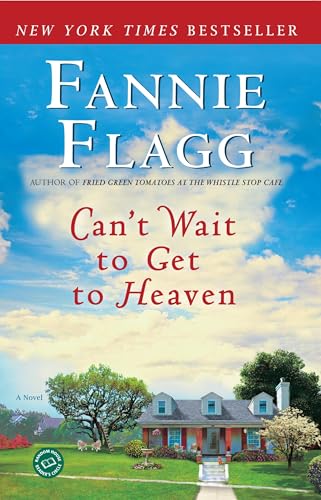
Flagg subsequently developed the fictional Missouri community of Elmwood Springs, beginning with Welcome to the World, Baby Girl! (1998). Through interconnected novels such as Standing in the Rainbow and Can’t Wait to Get to Heaven, she explored changing American customs, family histories, and the relationships linking generations of ordinary people.
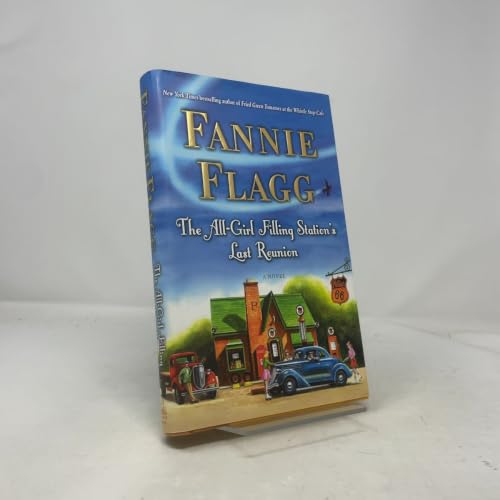
Her later fiction continued to draw upon lesser-known aspects of American life. The All-Girl Filling Station’s Last Reunion (2013) incorporates the history of women pilots during World War II, while The Wonder Boy of Whistle Stop (2020) returns to characters and places associated with her best-known novel.
In Something to Look Forward To (2025), Flagg moved into shorter fiction, presenting a collection of interconnected and independent stories featuring humour, unexpected developments, and familiar human concerns.
Although many of her works share Southern settings and recurring characters, Flagg does not restrict herself to a single continuous series. Her bibliography includes standalone novels, loosely connected community narratives, a direct continuation of Whistle Stop, and nonfiction associated with the fictional cafe.
Her writing is distinguished by conversational prose, eccentric but believable characters, and an ability to address painful subjects without surrendering its warmth. She frequently gives particular attention to older women, overlooked individuals, and friendships that provide support during difficult circumstances.
A recipient of the Harper Lee Prize and numerous other honours, Flagg has maintained a lasting presence in American popular fiction. Her novels preserve the humour and storytelling traditions of the South while recognising its historical injustices and social changes. Through her affectionate yet perceptive depictions of ordinary lives, she celebrates the resilience, generosity, and unexpected connections that make communities memorable.