
Below is the complete list of Dale Brown books in order. For each series, the chronological reading order is the same as the order of publication.
Publication Order of Patrick McLanahan Books

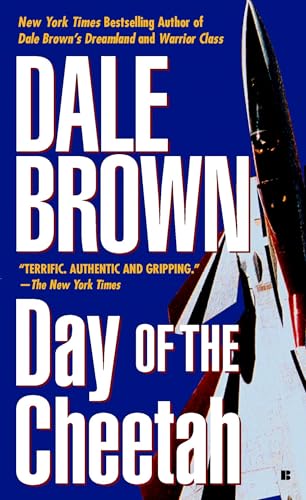


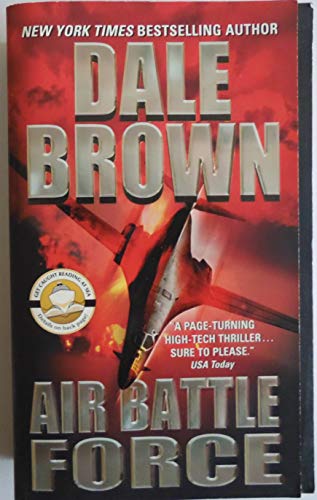

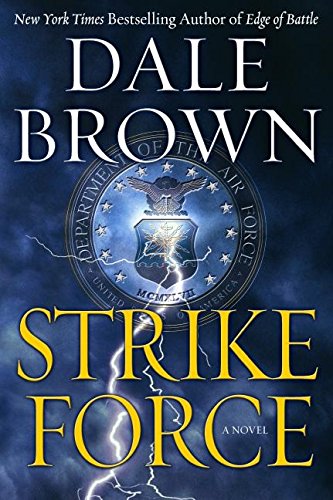


Publication Order of Brad McLanahan Books


Publication Order of Act Of War/Jason Richter Books


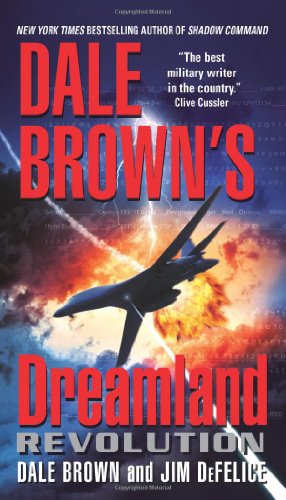
Publication Order of Dreamland Books
with Jim DeFelice
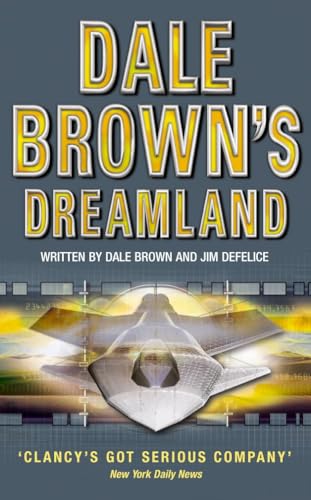







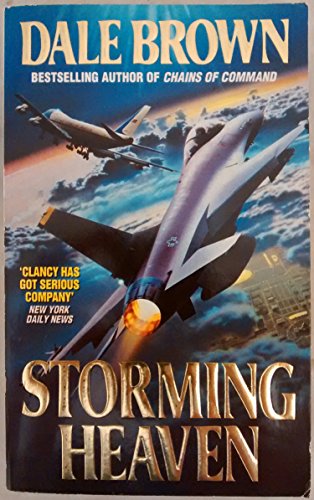
Publication Order of Independent Books


Publication Order of Nick Flynn Books
with Patrick Larkin




Publication Order of Puppet Master Books
with Jim DeFelice


About Dale Brown
Dale Brown is an American novelist and former United States Air Force captain whose aviation experience helped make him one of the defining writers of the modern military techno-thriller. His fiction combines strategic warfare, experimental aircraft, intelligence operations, geopolitical confrontation, and detailed descriptions of weapons systems. Although his novels frequently imagine technology beyond current military capability, their procedures and operational pressures are grounded in his firsthand understanding of bomber crews and Strategic Air Command culture.
Born in Buffalo, New York, in 1956, Brown developed an early interest in aviation and began taking flying lessons as a teenager. He studied Western European history at Pennsylvania State University, participated in Air Force ROTC, and received his commission in 1978. He served as a navigator-bombardier aboard the B-52G Stratofortress and the FB-111A, eventually reaching the rank of captain. His years in military aviation supplied not only technical knowledge but also an understanding of crew coordination, mission planning, command structures, and the psychological strain of preparing for conflicts that could escalate into strategic war.
Brown transformed that experience into Flight of the Old Dog, published in 1987. The novel introduced Patrick McLanahan, initially a young Air Force navigator recruited for a desperate mission aboard a heavily modified B-52 bomber. Its success began an unusually long fictional continuity in which McLanahan advances through the military, repeatedly clashes with political and operational authority, and becomes involved in increasingly ambitious projects involving stealth aircraft, unmanned systems, space weapons, private military power, and advanced strategic defenses.
The McLanahan novels are the center of Brown’s bibliography, but their structure becomes broader than one protagonist’s career. Characters introduced in books that initially appeared independent later enter the same continuity, while Patrick’s son, Brad McLanahan, eventually assumes a leading role. This creates a multigenerational military saga rather than a collection of interchangeable combat adventures. Political leaders, commanders, engineers, pilots, and adversaries return across decades, and technological developments introduced in one novel often reshape the conflicts of later books.
Brown expanded that universe through Dale Brown’s Dreamland, written principally with Jim DeFelice. The series focuses on a secret testing and operations facility associated with experimental aircraft and weapons. Although designed as a distinct collaborative sequence, Dreamland occupies the wider McLanahan world and develops technologies, organizations, and personnel connected to Brown’s principal novels. Brown and DeFelice also collaborated on the Puppet Master books, which move toward cyber operations, robotics, surveillance, and the political consequences of privately controlled technology.
Another major collaborative phase produced the Nick Flynn series with Patrick Larkin. Beginning with Arctic Storm Rising, these novels follow a younger intelligence officer through confrontations involving Russia, covert organizations, nuclear weapons, criminal alliances, and deniable warfare. The series has a more field-oriented structure than the later McLanahan books, but it retains Brown’s preference for plausible near-future threats and protagonists willing to act before conventional authorities recognize the scale of a crisis.
Brown has also written novels outside his dominant continuities, including Silver Tower, Hammerheads, Chains of Command, and Storming Heaven, though several characters and concepts from these books were subsequently absorbed into the McLanahan universe. His catalogue is therefore best understood by following its recurring personnel and shared history rather than assuming every apparently separate title remains completely independent.
Across his work, Brown treats military technology as an expression of human ambition rather than a substitute for character. Aircraft and weapons may determine what is possible, but judgment, loyalty, political calculation, and resistance to authority decide how that power is used. His most characteristic protagonists are technically gifted professionals who believe an approaching threat demands immediate action, even when acting means defying the institutions they were trained to serve.