
Below is the complete list of Ellen Hopkins’ Burned books in order. For this series, the chronological reading order is the same as the order of publication.
Publication Order of Burned Books
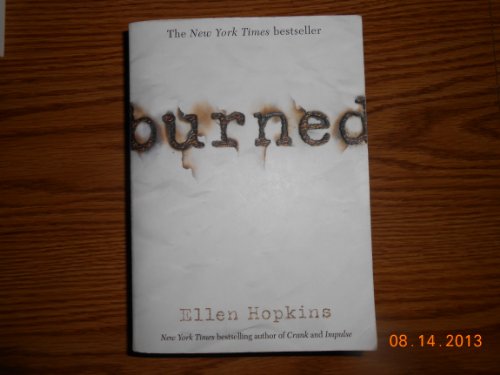

About Burned
Ellen Hopkins’s Burned series is a two-book young-adult verse narrative following Pattyn Von Stratten, a teenager raised in a deeply religious and abusive household where obedience is expected and questions about faith, sexuality, and personal freedom are treated as dangerous. Burned introduces Pattyn’s conflict with her family and beliefs, while Smoke continues directly from the devastating consequences of the first novel. Together, the books form one continuous story about abuse, grief, guilt, sisterhood, and the difficult process of separating genuine faith from the people who have used religion as a means of control.
Pattyn grows up in a large Mormon family dominated by her alcoholic and violent father, Caleb. Her mother has largely surrendered to his authority, leaving Pattyn responsible for much of the care of her younger sisters. She has been taught a strict understanding of female behavior and eternal consequences, but as adolescence brings questions about attraction and desire, she becomes increasingly troubled by the gap between what she has been told about righteousness and what she witnesses inside her supposedly faithful home.
In Burned, Pattyn’s questioning intensifies after she becomes interested in a boy outside her religious community. When her father discovers her behavior, he sends her away to spend the summer with her aunt in rural Nevada. What is intended as punishment becomes Pattyn’s first sustained experience of a household where she is treated with patience and respect. Away from her father’s control, she discovers a different relationship with work, nature, family, and herself.
Her relationship with Ethan becomes central to this period of transformation. For Pattyn, falling in love is inseparable from realizing that tenderness does not have to coexist with fear. Yet the life she begins imagining cannot simply erase the family and religious expectations waiting for her at home. The closing portion of Burned turns that conflict into profound tragedy, leaving Pattyn physically and emotionally shattered and creating the circumstances that drive the sequel.
Smoke begins after the death of Pattyn’s father. Pattyn is on the run, burdened by grief over Ethan and their unborn child as well as by the events surrounding Caleb’s death. She attempts to create another identity and another life, but escape cannot silence memory. Hopkins shows Pattyn struggling not only with what happened to her but with the belief that she may somehow be responsible for the destruction surrounding her.
The sequel also gives substantial narrative space to Jackie, one of Pattyn’s younger sisters. Left behind with their mother and siblings, Jackie knows crucial truths about what occurred within the family. Her perspective reveals that removing an abusive father does not automatically end the system that protected him. Community pressure, denial, fear, and the desire to preserve appearances continue shaping the household even after Caleb is gone.
This dual perspective broadens the story beyond Pattyn’s individual suffering. Smoke becomes a novel about whether silence will continue into another generation and what it costs for survivors to speak when the people around them prefer a more comfortable version of events.
Both novels are written in Hopkins’s characteristic free verse, using compressed language, visual spacing, and shifting poetic structures to convey emotional states that conventional prose might explain more directly. Publication order is essential: Smoke is not a loosely connected companion but the aftermath of Burned, completing Pattyn and Jackie’s struggle to reclaim their voices from a family culture built upon fear, secrecy, and enforced obedience.