
Below is the complete list of Brandon Sanderson books in order. For each series, the chronological reading order is the same as the order of publication.
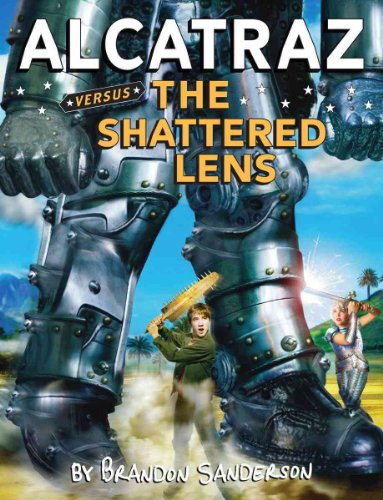
Publication Order of Alcatraz Books




Publication Order of Cosmere Collections Books

Publication Order of Cosmere Short Stories/Novellas Books
- Sixth of the Dusk (2014)
Sixth of the Dusk was published in 2014 and is listed as book #1 in the Cosmere Short Stories/Novellas series. 
Publication Order of Cosmere Books
- White Sand (1998)
White Sand was published in 1998 and is listed as book #1 in the Cosmere series. 


- Allomancer Jak and the Pits of Eltania (2016)
Allomancer Jak and the Pits of Eltania was first published in 2016; within the Cosmere series, it is listed as book #15. 


Publication Order of Elantris Books
Publication Order of Ethan Skarstedt Short Stories/Novellas Books
with Ethan Skarstedt
Publication Order of Hoid’s Travails Books

Publication Order of Infinity Blade Books

- Redemption (2013)
Published in 2013, Redemption is listed as book #2 in the Infinity Blade series.
Publication Order of Legion Collections Books

Publication Order of Legion Books


Publication Order of Mistborn Books
Publication Order of Oathbringer Serialization Books


Publication Order of Reckoners Books


Publication Order of Riftwake Books
with Janci Patterson

Publication Order of Secret Projects Books
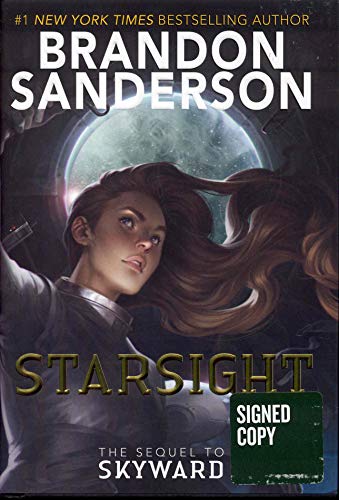
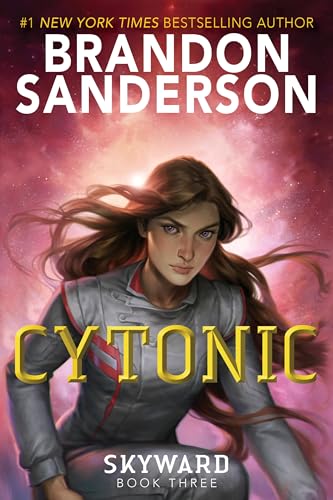
Publication Order of Skyward Books


Publication Order of Skyward Short Stories/Novellas Books

- Hyperthief (2021)
(With Janci Patterson)
Published in 2021, Hyperthief is listed as book #2 in the Skyward Short Stories/Novellas series. 


Publication Order of Strata Wars Books
with Peter Orullian

Publication Order of Texas Reckoners Books

Publication Order of Stormlight Archive Books
- Elsecaller / King Lopen the First of Alethkar (2025)
(With Dan Wells)
Elsecaller / King Lopen the First of Alethkar is a 2025 release and appears as book #8 in the Stormlight Archive series.
Publication Order of The Wheel of Time Books
with Robert Jordan


Publication Order of Wheel Of Time Short Stories/Novellas Books


Publication Order of White Sand Graphic Novels Books


Publication Order of Standalone Books
- White Sand (1998)
White Sand was published in 1998 and is listed as book #1 in the Standalone series. - Dragonsteel Prime (1999)
Published in 1999, Dragonsteel Prime is listed as book #2 in the Standalone series. 


Publication Order of Short Stories/Novellas Books
- Centrifugal (1994)
Centrifugal was published in 1994 and is listed as book #1 in the Short Stories/Novellas series. - Dragonsteel (2001)
Published in 2001, Dragonsteel is listed as book #2 in the Short Stories/Novellas series. 


- Dreamer (2014)
Dreamer was published in 2014 and is listed as book #6 in the Short Stories/Novellas series. 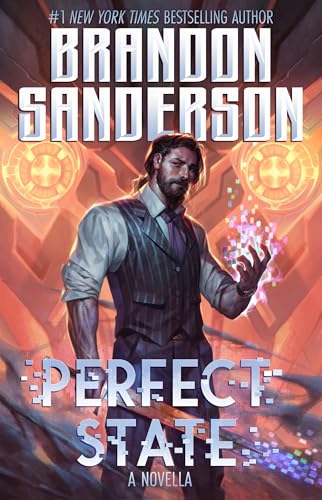


- Brain Dump (2025)
Brain Dump was first published in 2025; within the Short Stories/Novellas series, it is listed as book #10. - Probability Approaching Zero (2025)
Probability Approaching Zero was published in 2025 and is listed as book #11 in the Short Stories/Novellas series. - Moment Zero (2025)
Published in 2025, Moment Zero is listed as book #12 in the Short Stories/Novellas series.
Publication Order of Short Story Collections Books


- Brandon Sanderson’s Fantasy Firsts (2017)
In the Short Story Collections series, Brandon Sanderson’s Fantasy Firsts is book #4 and was published in 2017. 
Publication Order of Picture Books

Publication Order of Dark One Books


Publication Order of L. Ron Hubbard Presents: Writers of the Future Books


Publication Order of Magic: The Gathering Books
- Children of the Nameless (2018)
Children of the Nameless was published in 2018 and is listed as book #1 in the Magic: The Gathering series.
Publication Order of The Year’s Best Dark Fantasy & Horror Books


About Brandon Sanderson
Brandon Sanderson is an American fantasy and science-fiction writer best known for the interconnected Cosmere universe, the Mistborn saga, and The Stormlight Archive. Born in Lincoln, Nebraska, in 1975, he became an enthusiastic fantasy reader after a teacher introduced him to Barbara Hambly’s Dragonsbane. Sanderson later attended Brigham Young University, where he shifted his studies toward English, worked on the science-fiction and fantasy magazine The Leading Edge, and completed a master’s degree in creative writing. He also developed a long association with BYU as a teacher of creative writing.
His route to publication was unusually persistent. Sanderson wrote numerous novels before selling one, completing thirteen manuscripts before his first published book appeared. That debut was Elantris in 2005, a standalone epic fantasy concerned with a fallen magical city, political instability, and competing religious forces. The novel already displayed traits that would become closely associated with his work: carefully structured magic, multiple viewpoints, extensive worldbuilding, and plots in which apparently separate problems converge during the final movement.
The original Mistborn trilogy established him more firmly as a major fantasy writer. Beginning with Mistborn: The Final Empire, the sequence combines revolution, heist elements, political transformation, and an unusually systematic magic structure based on metals. Sanderson later expanded the setting through the Wax and Wayne novels, moving the same world into a later technological era. That evolution illustrates one of his most ambitious long-term interests: allowing fantasy societies, technologies, and magical knowledge to change across centuries rather than freezing a fictional world in a permanent medieval state.
Mistborn belongs to the Cosmere, the larger universe connecting much of Sanderson’s adult epic fantasy. Elantris, Warbreaker, The Stormlight Archive, Mistborn, and works such as The Emperor’s Soul, Tress of the Emerald Sea, Yumi and the Nightmare Painter, and The Sunlit Man occupy different worlds within a shared cosmology. Most can be approached through their individual stories, but recurring characters, magical principles, and increasingly visible links reward readers who follow the wider structure. The Hugo Award-winning The Emperor’s Soul demonstrates that Sanderson can also work on a compact scale within that enormous framework.
The Stormlight Archive became his largest central epic, beginning with The Way of Kings in 2010. Set primarily on Roshar, the series combines war, political fragmentation, ancient orders, personal trauma, and a magic system tied to oaths and moral progression. Words of Radiance, Oathbringer, Rhythm of War, and Wind and Truth developed the first major five-book arc, with shorter works such as Edgedancer and Dawnshard occupying related positions within the expanding narrative.
A separate milestone came when Harriet McDougal selected Sanderson to complete Robert Jordan’s Wheel of Time after Jordan’s death. Working from Jordan’s notes and existing material, Sanderson helped bring the epic to its conclusion through The Gathering Storm, Towers of Midnight, and A Memory of Light. The assignment placed him inside another author’s long-established world at a crucial stage of his own career and introduced his work to an even broader fantasy readership.
His bibliography extends well beyond the Cosmere. The Reckoners explores a world of superpowered figures who become dangerous tyrants; Skyward develops a science-fiction setting around pilot Spensa Nightshade; Alcatraz vs. the Evil Librarians uses comic middle-grade fantasy; and standalone projects show his willingness to move between age groups and narrative tones. His 2022 campaign built around four previously secret novels became a record-breaking crowdfunding phenomenon and highlighted the unusual scale of the readership surrounding his independently managed Dragonsteel operation.
Across these different projects, Sanderson is especially identified with explicit magical rules, large narrative architecture, rapid climactic convergence, and sustained planning across multiple series. His bibliography is best understood not as one continuous reading sequence but as several major bodies of work—some independent, some deeply interconnected through the Cosmere—created by a writer whose career has combined prolific production with unusually long-range fictional design.