
Below is the complete list of Thomas Perry books in order. For each series, the chronological reading order is the same as the order of publication.
Publication Order of Butcher’s Boy Books



Publication Order of Fargo Adventures Books


Publication Order of Jack Till Books


Publication Order of Jane Whitefield Books


Publication Order of Standalone Books









Publication Order of Short Stories/Novellas Books

Publication Order of Mysterious Profiles Books

Publication Order of Bibliomysteries Books
About Thomas Perry
Thomas Perry is an American crime and suspense novelist best known for the Jane Whitefield series, featuring a resourceful Native American woman who helps endangered people disappear and establish new identities. He is also the author of the Butcher’s Boy novels and numerous standalones, including Metzger’s Dog, Death Benefits, Pursuit, and The Old Man. Perry’s fiction is distinguished by intelligent protagonists and antagonists, meticulous pursuit narratives, and an unusually detailed interest in surveillance, escape, deception, and the practical mechanics of staying alive.
Perry was born in Tonawanda, New York, in 1947. He studied at Cornell University, earning a B.A., and continued his education at the University of Rochester, where he received a Ph.D. in English. Before establishing himself as a full-time novelist, he held a wide variety of jobs, experience that contributed to the broad occupational knowledge and practical detail found throughout his fiction.
His first novel, The Butcher’s Boy, was published in 1982. It follows a highly capable professional killer who discovers that the people behind his latest assignment intend to eliminate him. Rather than presenting its assassin simply as a conventional villain, Perry builds much of the suspense around professional competence: how someone recognizes danger, anticipates an opponent’s next move, and survives when both criminals and investigators are closing in.
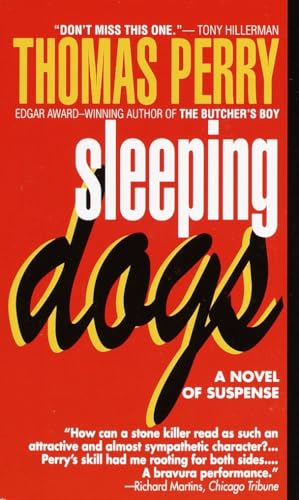
The Butcher’s Boy won the 1983 Edgar Award for Best First Novel from the Mystery Writers of America. Perry later returned to the character in Sleeping Dogs, published a decade after the first novel, and again in The Informant. The books established several elements that became characteristic of his career, particularly the contest between pursuer and pursued and the fascination of watching highly skilled people attempt to outthink one another.
Perry created his most enduring protagonist with Vanishing Act in 1995. Jane Whitefield lives in western New York and is of Seneca heritage. Her unusual vocation is helping people who face serious danger disappear from their old lives. She creates escape routes, identities, financial arrangements, and behavioral strategies designed to prevent violent pursuers from finding her clients.
The Jane Whitefield novels combine thriller plotting with aspects of Seneca history and culture, which inform Jane’s identity and worldview. Her cases involve people fleeing organized crime, abusive relationships, corrupt organizations, and other threats that conventional protection cannot necessarily resolve. Rather than merely hiding someone temporarily, Jane must teach clients how to stop behaving like the people their pursuers already know.
The series continued with novels including Dance for the Dead, Shadow Woman, The Face-Changers, and Blood Money. After an extended break, Perry returned to Jane with Runner, followed by further installments that expanded one of his signature creations across several decades.
Perry has nevertheless spent much of his career writing standalones. Metzger’s Dog combines crime with dark comedy, while Pursuit develops an intense contest between an investigator and a professional killer. The Old Man centers on an aging former intelligence operative whose carefully constructed quiet life collapses when dangerous people from his past locate him. The novel was later adapted into the television series The Old Man, starring Jeff Bridges.
Other books explore thieves, con artists, private investigators, security specialists, fugitives, and ordinary people suddenly forced to become unusually resourceful. Perry frequently shifts viewpoint between opposing sides, allowing readers to understand not only how someone plans an escape but also how an equally intelligent pursuer attempts to reconstruct that plan.
That structure is central to his suspense. Perry rarely depends solely on concealing the villain’s identity until a final revelation. He often allows the reader to know who the dangerous people are and instead builds tension from strategy. A hotel reservation, vehicle, credit card, telephone call, familiar habit, or moment of carelessness can become the detail that exposes someone who thought they had vanished.
Over a career spanning more than four decades, Perry has maintained a distinctive position between crime fiction and the thriller. His characters survive less through extraordinary technology or spectacular action than through preparation, observation, patience, and an understanding of how other people think. Whether following Jane Whitefield as she makes someone disappear or placing two professionals on opposite sides of a pursuit, Perry repeatedly turns the practical question of who can anticipate the next move into the source of his fiction’s suspense.