
Below is the complete list of Robin Cook books in order. For each series, the chronological reading order is the same as the order of publication.
Publication Order of Jack Stapleton and Laurie Montgomery Books






Publication Order of Dr. Marissa Blumenthal Books


Publication Order of Pia Grazdani Books


Publication Order of Standalone Books











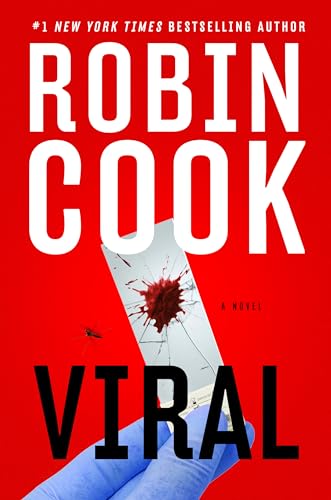

About Robin Cook
Robin Cook is an American physician and novelist whose medical thrillers helped establish medicine, biotechnology, and health-care ethics as fertile territory for popular suspense. Born Robert Brian Cook in Brooklyn, New York, in 1940, he combines firsthand medical experience with stories about the dangers that can emerge when scientific advances, commercial interests, and human ambition collide. His breakthrough novel, Coma, became a major bestseller in 1977 and is widely credited with popularizing the modern medical thriller.
Cook developed an interest in medicine while growing up in Leonia, New Jersey. He attended Wesleyan University, graduating summa cum laude with a chemistry major and distinction in government, then earned his medical degree from Columbia University’s College of Physicians and Surgeons. While studying medicine, he also worked in a laboratory supporting Columbia-Presbyterian Hospital’s cardiac surgery team, giving him early exposure to the combination of clinical science and rapidly developing medical technology that would later become central to his fiction.
After surgical training, Cook entered the United States Navy, where he attended submarine and diving schools and served aboard the ballistic-missile submarine USS Kamehameha. He later worked with the Navy’s Deep Submergence Systems Project and trained as an aquanaut medical officer. His first published book was actually a technical work on saturation diving. After leaving military service as a lieutenant commander, he completed an ophthalmology residency at Harvard, studied at Harvard’s Kennedy School of Government, opened an ophthalmology practice, and held a clinical position connected with Harvard Medical School and the Massachusetts Eye and Ear Infirmary.
Cook’s first novel, The Year of the Intern, drew upon the psychological pressures of medical training but did not achieve the success of his later work. Five years later, Coma transformed his career. Its disturbing premise involving patients deliberately placed into irreversible comas for organ transplantation demonstrated how medical technology could provide the foundation for a thriller while simultaneously raising genuine ethical questions. Cook continued developing that approach rather than treating medicine merely as an exotic backdrop.
His subsequent novels have explored infectious disease, bioterrorism, transplantation, genetic engineering, managed care, fertility medicine, cloning, nanotechnology, DNA databases, hospital economics, and other subjects where scientific possibility meets ethical or commercial pressure. Books such as Outbreak, Contagion, Chromosome 6, and Pandemic illustrate his recurring method: take a plausible medical development, extend its risks, and construct suspense around what might happen if professional responsibility gives way to greed, secrecy, or misuse of technology.
Although much of Cook’s bibliography consists of stand-alone medical thrillers, medical examiners Laurie Montgomery and Jack Stapleton became his most important recurring characters. Their work in forensic pathology gives Cook a flexible way to investigate suspicious deaths while examining broader weaknesses in medicine and health care. Their professional and personal relationship develops across multiple novels rather than resetting with every case, and they continue to anchor Cook’s later fiction.
Cook’s medical background is consequently more than an unusual detail in his biography. It determines the questions his fiction repeatedly asks: who controls new technology, what happens when medicine becomes primarily a business, and how quickly an innovation intended to save lives can acquire dangerous unintended consequences. That tension between scientific progress and human fallibility has sustained his career for nearly five decades and made the medical system itself one of the most recognizable sources of suspense in his work.