
Below is the complete list of Richard Osman books in order. For this series, the chronological reading order is the same as the order of publication.
Publication Order of Thursday Murder Club Books


Publication Order of We Solve Murders Books


Publication Order of Non-Fiction Books
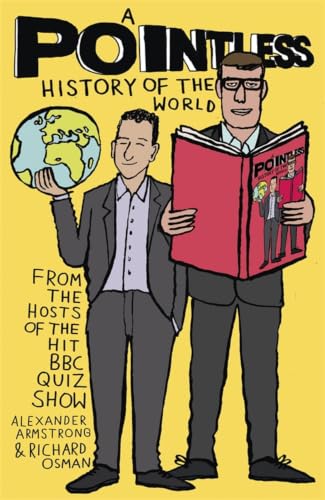


Publication Order of BBC’s Pointless Books
with Alexander Armstrong



About Richard Osman
Richard Osman is unusual as a novelist because he arrived at fiction already widely known in another field. Before his breakthrough as a crime writer, he had a long career in British television as a producer and presenter, and that background helps explain a lot about his novels. He understands pacing, audience expectation, timing, and character appeal at a very instinctive level. When he turned to fiction, he did not write in a way that felt tentative or apprentice-like. He entered the mystery market with a strong sense of tone and a very clear idea of what kind of reading experience he wanted to create: witty, accessible, emotionally warm, and sharply structured. Official publisher biographies present him not just as an author, but as an author-producer-presenter, which is the right way to understand the shape of his career.
His fiction career is anchored first and foremost by the Thursday Murder Club novels, the series that made him an international bestseller. Those books established his signature approach almost immediately. Instead of building crime fiction around a hard-bitten detective or a conventional police procedural frame, Osman centered older protagonists in a retirement-community setting and trusted charm, intelligence, and emotional observation as much as plot. That choice was not a gimmick. It became the foundation of his authorial identity. The Thursday Murder Club books are comic without being lightweight, puzzle-driven without becoming cold, and sentimental in the best controlled sense: they care about loneliness, friendship, aging, grief, and loyalty while still delivering the satisfactions of murder mystery. His publishers describe the series as record-breaking and multi-million-copy bestselling, and the scale of its success has made it the defining body of his work so far.
Osman’s bibliography is best understood as moving in two phases. The first is the Thursday Murder Club era, beginning with The Thursday Murder Club and continuing through The Man Who Died Twice, The Bullet That Missed, The Last Devil to Die, and The Impossible Fortune. That run established him as more than a celebrity novelist trying his hand at fiction. It showed sustained control of recurring characters and a genuine ability to build a long-running mystery world readers wanted to revisit. The second phase begins with We Solve Murders, which launches a new series with a different setup and tone. Publisher listings now show that sequence continuing with We Chase Shadows, scheduled for September 2026, which confirms that Osman is not treating the newer books as a one-off experiment but as a parallel strand in his fiction career.
What ties those phases together is voice. Osman writes popular crime fiction that is deliberately readable, but readability in his case is not the same thing as thinness. His books are built around conversation, timing, and the pleasure of spending time with people whose company matters as much as the mystery. That is why his bibliography is best approached through series rather than as a loose stack of thrillers. Even when the plots are intricate, the real engine is character chemistry. Readers return for Elizabeth, Joyce, Ibrahim, and Ron as much as for the crimes themselves; similarly, the newer We Solve Murders books are being positioned around a fresh detective trio rather than around premise alone. Osman’s strength is that he writes crime fiction with the sociability of ensemble storytelling.
His career also makes more sense when viewed as a case of skills transferring cleanly from one medium to another. Television gave him a public profile, but it also trained the instincts that suit commercial fiction: clarity, rhythm, setup, reveal, and the ability to create characters people want to spend repeated time with. That does not mean the novels read like television scripts. It means they understand audience pleasure with unusual precision. Richard Osman’s bibliography is still relatively compact compared with some long-established crime writers, but it already has a very clear architecture: one hugely successful flagship mystery series, one newer expanding series, and a reputation built on making murder fiction feel companionable without ever draining it of stakes. That balance is what makes his work distinctive, and it is why his books have become such a large part of contemporary commercial crime fiction.