
Below is the complete list of Mary Alice Monroe books in order. For each series, the chronological reading order is the same as the order of publication.
Publication Order of Beach House Books


Publication Order of The Islanders Books


Publication Order of Lowcountry Summer Books


Publication Order of Standalone Books




Publication Order of Picture Books

Publication Order of Non-Fiction Books

Publication Order of Young Palmetto Books Books

About Mary Alice Monroe
Mary Alice Monroe is an American novelist whose work combines Southern family drama, women’s fiction, romance, and environmental storytelling. Closely associated with the coastal landscapes of South Carolina, she has built much of her career around the relationship between human lives and the natural world. Sea turtles, dolphins, monarch butterflies, shorebirds, and fragile marine habitats are not decorative features in her fiction; their migrations, injuries, and struggles for survival often mirror the emotional journeys of her characters.
Monroe’s early novels established her interest in women facing personal reinvention, complicated families, and relationships altered by loss or long-kept secrets. Her work found its defining setting and purpose in the South Carolina Lowcountry, where barrier islands, tidal creeks, beaches, marshes, and working communities became integral to her stories. She researches these environments through collaboration with scientists, wildlife specialists, and conservation organizations, supplementing academic study with direct volunteer experience. She has served for more than two decades as a state-certified volunteer with the Island Turtle Team and has held roles with organizations including the South Carolina Aquarium and the Leatherback Trust.
Her best-known body of work is the Beach House series, beginning with The Beach House. Set principally around Isle of Palms, the sequence follows the Rutledge family and the relationships formed around their coastal home. The novels explore motherhood, estrangement, aging, caregiving, marriage, and generational change while maintaining a sustained connection to sea-turtle conservation. The opening novel was adapted into a Hallmark Hall of Fame television film, extending the series beyond its readership.
Monroe’s Lowcountry Summer books form another connected family saga. Beginning with The Summer Girls, the sequence brings three half-sisters together at their grandmother’s seaside home and follows the gradual rebuilding of relationships weakened by distance and resentment. Although the Beach House and Lowcountry Summer novels occupy similar coastal territory, they center on different families and should be treated as separate series.
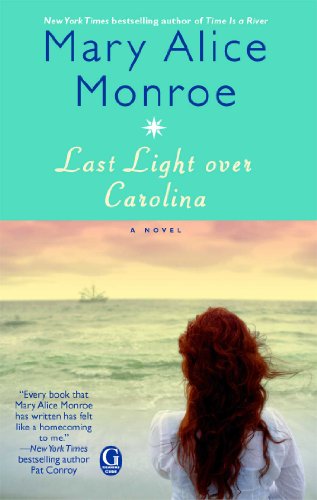
Her stand-alone fiction broadens the environmental focus through different species, industries, and landscapes. Skyward incorporates birds of prey and wildlife rehabilitation, while Sweetgrass draws upon the cultural history of Lowcountry basket making and the pressure of development on land and tradition. The Butterfly’s Daughter uses the monarch migration as the framework for a journey involving grief and family discovery. Last Light Over Carolina turns toward the working lives of shrimpers, and Time Is a River connects breast-cancer recovery with fly-fishing in the mountains of North Carolina.
Monroe has also written for younger readers. Her picture books extend the conservation concerns of her adult novels, while the Islanders series, co-written with Angela May, follows children exploring the wildlife and waterways around Dewees Island. The series began with The Islanders and continued through Search for Treasure and Shipwrecked, combining outdoor adventure with friendship, environmental knowledge, and personal growth.
With Where the Rivers Merge, Monroe moved into an expansive historical family saga set in the twentieth-century South Carolina Lowcountry. The novel follows a woman’s determination to protect her family estate and its surrounding ecosystem across decades of social and environmental change, extending Monroe’s established concern with conservation into a broader historical framework.
Across her bibliography, Monroe writes with emotional accessibility and close attention to place. Her characters frequently discover that recovery requires not only repairing relationships but understanding the environment that sustains their communities. That union of family storytelling and conservation has made the Lowcountry more than her recurring setting: it is the central living presence around which much of her fiction is built.