
Below is the complete list of Lawrence Osborne books in order. For each series, the chronological reading order is the same as the order of publication.
Publication Order of Standalone Books


Publication Order of Philip Marlowe Books




Publication Order of Non-Fiction Books


Publication Order of Akashic Noir Books

About Lawrence Osborne
Lawrence Osborne is a British novelist, journalist, travel writer, and screenwriter whose fiction repeatedly places outsiders in unfamiliar countries where money, desire, privilege, and cultural misunderstanding begin to erode their sense of control. Macau casinos, Moroccan deserts, Cambodian border towns, Greek islands, Bangkok condominiums, Hong Kong during political unrest, and the Turkish Riviera have all provided settings for his novels. Rather than using these places as decorative backdrops, Osborne makes dislocation central to the story: his expatriates and travelers frequently discover that the rules they assumed governed their lives no longer apply.
Educated at Fitzwilliam College, Cambridge, and Harvard University, Osborne rejected an academic career and spent much of his adult life moving between countries. He has lived for extended periods in places including France, Italy, Morocco, Mexico, Thailand, and Turkey, eventually making Bangkok his principal base. His long-form journalism and essays have appeared in publications including The New Yorker, The New York Times Magazine, and Harper’s, while travel became a major component of his early nonfiction career.
Books such as The Accidental Connoisseur explore wine culture, while The Naked Tourist considers modern travel and the increasingly difficult search for places untouched by global tourism. Bangkok Days is a more personal portrait of expatriate existence in the Thai capital, and The Wet and the Dry investigates drinking cultures across predominantly Muslim societies. These works helped develop the observational style that later became integral to his fiction.
Osborne had published the earlier novel Ania Malina, but his mature career as a novelist gained substantial momentum with The Forgiven in 2012. Set around a lavish weekend gathering in Morocco, the novel begins when a wealthy British couple accidentally kills a young Moroccan man while driving through the desert. The consequences expose divisions of class, nationality, entitlement, and morality among both visitors and locals. The novel was later adapted into a film starring Ralph Fiennes and Jessica Chastain.
The Ballad of a Small Player moves into the casinos of Macau, where a disgraced English lawyer attempts to lose himself through baccarat, alcohol, and increasingly unstable perceptions of reality. Gambling, fate, guilt, and the possibility of the supernatural give the book a dreamlike quality. It was adapted into a 2025 film starring Colin Farrell and Tilda Swinton. Hunters in the Dark similarly follows a foreigner attempting to abandon his previous identity, this time in Cambodia, while Beautiful Animals uses a Greek island to examine privilege and the dangerous consequences of well-intentioned intervention.
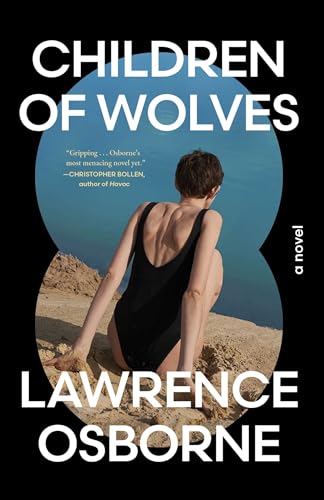
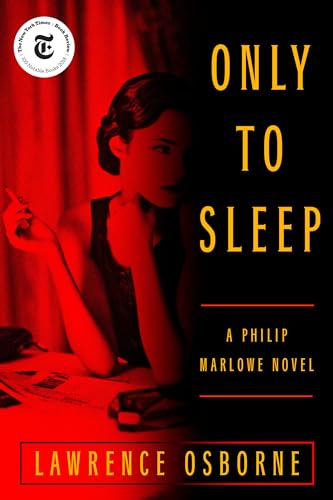
Osborne entered an established literary universe with Only to Sleep, an authorized Philip Marlowe novel that imagines Raymond Chandler’s detective at seventy-two, living in Mexico in 1988. The book was nominated for both Edgar and Shamus awards. The Glass Kingdom returned to Bangkok for a story of expatriates, hidden money, political instability, and an apartment complex that becomes increasingly claustrophobic, while On Java Road places personal disappearance against unrest in Hong Kong.
His fiction also includes the 2023 collection Burning Angel and Other Stories. In August 2026, Osborne published Children of Wolves, a suspense novel moving between the Turkish Riviera and Istanbul as a private investigator searches for the radicalized daughter of a wealthy American.
Across Osborne’s work, travel rarely produces enlightenment in any reassuring sense. Foreign landscapes instead destabilize his characters, exposing appetites and weaknesses that ordinary life allowed them to conceal. Gambling, alcohol, wealth, sex, political violence, and chance recur throughout his bibliography, giving his novels their distinctive atmosphere of elegant surfaces gradually giving way to something darker underneath.