
Below is the complete list of Julie Garwood’s Lairds’ Brides books in order. For this series, the chronological reading order is the same as the order of publication.
Publication Order of Lairds’ Brides Books

About Lairds’ Brides
Julie Garwood’s Lairds’ Brides series consists of two closely connected medieval romances set among powerful Scottish clans and the English women drawn into their world through politically useful marriages. The novels combine clan rivalry, royal interference, concealed crimes, and threats of vengeance with the humor created by forceful Highland lairds discovering that their new wives cannot be commanded as easily as their warriors. Each book centers on a separate couple, but the second returns to the characters and setting established in the first, giving the pair of stories a stronger continuity than their individual romantic plots initially suggest.
The Bride introduces Alec Kincaid, a feared Scottish laird ordered by the king to marry one of Baron Jamison’s English daughters. Alec chooses Jamie, the daughter her family depends upon but routinely underestimates. She is compassionate, practical, skilled in healing, and accustomed to taking responsibility for everyone around her. Marriage removes her from England and places her within a clan whose customs, loyalties, and expectations differ sharply from those she has known.
Jamie’s arrival begins changing the Kincaid household almost immediately. She tends the sick, intervenes in disputes, and challenges practices she considers unreasonable, often without realizing how thoroughly she is disrupting Alec’s authority. Alec initially expects obedience and struggles to understand why his bride treats his commands as subjects for negotiation. Their clash creates much of the novel’s comedy, but the story also carries a darker mystery connected to Alec’s past and the death of his first wife. Jamie must establish her place within the clan while recognizing that someone may regard her presence as a threat.
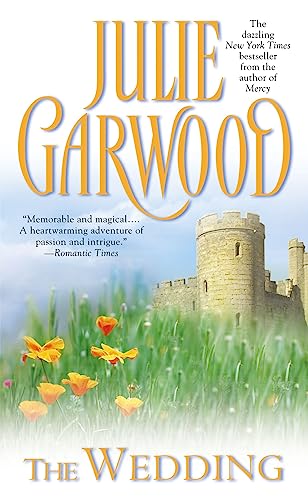
The Wedding takes place years later and shifts attention to Connor MacAlister, a laird bound to Alec by a relationship as close as brotherhood. Lady Brenna is travelling from England to marry another Highland chief when Connor and his warriors intercept her. His decision to marry Brenna is partly an act of revenge against the man she was intended to wed, but their connection began much earlier: as a child, Brenna had impulsively proposed marriage to Connor when he visited her family’s home.
Brenna enters the marriage with greater optimism than Connor expects. He regards their union as a practical step in a longstanding clan conflict and assumes emotional distance will keep his purpose clear. Brenna instead applies herself to her new household with determination, imagination, and a remarkable capacity for turning confusion into confidence. Her efforts gradually expose the difference between ruling through fear and building loyalty through trust.
Alec and Jamie return as established figures in The Wedding, allowing readers to see how their marriage and family have developed since the opening novel. Their presence also gives Connor and Brenna’s relationship additional depth. Alec recognizes qualities in Connor that resemble his younger self, while Jamie provides Brenna with an example of an Englishwoman who has successfully made a place within Highland society without surrendering her identity.
The series is sometimes labelled Lairds’ Fiancées rather than Lairds’ Brides. Both names refer to the same two novels. An omnibus titled The Bride / The Wedding also collects them in one volume but does not add a separate story. They should not be confused with Garwood’s Highlands’ Lairds sequence, which begins with The Secret and features a different set of connected characters.
Both novels use arranged marriage as the starting point for a broader negotiation over belonging, authority, and emotional honesty. Garwood’s heroines do not defeat their husbands through force; they transform clan life through competence, generosity, stubbornness, and an unwillingness to accept that affection must follow the rules established by men.