Judy Blume Books In Order

Below is the complete list of Judy Blume books in order. For each series, the chronological reading order is the same as the order of publication.

Publication Order of Fudge Books

  1. Tales of a Fourth Grade Nothing (1972)
    by Judy Blume
    Tales of a Fourth Grade Nothing was published in 1972 and is listed as book #1 in the Fudge series.
  2. Otherwise Known as Sheila the Great (1972)
    by Judy Blume
    Published in 1972, Otherwise Known as Sheila the Great is listed as book #2 in the Fudge series.
  3. Superfudge (1980)
    by Judy Blume
    Superfudge is a 1980 release and appears as book #3 in the Fudge series.
  4. Fudge-a-Mania (1990)
    by Judy Blume
    In the Fudge series, Fudge-a-Mania is book #4 and was published in 1990.
  5. Double Fudge (2002)
    by Judy Blume
    Double Fudge was first published in 2002; within the Fudge series, it is listed as book #5.

Publication Order of BFF Books

  1. Just As Long As We’re Together (1986)
    by Judy Blume
    Just As Long As We’re Together was published in 1986 and is listed as book #1 in the BFF series.
  2. Here’s to You, Rachel Robinson (1993)
    by Judy Blume
    Published in 1993, Here’s to You, Rachel Robinson is listed as book #2 in the BFF series.

Publication Order of Pain & The Great One Books

  1. Soupy Saturdays (2007)
    by Judy Blume
    Soupy Saturdays was published in 2007 and is listed as book #1 in the Pain & The Great One series.
  2. Cool Zone (2008)
    by Judy Blume
    Published in 2008, Cool Zone is listed as book #2 in the Pain & The Great One series.
  3. Going, Going, Gone (2008)
    by Judy Blume
    Going, Going, Gone is a 2008 release and appears as book #3 in the Pain & The Great One series.
  4. Friend or Fiend? (2008)
    by Judy Blume
    In the Pain & The Great One series, Friend or Fiend? is book #4 and was published in 2008.

Publication Order of Standalone Books

  1. Are You There God? It’s Me, Margaret (1970)
    by Judy Blume
    Are You There God? It’s Me, Margaret was published in 1970 and is listed as book #1 in the Standalone series.
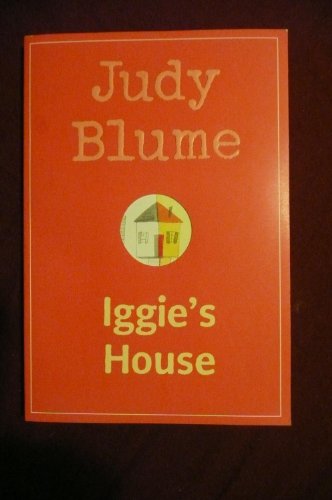
  2. Iggie’s House (1970)
    by Judy Blume
    Published in 1970, Iggie’s House is listed as book #2 in the Standalone series.
  3. Then Again, Maybe I Won’t (1971)
    by Judy Blume
    Then Again, Maybe I Won’t is a 1971 release and appears as book #3 in the Standalone series.
  4. It’s Not the End of the World (1972)
    by Judy Blume
    In the Standalone series, It’s Not the End of the World is book #4 and was published in 1972.
  5. Deenie (1973)
    by Judy Blume
    Deenie was first published in 1973; within the Standalone series, it is listed as book #5.
  6. Blubber (1974)
    by Judy Blume
    Blubber was published in 1974 and is listed as book #6 in the Standalone series.
  7. Forever… (1975)
    by Judy Blume
    Published in 1975, Forever… is listed as book #7 in the Standalone series.
  8. Starring Sally J. Freedman as Herself (1977)
    by Judy Blume
    Starring Sally J. Freedman as Herself is a 1977 release and appears as book #8 in the Standalone series.
  9. Wifey (1978)
    by Judy Blume
    In the Standalone series, Wifey is book #9 and was published in 1978.
  10. Tiger Eyes (1981)
    by Judy Blume
    Tiger Eyes was first published in 1981; within the Standalone series, it is listed as book #10.
  11. Smart Women (1983)
    by Judy Blume
    Smart Women was published in 1983 and is listed as book #11 in the Standalone series.
  12. Summer Sisters (1998)
    by Judy Blume
    Published in 1998, Summer Sisters is listed as book #12 in the Standalone series.
  13. In the Unlikely Event (2015)
    by Judy Blume
    In the Unlikely Event is a 2015 release and appears as book #13 in the Standalone series.

Publication Order of Short Story Collections Books

  1. The Pain and the Great One: Go Places! (2015)
    by Judy Blume
    The Pain and the Great One: Go Places! was published in 2015 and is listed as book #1 in the Short Story Collections series.

Publication Order of Picture Books

  1. The One in the Middle Is the Green Kangaroo (1969)
    by Judy Blume
    The One in the Middle Is the Green Kangaroo was published in 1969 and is listed as book #1 in the Picture series.
  2. Freckle Juice (1978)
    by Judy Blume
    Published in 1978, Freckle Juice is listed as book #2 in the Picture series.

Publication Order of Non-Fiction Books

  1. The Judy Blume Diary (1981)
    by Judy Blume
    The Judy Blume Diary was published in 1981 and is listed as book #1 in the Non-Fiction series.
  2. Letters to Judy: What Kids Wish They Could Tell You (1986)
    by Judy Blume
    Published in 1986, Letters to Judy: What Kids Wish They Could Tell You is listed as book #2 in the Non-Fiction series.
  3. The Judy Blume Memory Book (1988)
    by Judy Blume
    The Judy Blume Memory Book is a 1988 release and appears as book #3 in the Non-Fiction series.

About Judy Blume

Judy Blume is an American novelist whose books for children, teenagers, and adults helped change the way popular fiction addressed puberty, sexuality, bullying, religion, family conflict, friendship, and the private anxieties of growing up. Born Judith Sussman in Elizabeth, New Jersey, in 1938, she attended New York University and graduated with a degree in education. She began writing while raising her young family and published her first book, The One in the Middle Is the Green Kangaroo, in 1969.

Her breakthrough came with Are You There God? It’s Me, Margaret., published in 1970. The novel follows Margaret Simon, an eleven-year-old girl navigating puberty, friendships, menstruation, and questions about religious identity after moving to a new community. Blume treated subjects that were often avoided in children’s fiction with unusual directness, allowing Margaret’s worries to remain ordinary rather than turning them into moral lessons. The book became one of her defining works and was adapted into a feature film in 2023.

Blume continued exploring childhood from markedly different perspectives. Tales of a Fourth Grade Nothing introduced Peter Hatcher and his irrepressible younger brother, Fudge. Their family became the center of a popular sequence that includes Superfudge, Fudge-a-Mania, and Double Fudge. These books are comic in tone but grounded in recognizable sibling frustration, jealousy, embarrassment, and affection.

Her stand-alone novels often move into more difficult territory. Blubber examines bullying and the instability of childhood group behavior without providing an artificially tidy resolution. Deenie addresses body image and scoliosis, while Then Again, Maybe I Won’t approaches puberty through a boy’s perspective. Tiger Eyes follows a teenage girl coping with the violent death of her father and the upheaval that follows.

Forever…, published in 1975, became especially controversial for its frank portrayal of a teenage sexual relationship. Blume wrote about contraception, desire, and emotional responsibility without relying on punishment or fear as the central message. That openness made the novel influential with generations of readers while also placing it among books frequently challenged or removed from school and library collections.

Attempts to censor her work became an important part of Blume’s public life. She has consistently defended intellectual freedom and the ability of young readers to encounter books addressing subjects adults may find uncomfortable. Her own experience with challenges to titles such as Forever…, Blubber, and Are You There God? It’s Me, Margaret. made her a prominent voice against book banning.

Blume also developed a substantial adult readership. Wifey examines marriage and sexual dissatisfaction in suburban life, while Smart Women follows relationships among divorced adults and their families. Summer Sisters became one of her best-known adult novels, tracing a complicated friendship from adolescence into adulthood. In the Unlikely Event, inspired by a series of airplane crashes that occurred near Elizabeth, New Jersey, during Blume’s youth, combines historical events with a large fictional cast.

Her work is notable for its conversational clarity and respect for experiences that can seem enormous when encountered for the first time. Blume rarely writes down to younger characters or assumes that adulthood automatically produces wisdom. Parents can misunderstand their children, friends can behave cruelly, relationships can change, and embarrassing questions deserve serious answers.

Her bibliography spans picture books, middle-grade fiction, young-adult novels, adult fiction, and several recurring characters, but its enduring connection is emotional honesty. Blume made everyday fears and bodily changes legitimate subjects for fiction, helping generations of readers recognize that the thoughts they were reluctant to discuss were often shared by many others.

Leave a Reply

Your email address will not be published. Required fields are marked *